Before you read any further, I would like to suggest that you stop now, friend, and read Leviticus chapters 8 and 9--yes both chapters.
Okay, now that you have read these chapters. I want you to key in on the phrase:
"just as the LORD had commanded Moses." In various forms, you'll find the phrase found ten times in the two chapters, wherein God was dedicating the tabernacle.
Doing things right mattered. After offering sacrifices and preparing the tabernacle, Lev. 9:23-24 says:
Moses and Aaron went into the tent of meeting. When they came out and blessed the people, the glory of the LORD appeared to all the people. Then fire came out from before the LORD and consumed the burnt offering and the portions of fat on the altar; and when all the people saw it, they shouted and fell on their faces.
This is the setting for Nadab and Abihu, who had worn the linen and offered the sacrifices "just as the Lord had commanded" for several days.
Their offering of "strange" fire (unauthorized fire in ESV and NIV), was something the Lord had not commanded. They thought that one up on their own and acted on their own initiative.
God's response was to consume them with fire--fire that came from the presence of the Lord.
The Lord said through Moses, ‘Among those who are near me I will be sanctified (treated as holy, NASB), and before all the people I will be glorified.’
God took personal offense at the unauthorized offering. Offering something strange was treating Him as common, not holy. Their acting on of their own initative did not glorify God. They may have had good intentions; but God was not glorified by their doing their own thing.
Some folks who think telling this story amounts to legalism and who have made grace appear to allow presumption (which David calls great transgression in Psalm 19) point to Eleazar and Ithamar, who had lost their brothers.
In their grief, they did not eat the sin offering that day. Should they have? Yes. Did they? No, it burned uneaten. The blood was not brought into the holy place.
When Aaron explained, "When things like these happened to me, if I had eaten a sin offering today, would it have been good in the sight of the LORD?” Aaron realized that his heavy heart would not allow him to eat this offering with a proper heart. He felt it better not to eat than to render to God an inappropriate heart in his eating. This explanation seemed good in Moses' sight. No more was said about it.
God is certainly a God of compassion, mercy and grace; Moses aceepted the explanation. To find God's understanding in a time of great loss is understandable. To knowingly, willfully act without authority is quite another.
Does one example of grace open the door for presumption and disregard? Some make the mistake here of thinking that it is easier to get forgiveness than it is to obey; but such a view may be presumptuous. It is one thing to explain under some extreme circumstances why one cannot fulfill his duty; it is another to presume upon the grace of God.
Nadab and Abihu, Uzzah, Saul, Ahaz, and Uzziah all learned that one has no right to act without authorization.
Jeremiah spoke of some prophets who in their hearts were sure they were speaking for the Lord. "Thus saith the Lord..." was part of their prophecies. The only problem is that the Lord did not say those things. It never entered into God's mind to say those things. They dreamed them up--spoke from their own imagination. "They speak a vision of their own imagination, Not from the mouth of the LORD." “I did not send these prophets, But they ran. I did not speak to them, But they prophesied." “Then as for the prophet or the priest or the people who say, ‘The oracle of the LORD,’ I will bring punishment upon that man and his household." (see Jer. 23:16-40) Acting without authority is dishonoring to God and exceedingly sinful.
Paul noted how some ate the Lord Supper unworthily (1 Cor. 11:23-32), not discerning the Lord's body and thus incurring judgment. Their hearts and minds did not focus on the Lord but on the fusses brewing over the behavior of their brothers. Some were weak and sick, many were spiritually asleep. God wanted right hearts with right action. I would think that it would be better not to partake at all than to partake unworthily--not honoring God and treating Christ as holy. This is more parallel to Aaron, Eleazar and Ithamar than Nadab and Abihu. While Moses accepted Aaron's explanation, neither Moses nor Aaron expected this to be the case the next time they had a sin offering to sacrifice. It is one thing to forgive a diversion over extreme circumstances; it is another to act like God didn't care whether he was obeyed or not. The counsel of presuming on the grace of God couldn't be more destestable.
This is a different thing than presumptuously acting on one's own initiative. The difference is that in Nadab and Abihu's case, they acted without authority and innovated their own offering. They acted without a command at all. In the second situation, the brothers acted out of soorow, respecting the commandment so much that they would not eat with an improper heart.
Loophole religion, presuming we can continue to act where we have no authority, is sand theology. Those who counsel sand theology will see their house stand for a time; but the wind will blow and the rain will come. Their counsel will be so regretted. Sand theology is thinking I can do whatever I please and face no consequences. Sad, sad.
Grace ought to lead us to listen and build on a rock, to love enough to heed. Grace builds faith and careful desire to please--not presumptuous innovation. We must not presume upon grace and try the Lord.
brotherly,
Phil
Thursday, October 19, 2006


Monday, October 16, 2006
Jesus and the Father
In discussing Jesus and the silence of the Scriptures, one must have not only an understanding of what the Law itself asks of those who are under the Law, but also how Jesus has treated that Law.
The Scriptures assert without exception the sinlessness of Jesus (Heb. 4:14-16; 1 Peter 2:21-24). Had Jesus sinned, He could not have been the perfect Lamb of God that takes away the sins of the world (John 1:29).
As one studies through the Law of Moses, especially as Moses reviews in the book of Deuteronomy, one is easily and often struck with the conscientiousness demanded of those who are in the covenant God made at Sinai. Jesus was a Jew and lived his entire earthly life under that covenant. The concept of keeping the law carefully is found some 27 times (NASB; 31 times in the NIV) in the book of Deuteronomy alone. That concept can also be seen in Joshua and frequently in the assessment of the Jewish kings in Kings and Chronicles. Careful obedience to the Law was extremely important. If your God told you something that many times, you would conclude that He meant it.
The object of the stipulations in the covenant was the maintenance of a true and living relationship with the Lord of the covenant. “To break the commandments was to disrupt the relationship of love; when there was no love there could be no covenant.”[i] One kept the commandments carefully as a means of showing loving commitment and pure devotion to Yahweh. Walter C. Kaiser noted that the “ancient mind fastened on the outward acts revealing the inward state, while the modern mind goes directly to the internal condition.”[ii] Modern man tends to focus on merely the feelings of devotion and ignore the form; yet the Scriptures do not adopt such a position. Whether one follows the form reveals whether one has the appropriate internal condition.
[i]Craigie, pp. 42,43.
[ii]Walter C. Kaiser Jr., Toward an Old Testament Theology (Grand Rapids, Mich.: Academie Books, 1978), p. 112, quoting G. A. Cooke, "The Book of Ezekiel," in International Critical
Commentary (Edinburgh: T. & T. Clark, 1967), p. 199.
In Deuteronomy, careful obedience and loving obedience are closely linked with fearing God, a major theme. Carefulness showed love and reverence. There was none of this notion that reverent obedience was loveless or that loving obedience could be careless or presumptuous. These concepts are often blended in the same commandments and exhortations.
Gunther Warnke further describes the use of the term yare’ in Deuteronomy in his study of phobeo in the LXX:[1]
In Deuteronomic and Deuteronomic lit., esp. Dt. itself, “to fear God” occurs in a series of formulae which demand piety orientated to the Deuteronomic Law. Fearing God can be a result of hearing and learning God’s Word, Dt. 4:10, or keeping the commandments of Yahweh, 8:6, but it can also be equated with the demand to hear Yahweh’s voice, 13:5, or to serve Yahweh, 6:13; 10:12,20; 13:5; or to tread His way, 8:6, etc., so that this fear is not just demanded but can also be learned as a statute or commandment, Dt. 14:22f.; 17:19. The combining of two other words with “fear,” namely “to love” and “to cling to,” Dt. 10:12,20; 13:5, makes possible a broader understanding of the content of fearing God, esp. since what is said about yare’ applies to “loving” and “clinging,” and the terms are more or less interchangeable. Since, however, the norms of the conduct to God and man described by these words can be expressed in the Law, fearing God along with loving God is not just a basic attitude but amounts to the observance of moral and cultic demands.
[1]Gunther Warnke, "phobeo," in Theological Dictionary of the New Testament, ed. Gerhard Friedrich, trans. Geoffry Bromiley, 10 vols. (Grand Rapids, Mich.: Eerdmans, 1974), IX:201.
The concept of carefulness is derived from the Hebrew verb, shamar, which is found 44 times in Deuteronomy. John E. Hartley in the Theological Wordbook of the Old Testament describes the term:
The basic idea of the root is “to exercise great care over.” This meaning can be seen to underlie the various semantic modifications seen in the verb: In combination with other verbs the meaning is “do carefully or diligently.” Deut. 11:32, “Be careful (i.e., perform carefully) all the statutes and ordinances,” and in Num. 23:12, “speak carefully and faithfully.”
Secondly it expresses the careful attention to be paid to the obligations of a covenant, to laws, statutes, etc.[i]
[i]John E. Hartley, "shamar," TWOT II:939.
The careful, conscientious, observance of the laws was an attitude Israel was to manifest in the actual doing of the commandments, statutes and ordinances. It was not considered legalism but loving to be zealous in keeping the laws. The words of the law were to be pressed upon their hearts.[i] Careful obedience in the context of loving God is emphasized in 6:3-5; 11:22; 30:15,16. One should be careful not to confuse the conscientious observance of the Law with the over-scrupulous abuses of the hypocrites of the New Testament.[ii] “Carefulness” is not a license for self-made religion or innovative legislation. Carefulness does all that an ordinance requires and does not assume that it can add new requirements.
[i]Taking the commandments to "heart" is commanded four times in Deuteronomy: 4:39,40; 6:5-9; 11:18; 32:46. The word "heart" is found 46 times in Deuteronomy. The phrase "with all your heart" occurs nine times: 4:29; 6:5; 10:12; 11:13; 13:3; 26:16; 30:2,6,10.
[ii]Notice Jesus’ opposition to the hypocrisy of the Jews, who manipulated Scripture and whose hearts were far from God (Matt. 15:1-14).
Two other concepts come out of Deuteronomy: first, there is a need to keep all the commandments (32 times emphasized in the book).
Second, there is the concept Moses emphasizes remarkably well--the need for accuracy in one's obedience to God. The vocabulary of Deuteronomy also shows that God expected His people to act just “as the Lord commanded.” The Pentateuch uses the phrase 69 times, 12 of which are in commandments. The remaining 57 uses are confirmations that the people of God did as they were instructed.[1] Moses instructs the people seven times in Deuteronomy to do “just as the Lord commanded.”[2] This persistent emphasis on precision can be seen in Deut. 24:8:
In cases of a skin affection be most careful to do exactly as the levitical priests instruct you. Take care to do as I have commanded them.
The English Standard Version here says, “As I commanded them, so you shall be careful to do.” The emphasis on keeping the specific details carefully and exactly must not be overlooked when one considers the kind of response God desires from His people. Moses had already instructed the priests how to respond to leprosy in Leviticus 13-14. His later instruction in Deuteronomy was to exhort the people to “diligently observe” the legislation already in existence.[3] Once given, the consistent teaching of Scripture is to fulfill faithfully and accurately what has already been taught. It is significant that Jesus in cleansing the leper counseled them to show themselves to the priest and to make an offering as a testimony to them, “just as Moses commanded.”[4]
Another significant phrase arises in acting “according to” the instruction, commandment, ordinance, statute or word of the Lord. This phrase is found 43 times in the books of Exodus, Leviticus, Numbers and Deuteronomy.[5] Deut. 17:9-11 demonstrates the covenantal precision God desires from Israel:
When they have announced to you the verdict in the case, you shall carry out the verdict that is announced to you from that place that the Lord chose, observing scrupulously all their instructions to you. You shall act in accordance with the instructions given you and the ruling handed down to you; you must not deviate from the verdict that they announce to you either to the right or to the left.
Carefulness and accuracy in keeping the verdict of the priests was crucially important. Disregarding that instruction demonstrated a presumption that carried the death penalty (17:12,13). If the presumptuous disregard for human verdicts carried a death penalty, how much greater offense in God’s eyes was the presumptuous disregard for His own statutes and laws.
The phrase describing going “to the right or to the left” is found five times in Deuteronomy and is built upon the example of Israel’s promise to King Sihon of Heshbon to “keep strictly to the highway, turning off neither to the right or to the left.”[6] Four times Moses exhorts the people to stay within the revealed commandment in order to avoid entanglement with idolatry.[7] The people could not survive on the land should they forsake God by deviation:
Be careful, then, to do as the Lord your God has commanded you. Do not turn aside to the right or to the left: follow only the path that the Lord your God has enjoined upon you, so that you may thrive and that it may go well with you, and that you may long endure in the land you are to possess. (5:29,30 JPS or Tanakh)
God has never permitted deviation from His revealed will.[viii] He expects those who follow Him to conscientiously follow the strait and narrow way (Matt. 7:13-14). Other phrases that attest this same concept include “walk in His ways,”[ix] “turn from the way,”[x] and “turn aside from the commandment.”[xi]
[1]Ex. 7:6,10,20; 12:28,50; 16:34; 34:4; 39:1,5,7,21,26,29,31,43; 40:19,21,23,25,27,29,32; Lev. 8:4,5,9,13,17,21,29,31; 9:7,10,21; 16:34; 24:23; Num. 1:19; 2:33; 3:16,42,51; 36:10; Deut. 1:19; 6:25; 10:5; 34:9. In addition to the phrase "just as the Lord commanded," are the confirming statements "so they did": Ex 7:10; 12:28; 16:34; 39:43; Lev. 16:34; Num. 1:19; 8:20,22; 9:5; 17:11; 20:9; and "thus they did": Ex. 7:6; 29:35; Lev. 8:36; 24:23; Num. 1:54; 2:34; 17:11. See also Lev. 8:36; 9:16; 10:7.
[2]Deut. 4:5; 5:12,16,32; 12:21; 20:17; 24:8. Other Penteteuchal passages include Ex. 29:35; 34:18; Lev. 10:15,18; Num. 26:4.
[3]Craigie, Deuteronomy, p. 308.
[4]Luke 5:14. Cf. Matt. 8:14; Mark 1:44.
[5]Ex. 17:1; 29:35; 31:11; 36:1; 38:21; 39:32,42; 40:16; Lev. 5:10; 9:16; 10:7; Num. 1:54; 2:34; 3:16; 4:37,41,45,49; 8:20; 9:3,5,12,14,20,23; 10:13; 15:24; 29:18,21,24,27,30,33,37,40; 36:5; Deut. 1:3; 17:11; 24:8; 26:13,14; 30:2; 31:5. See also Josh. 1:7,8.
[6]Deut. 2:27; 5:32; 17:11,20; 28:14. See also Josh. 1:7; 23:6,7; 2 Sam. 14:19; 2 Kings 22:2; Prov. 4:26,27; Isa. 30:18-22; 2 Pet. 2:15; Matt. 7:13,14; Luke 13:23,24. Cf. Wilhelm Michaelis, "hodos," TDNT V:42-114, esp. 51,52.
[7]Craigie, p. 338.
[viii]Some think they have found an exception to this principle in Hezekiah’s prayer in 2 Chron. 30:18-19, "May the good Lord pardon everyone who prepares his heart to seek God, the Lord God of his fathers, though not according to the purification rules of the sanctuary (NASB)." While the Lord heard Hezekiah’s prayer and healed the people, one should not presume that the people of Israel could continue with their disobedience. Because Hezekiah prayed, God pardoned. “Pardon” implies the presence of sin. Continued presuming upon the grace of God to cover acting outside the rules leads to the loss of any blessing. “For if we go on sinning willfully after receiving the knowledge of the truth, there no longer remains a sacrifice for sins, but a certain terrifying expectation of judgment, and the fury of a fire which will consume the adversaries” (Heb. 10:26-27 NASB).
[ix]Deut. 5:33 (NIV); 8:6; 10:12; 11:22; 13:5; 19:9; 26:17; 28:9; 30:16.
[x]Deut. 9:12,16; 11:28; 31:29 (in association with idolatry).
[xi]Deut. 17:20
To suggest that Jesus lived under the covenant in any other way than lovingly, reverently, carefully, completely, and accurately is to accuse Him of sin. I dare not.
Where does Jesus fit in all this:
Jesus said something that was very important on the night of the Passover. Hear thes words from John 14:31: "but so that the world may know that I love the Father, I do exactly as the Father commanded Me. Get up, let us go from here." (NASB, cf. ESV, GWT and NIV) A closer examination of these words in Greek, show their close ties to Deuteronomic phrases found in the LXX: "just as the Father commands, even so I do."
Jesus showed this same scrupulousness in John 12:48-50, and I am thankful that he did. Had Jesus not carefully, accurately, lovingly, and completely revealed the truth of God's will and teaching for our lives, we might well live in confusion.
Jesus never acted outside the will of His Father. Jesus never acted on his own authority or initiative. Jesus always did that which was pleasing to the Father (John 8:28-29).
To suggest then, that Jesus set aside all of this and followed Rabbinic traditions that nullified the word of God is to assume, no to presume, too much.
The weakness of the wine argument is that one must take extra-Biblical understandings from suspect Rabbinic writings (even Edersheim admits that it is difficult to know how much of the tradition was practiced in the days of Jesus). This understanding also assumes that all the "people of the land" worshiped like the most scrupulous Pharisees. It further ignores the strong stance the Lord himself took against humanly-devised traditions (the traidition of the elders in Matthew 15:1-14).
One can be very logical if one is able to set the terms leading to the conclusion. The problem is that one must read the Rabbinic writings into the premises to come out with the conclusion that Jesus drank four cups of wine. Such eisegesis, reading into the text what is not there, will always lead to whatever the author wants to be the conclusion. The problem, however, is that the conclusion may not be true, because the premises are not true. The premises are altered with assumptions. If the premises are not true, the conclusion will be false and the argument invalid. Such is the case here.
If anyone would like a copy of my paper "Reponse Hermeneutics," dealing with obedience in Deuteronomy, please send me an email: phil@God-answers.org.
I will also send this to http://www.seektrueunity.org/ so that it can be posted.
I hope this little study is helpful to you.
kindly,
Phil
The Scriptures assert without exception the sinlessness of Jesus (Heb. 4:14-16; 1 Peter 2:21-24). Had Jesus sinned, He could not have been the perfect Lamb of God that takes away the sins of the world (John 1:29).
As one studies through the Law of Moses, especially as Moses reviews in the book of Deuteronomy, one is easily and often struck with the conscientiousness demanded of those who are in the covenant God made at Sinai. Jesus was a Jew and lived his entire earthly life under that covenant. The concept of keeping the law carefully is found some 27 times (NASB; 31 times in the NIV) in the book of Deuteronomy alone. That concept can also be seen in Joshua and frequently in the assessment of the Jewish kings in Kings and Chronicles. Careful obedience to the Law was extremely important. If your God told you something that many times, you would conclude that He meant it.
The object of the stipulations in the covenant was the maintenance of a true and living relationship with the Lord of the covenant. “To break the commandments was to disrupt the relationship of love; when there was no love there could be no covenant.”[i] One kept the commandments carefully as a means of showing loving commitment and pure devotion to Yahweh. Walter C. Kaiser noted that the “ancient mind fastened on the outward acts revealing the inward state, while the modern mind goes directly to the internal condition.”[ii] Modern man tends to focus on merely the feelings of devotion and ignore the form; yet the Scriptures do not adopt such a position. Whether one follows the form reveals whether one has the appropriate internal condition.
[i]Craigie, pp. 42,43.
[ii]Walter C. Kaiser Jr., Toward an Old Testament Theology (Grand Rapids, Mich.: Academie Books, 1978), p. 112, quoting G. A. Cooke, "The Book of Ezekiel," in International Critical
Commentary (Edinburgh: T. & T. Clark, 1967), p. 199.
In Deuteronomy, careful obedience and loving obedience are closely linked with fearing God, a major theme. Carefulness showed love and reverence. There was none of this notion that reverent obedience was loveless or that loving obedience could be careless or presumptuous. These concepts are often blended in the same commandments and exhortations.
Gunther Warnke further describes the use of the term yare’ in Deuteronomy in his study of phobeo in the LXX:[1]
In Deuteronomic and Deuteronomic lit., esp. Dt. itself, “to fear God” occurs in a series of formulae which demand piety orientated to the Deuteronomic Law. Fearing God can be a result of hearing and learning God’s Word, Dt. 4:10, or keeping the commandments of Yahweh, 8:6, but it can also be equated with the demand to hear Yahweh’s voice, 13:5, or to serve Yahweh, 6:13; 10:12,20; 13:5; or to tread His way, 8:6, etc., so that this fear is not just demanded but can also be learned as a statute or commandment, Dt. 14:22f.; 17:19. The combining of two other words with “fear,” namely “to love” and “to cling to,” Dt. 10:12,20; 13:5, makes possible a broader understanding of the content of fearing God, esp. since what is said about yare’ applies to “loving” and “clinging,” and the terms are more or less interchangeable. Since, however, the norms of the conduct to God and man described by these words can be expressed in the Law, fearing God along with loving God is not just a basic attitude but amounts to the observance of moral and cultic demands.
[1]Gunther Warnke, "phobeo," in Theological Dictionary of the New Testament, ed. Gerhard Friedrich, trans. Geoffry Bromiley, 10 vols. (Grand Rapids, Mich.: Eerdmans, 1974), IX:201.
The concept of carefulness is derived from the Hebrew verb, shamar, which is found 44 times in Deuteronomy. John E. Hartley in the Theological Wordbook of the Old Testament describes the term:
The basic idea of the root is “to exercise great care over.” This meaning can be seen to underlie the various semantic modifications seen in the verb: In combination with other verbs the meaning is “do carefully or diligently.” Deut. 11:32, “Be careful (i.e., perform carefully) all the statutes and ordinances,” and in Num. 23:12, “speak carefully and faithfully.”
Secondly it expresses the careful attention to be paid to the obligations of a covenant, to laws, statutes, etc.[i]
[i]John E. Hartley, "shamar," TWOT II:939.
The careful, conscientious, observance of the laws was an attitude Israel was to manifest in the actual doing of the commandments, statutes and ordinances. It was not considered legalism but loving to be zealous in keeping the laws. The words of the law were to be pressed upon their hearts.[i] Careful obedience in the context of loving God is emphasized in 6:3-5; 11:22; 30:15,16. One should be careful not to confuse the conscientious observance of the Law with the over-scrupulous abuses of the hypocrites of the New Testament.[ii] “Carefulness” is not a license for self-made religion or innovative legislation. Carefulness does all that an ordinance requires and does not assume that it can add new requirements.
[i]Taking the commandments to "heart" is commanded four times in Deuteronomy: 4:39,40; 6:5-9; 11:18; 32:46. The word "heart" is found 46 times in Deuteronomy. The phrase "with all your heart" occurs nine times: 4:29; 6:5; 10:12; 11:13; 13:3; 26:16; 30:2,6,10.
[ii]Notice Jesus’ opposition to the hypocrisy of the Jews, who manipulated Scripture and whose hearts were far from God (Matt. 15:1-14).
Two other concepts come out of Deuteronomy: first, there is a need to keep all the commandments (32 times emphasized in the book).
Second, there is the concept Moses emphasizes remarkably well--the need for accuracy in one's obedience to God. The vocabulary of Deuteronomy also shows that God expected His people to act just “as the Lord commanded.” The Pentateuch uses the phrase 69 times, 12 of which are in commandments. The remaining 57 uses are confirmations that the people of God did as they were instructed.[1] Moses instructs the people seven times in Deuteronomy to do “just as the Lord commanded.”[2] This persistent emphasis on precision can be seen in Deut. 24:8:
In cases of a skin affection be most careful to do exactly as the levitical priests instruct you. Take care to do as I have commanded them.
The English Standard Version here says, “As I commanded them, so you shall be careful to do.” The emphasis on keeping the specific details carefully and exactly must not be overlooked when one considers the kind of response God desires from His people. Moses had already instructed the priests how to respond to leprosy in Leviticus 13-14. His later instruction in Deuteronomy was to exhort the people to “diligently observe” the legislation already in existence.[3] Once given, the consistent teaching of Scripture is to fulfill faithfully and accurately what has already been taught. It is significant that Jesus in cleansing the leper counseled them to show themselves to the priest and to make an offering as a testimony to them, “just as Moses commanded.”[4]
Another significant phrase arises in acting “according to” the instruction, commandment, ordinance, statute or word of the Lord. This phrase is found 43 times in the books of Exodus, Leviticus, Numbers and Deuteronomy.[5] Deut. 17:9-11 demonstrates the covenantal precision God desires from Israel:
When they have announced to you the verdict in the case, you shall carry out the verdict that is announced to you from that place that the Lord chose, observing scrupulously all their instructions to you. You shall act in accordance with the instructions given you and the ruling handed down to you; you must not deviate from the verdict that they announce to you either to the right or to the left.
Carefulness and accuracy in keeping the verdict of the priests was crucially important. Disregarding that instruction demonstrated a presumption that carried the death penalty (17:12,13). If the presumptuous disregard for human verdicts carried a death penalty, how much greater offense in God’s eyes was the presumptuous disregard for His own statutes and laws.
The phrase describing going “to the right or to the left” is found five times in Deuteronomy and is built upon the example of Israel’s promise to King Sihon of Heshbon to “keep strictly to the highway, turning off neither to the right or to the left.”[6] Four times Moses exhorts the people to stay within the revealed commandment in order to avoid entanglement with idolatry.[7] The people could not survive on the land should they forsake God by deviation:
Be careful, then, to do as the Lord your God has commanded you. Do not turn aside to the right or to the left: follow only the path that the Lord your God has enjoined upon you, so that you may thrive and that it may go well with you, and that you may long endure in the land you are to possess. (5:29,30 JPS or Tanakh)
God has never permitted deviation from His revealed will.[viii] He expects those who follow Him to conscientiously follow the strait and narrow way (Matt. 7:13-14). Other phrases that attest this same concept include “walk in His ways,”[ix] “turn from the way,”[x] and “turn aside from the commandment.”[xi]
[1]Ex. 7:6,10,20; 12:28,50; 16:34; 34:4; 39:1,5,7,21,26,29,31,43; 40:19,21,23,25,27,29,32; Lev. 8:4,5,9,13,17,21,29,31; 9:7,10,21; 16:34; 24:23; Num. 1:19; 2:33; 3:16,42,51; 36:10; Deut. 1:19; 6:25; 10:5; 34:9. In addition to the phrase "just as the Lord commanded," are the confirming statements "so they did": Ex 7:10; 12:28; 16:34; 39:43; Lev. 16:34; Num. 1:19; 8:20,22; 9:5; 17:11; 20:9; and "thus they did": Ex. 7:6; 29:35; Lev. 8:36; 24:23; Num. 1:54; 2:34; 17:11. See also Lev. 8:36; 9:16; 10:7.
[2]Deut. 4:5; 5:12,16,32; 12:21; 20:17; 24:8. Other Penteteuchal passages include Ex. 29:35; 34:18; Lev. 10:15,18; Num. 26:4.
[3]Craigie, Deuteronomy, p. 308.
[4]Luke 5:14. Cf. Matt. 8:14; Mark 1:44.
[5]Ex. 17:1; 29:35; 31:11; 36:1; 38:21; 39:32,42; 40:16; Lev. 5:10; 9:16; 10:7; Num. 1:54; 2:34; 3:16; 4:37,41,45,49; 8:20; 9:3,5,12,14,20,23; 10:13; 15:24; 29:18,21,24,27,30,33,37,40; 36:5; Deut. 1:3; 17:11; 24:8; 26:13,14; 30:2; 31:5. See also Josh. 1:7,8.
[6]Deut. 2:27; 5:32; 17:11,20; 28:14. See also Josh. 1:7; 23:6,7; 2 Sam. 14:19; 2 Kings 22:2; Prov. 4:26,27; Isa. 30:18-22; 2 Pet. 2:15; Matt. 7:13,14; Luke 13:23,24. Cf. Wilhelm Michaelis, "hodos," TDNT V:42-114, esp. 51,52.
[7]Craigie, p. 338.
[viii]Some think they have found an exception to this principle in Hezekiah’s prayer in 2 Chron. 30:18-19, "May the good Lord pardon everyone who prepares his heart to seek God, the Lord God of his fathers, though not according to the purification rules of the sanctuary (NASB)." While the Lord heard Hezekiah’s prayer and healed the people, one should not presume that the people of Israel could continue with their disobedience. Because Hezekiah prayed, God pardoned. “Pardon” implies the presence of sin. Continued presuming upon the grace of God to cover acting outside the rules leads to the loss of any blessing. “For if we go on sinning willfully after receiving the knowledge of the truth, there no longer remains a sacrifice for sins, but a certain terrifying expectation of judgment, and the fury of a fire which will consume the adversaries” (Heb. 10:26-27 NASB).
[ix]Deut. 5:33 (NIV); 8:6; 10:12; 11:22; 13:5; 19:9; 26:17; 28:9; 30:16.
[x]Deut. 9:12,16; 11:28; 31:29 (in association with idolatry).
[xi]Deut. 17:20
To suggest that Jesus lived under the covenant in any other way than lovingly, reverently, carefully, completely, and accurately is to accuse Him of sin. I dare not.
Where does Jesus fit in all this:
Jesus said something that was very important on the night of the Passover. Hear thes words from John 14:31: "but so that the world may know that I love the Father, I do exactly as the Father commanded Me. Get up, let us go from here." (NASB, cf. ESV, GWT and NIV) A closer examination of these words in Greek, show their close ties to Deuteronomic phrases found in the LXX: "just as the Father commands, even so I do."
Jesus showed this same scrupulousness in John 12:48-50, and I am thankful that he did. Had Jesus not carefully, accurately, lovingly, and completely revealed the truth of God's will and teaching for our lives, we might well live in confusion.
Jesus never acted outside the will of His Father. Jesus never acted on his own authority or initiative. Jesus always did that which was pleasing to the Father (John 8:28-29).
To suggest then, that Jesus set aside all of this and followed Rabbinic traditions that nullified the word of God is to assume, no to presume, too much.
The weakness of the wine argument is that one must take extra-Biblical understandings from suspect Rabbinic writings (even Edersheim admits that it is difficult to know how much of the tradition was practiced in the days of Jesus). This understanding also assumes that all the "people of the land" worshiped like the most scrupulous Pharisees. It further ignores the strong stance the Lord himself took against humanly-devised traditions (the traidition of the elders in Matthew 15:1-14).
One can be very logical if one is able to set the terms leading to the conclusion. The problem is that one must read the Rabbinic writings into the premises to come out with the conclusion that Jesus drank four cups of wine. Such eisegesis, reading into the text what is not there, will always lead to whatever the author wants to be the conclusion. The problem, however, is that the conclusion may not be true, because the premises are not true. The premises are altered with assumptions. If the premises are not true, the conclusion will be false and the argument invalid. Such is the case here.
If anyone would like a copy of my paper "Reponse Hermeneutics," dealing with obedience in Deuteronomy, please send me an email: phil@God-answers.org.
I will also send this to http://www.seektrueunity.org/ so that it can be posted.
I hope this little study is helpful to you.
kindly,
Phil
Saturday, October 14, 2006
The Postmodern Mindset
When the postmodernist, who is so involved with openness and new mindsets, is called into question, he often responds with condemnation. He can be angrey and cruel. He believes that anyone who calls his unwillingness to judge into question has himself broken the great taboo of our time: judgmentalism. It is interesting that the postmodernist feels quite self-assured that his condemnation of those who speak out against sin is fully justified. It never occurs to the postmodernist that he assumes the right to do the very thing he is so against.
Nor does the postmodernist realize that by dismissing firm convictions, he is himself severing the body. It is truth in the gospel that holds us together. When that truth is treated as if it were optional and an accommodation to the times rushes in with disrespect to God's holy instructions, then he has created the wedge that splits the log. Faithful Christians who love God and his word grieve at the humanly devised forms of worship now seemingly thrust upon us. We are told tht we shall lose out, that we cannot grow if indeed we do not rid ourselves of CENI. We are told that if we object to the progressives, we are crude and dull-witted. We should not call people back to restore New Testament Christianity, we ought to open up to all the new forms of Christianity without question.
For our part, we shall remain with the teaching of Jesus, which also identifies us as disciples and gives us true freedom (John 8:31-32).
Jesus was killed for speaking out against the abuses of the priests, the scribes, and the Pharisees.
A close study of the epistles Paul wrote to the Romans, the Galatians, and the Corinthians shows his heartache at the false apostles and the Judaizers who perverted the gospel of Christ in order to bind their human traditions on the Gentile Christians. They said all kinds of unkind things in opposition to Paul.
If we alienate for speaking the truth, then we are not alone (John 6:60-66; Gal. 4:16).
for the cause of truth and righteousness,
Phil
Nor does the postmodernist realize that by dismissing firm convictions, he is himself severing the body. It is truth in the gospel that holds us together. When that truth is treated as if it were optional and an accommodation to the times rushes in with disrespect to God's holy instructions, then he has created the wedge that splits the log. Faithful Christians who love God and his word grieve at the humanly devised forms of worship now seemingly thrust upon us. We are told tht we shall lose out, that we cannot grow if indeed we do not rid ourselves of CENI. We are told that if we object to the progressives, we are crude and dull-witted. We should not call people back to restore New Testament Christianity, we ought to open up to all the new forms of Christianity without question.
For our part, we shall remain with the teaching of Jesus, which also identifies us as disciples and gives us true freedom (John 8:31-32).
Jesus was killed for speaking out against the abuses of the priests, the scribes, and the Pharisees.
A close study of the epistles Paul wrote to the Romans, the Galatians, and the Corinthians shows his heartache at the false apostles and the Judaizers who perverted the gospel of Christ in order to bind their human traditions on the Gentile Christians. They said all kinds of unkind things in opposition to Paul.
If we alienate for speaking the truth, then we are not alone (John 6:60-66; Gal. 4:16).
for the cause of truth and righteousness,
Phil
Spineless Urijah
Ahaz was a wicked king of Judah. He offered his son in the fire. "And he sacrificed and made offerings on the high places and on the hills and under every green tree" (2 Kings 16:1-4). Rezin and Pekah challenged him in war, besieging Jerusalem. Rather than call on God, as Isaiah encouraged him, he summoned help from to Tiglath-Pileser of Assyria. Ahaz gave temple treasures to Tiglath and promised servitude. Tiglath came to the rescue, and God was forgotten.
Ahaz went up to Damascus to see Tiglath. While he was there Ahaz saw the altar that was at Damascus. And King Ahaz sent to Uriah the priest a model of the altar, and its pattern, exact in all its details. And Uriah the priest built the altar; in accordance with all that King Ahaz had sent from Damascus, so Uriah the priest made it, before King Ahaz arrived from Damascus. And when the king came from Damascus, the king viewed the altar. Then the king drew near to the altar and went up on it and burned his burnt offering and his grain offering and poured his drink offering and threw the blood of his peace offerings on the altar. And the bronze altar that was before the Lord he removed from the front of the house, from the place between his altar and the house of the Lord, and put it on the north side of his altar. And King Ahaz commanded Uriah the priest, saying, “On the great altar burn the morning burnt offering and the evening grain offering and the king’s burnt offering and his grain offering, with the burnt offering of all the people of the land, and their grain offering and their drink offering. And throw on it all the blood of the burnt offering and all the blood of the sacrifice, but the bronze altar shall be for me to inquire by.” Uriah the priest did all this, as King Ahaz commanded. (2 Kings 16:10-16 ESV. Note that the NASB uses Urijah, while ESV uses Uriah.) Here is an addition, plain and simple, unauthorized, presumptuous, and exceedingly sinful.
Ahaz was wicked; Urijah knew his wickedness. When the king ordered a new altar and set aside God's bronze altar, spineless priest Urijah went right along with him. The king was wicked, but the priest should have known better and should have maintained the integrity of the temple. He could have said no the Ahaz; he never even lifted his voice in protest to the shameless altar of Ahaz.
There is another priest, whom we can respect and should imitate his faith.
When Uzziah became strong and his heart proud, he acted corruptly and was unfaithful to the Lord his God, " for he entered the temple of the LORD to burn incense on the altar of incense. Then Azariah the priest entered after him and with him eighty priests of the LORD, valiant men. They opposed Uzziah the king and said to him, “It is not for you, Uzziah, to burn incense to the LORD, but for the priests, the sons of Aaron who are consecrated to burn incense. Get out of the sanctuary, for you have been unfaithful and will have no honor from the LORD God.” But Uzziah, with a censer in his hand for burning incense, was enraged; and while he was enraged with the priests, the leprosy broke out on his forehead before the priests in the house of the LORD, beside the altar of incense. Azariah the chief priest and all the priests looked at him, and behold, he was leprous on his forehead; and they hurried him out of there, and he himself also hastened to get out because the LORD had smitten him. King Uzziah was a leper to the day of his death; and he lived in a separate house, being a leper, for he was cut off from the house of the LORD" (2 Chron. 26:16-21).
Azariah was God's man and a faithful priest; Urijah the priest cowardly gave in Ahaz's self-made religion. He was perhaps more unfaithful to God than Ahaz, because he never lifted his voice against the sin. Whether you sacrifice on your own initiative or you add your own altar or add an instrument, you become unfaithful. When you are unwilling to speak against sin and presumption, you become just as guilty. Are you an Azariah or a Urijah?
Oh, by the way, Hezekiah cleansed the temple of Ahaz's unclean things (2 Chron. 29:5-13) and restored the utensils that Ahaz threw out. I wonder if indeed there are some things today that ought to be thrown out of God's holy place. Hezekiah and Azariah showed faithfulness by saying no to self-made religion.
for more see: http://www.god-answers.org/Online_Tools/books/Music_in_NT_Church.pdf
http://www.seektrueunity.org/
think,
Phil
Ahaz went up to Damascus to see Tiglath. While he was there Ahaz saw the altar that was at Damascus. And King Ahaz sent to Uriah the priest a model of the altar, and its pattern, exact in all its details. And Uriah the priest built the altar; in accordance with all that King Ahaz had sent from Damascus, so Uriah the priest made it, before King Ahaz arrived from Damascus. And when the king came from Damascus, the king viewed the altar. Then the king drew near to the altar and went up on it and burned his burnt offering and his grain offering and poured his drink offering and threw the blood of his peace offerings on the altar. And the bronze altar that was before the Lord he removed from the front of the house, from the place between his altar and the house of the Lord, and put it on the north side of his altar. And King Ahaz commanded Uriah the priest, saying, “On the great altar burn the morning burnt offering and the evening grain offering and the king’s burnt offering and his grain offering, with the burnt offering of all the people of the land, and their grain offering and their drink offering. And throw on it all the blood of the burnt offering and all the blood of the sacrifice, but the bronze altar shall be for me to inquire by.” Uriah the priest did all this, as King Ahaz commanded. (2 Kings 16:10-16 ESV. Note that the NASB uses Urijah, while ESV uses Uriah.) Here is an addition, plain and simple, unauthorized, presumptuous, and exceedingly sinful.
Ahaz was wicked; Urijah knew his wickedness. When the king ordered a new altar and set aside God's bronze altar, spineless priest Urijah went right along with him. The king was wicked, but the priest should have known better and should have maintained the integrity of the temple. He could have said no the Ahaz; he never even lifted his voice in protest to the shameless altar of Ahaz.
There is another priest, whom we can respect and should imitate his faith.
When Uzziah became strong and his heart proud, he acted corruptly and was unfaithful to the Lord his God, " for he entered the temple of the LORD to burn incense on the altar of incense. Then Azariah the priest entered after him and with him eighty priests of the LORD, valiant men. They opposed Uzziah the king and said to him, “It is not for you, Uzziah, to burn incense to the LORD, but for the priests, the sons of Aaron who are consecrated to burn incense. Get out of the sanctuary, for you have been unfaithful and will have no honor from the LORD God.” But Uzziah, with a censer in his hand for burning incense, was enraged; and while he was enraged with the priests, the leprosy broke out on his forehead before the priests in the house of the LORD, beside the altar of incense. Azariah the chief priest and all the priests looked at him, and behold, he was leprous on his forehead; and they hurried him out of there, and he himself also hastened to get out because the LORD had smitten him. King Uzziah was a leper to the day of his death; and he lived in a separate house, being a leper, for he was cut off from the house of the LORD" (2 Chron. 26:16-21).
Azariah was God's man and a faithful priest; Urijah the priest cowardly gave in Ahaz's self-made religion. He was perhaps more unfaithful to God than Ahaz, because he never lifted his voice against the sin. Whether you sacrifice on your own initiative or you add your own altar or add an instrument, you become unfaithful. When you are unwilling to speak against sin and presumption, you become just as guilty. Are you an Azariah or a Urijah?
Oh, by the way, Hezekiah cleansed the temple of Ahaz's unclean things (2 Chron. 29:5-13) and restored the utensils that Ahaz threw out. I wonder if indeed there are some things today that ought to be thrown out of God's holy place. Hezekiah and Azariah showed faithfulness by saying no to self-made religion.
for more see: http://www.god-answers.org/Online_Tools/books/Music_in_NT_Church.pdf
http://www.seektrueunity.org/
think,
Phil
Friday, October 13, 2006
More on Roast Lamb
Wolves work in packs. Since my response to my critic, he has sent all kinds of people out of the woodwork to trouble me. First, he called me a legalist. (is that an ad hominem argument?) When I responded that he wanted to introduce the instrument, he explained, "Indeed, my own personal preference, and I have asserted this repeatedly over the years, is for a cappella expressions of praise and devotion. I have no desire whatsoever to introduce instrumental accompaniment into the church; nor do I have any desire whatsoever to condemn those who choose to use it."
Here is an example of postmodern thinking: "I prefer my way but won't condemn those who prefer otherwise." Ted Kennedy says he opposes abortion but won't condemn a woman who chooses to abort. Hmmm?
Myself, I don't think the subject is up for preferences. Jesus is King and Lord; only He has the right to "prefer." The church is not a democracy. You and I don't have a vote. The unanimous evidence of Jesus, the church, and the Scriptures supports only a cappella singing. There is no evidence for instruments of music in our worship of God.
There is as much Scriptural support for instrumental music in worship as there is using roast lamb in the Lord's Supper. One might argue like some, "Now roast lamb was present when the LS was instituted. Jesus is the Lamb of God that takes away the sins of the world (Jn 1:29). Wouldn't eating roast lamb touch our hearts and remind us of what Jesus did for us? I like roast lamb. I could draw closer to God eating roast lamb in addition to the bread and cup."
All the above arguments don't matter. Jesus did not command us to eat roast lamb in the Lord's Supper, and we have no example of the church using lamb in the Supper. Further, there is no implication in Scripture that they used lamb to remember the body and blood of the Lord.
If we granted the four cups of wine argument, we could also allow in roast lamb. We could allow in purgatory, polygamy, gambling, a clerical priesthood, a pope, and many other things on the same grounds. We could open the door to self-made religion completely, because silence doesn't prohibit anything--according to some.
Saul felt free to offer a sacrifice at Gilgal. He also felt free to offer up sacrifices instead of utterly destroying the Amalakites animals. Self-made religion.
Ahaz felt free to build an altar and move God's altar to the side. Urijah the priest apparently didn't condemn it, because he built it for Ahaz. Hezekiah tore it down and removed all the unclean things Ahaz brought into the temple.
Jesus opposed self-made religion and the traditions of men. He knew that humanly-devised worship practices would be uprooted (Matt. 15:1-14). As far as his own life, Jesus never acted on his own authority but always did the will of the Father (John 5:17, 30; 8:28-32; 12:48-50; 14:31). To suggest that Jesus used wine to fulfill the instructions of the Passover is to deny what Jesus said he would not do.
Quoting Rabbinc literature is not helpful here, since Jesus did not live his life according to Rabbinic teaching. He taught that obeying the teachings of men rendered worship vain.
Jesus used the fruit of the vine in his instituting the Lord's Supper. That is why it was there! That is where the fruit of the vine takes on religious significance. It reminds us of his blood shed for our sins. Jesus used this cup in fulfillment of His Father's instructions for the new covenant and the new kingdom, not as a means of fulfilling the Passover.
The presence of the wine is incidental, since Jews had wine at their formal meals. They also had plates and bowls, tables and cushions. None of this has anything to do with Exodus 12; it has everything to do with eating a meal.
Now, where is the specific evidence that Jesus himself states he is using the cup to observe the Passover? Don't quote Rabbinic tradition. Jesus didn't live by that.
Having wine at the feast is no different than my having a glass of water at the pulpit. Now who would suggest that the glass of water is a means to worship God? No one. What is the water for? To keep my throat from drying out. Just because they had fruit of the wine present doesn't mean they considered it as a means of fulfilling the passover meal. Most people can see the difference between an incidental and an addition. Apparently, others don't or won't.
Using instruments of music in the worship of the church is an unwarranted, unauthorized, humanly devised act. It is presumptuous and goes beyond the teaching of Scripture. To suggest that Jesus practiced anything humanly-devised, when the Scriptures condemn such presumption is to suggest that Jesus did not obey the Father's will. I would hate to be guilty of saying such a thing about my Lord.
The hermeneutic of staying with the word and not going beyond is clear in Scripture. Jesus practiced this hermeneutic. So should we.
brotherly,
phil
Here is an example of postmodern thinking: "I prefer my way but won't condemn those who prefer otherwise." Ted Kennedy says he opposes abortion but won't condemn a woman who chooses to abort. Hmmm?
Myself, I don't think the subject is up for preferences. Jesus is King and Lord; only He has the right to "prefer." The church is not a democracy. You and I don't have a vote. The unanimous evidence of Jesus, the church, and the Scriptures supports only a cappella singing. There is no evidence for instruments of music in our worship of God.
There is as much Scriptural support for instrumental music in worship as there is using roast lamb in the Lord's Supper. One might argue like some, "Now roast lamb was present when the LS was instituted. Jesus is the Lamb of God that takes away the sins of the world (Jn 1:29). Wouldn't eating roast lamb touch our hearts and remind us of what Jesus did for us? I like roast lamb. I could draw closer to God eating roast lamb in addition to the bread and cup."
All the above arguments don't matter. Jesus did not command us to eat roast lamb in the Lord's Supper, and we have no example of the church using lamb in the Supper. Further, there is no implication in Scripture that they used lamb to remember the body and blood of the Lord.
If we granted the four cups of wine argument, we could also allow in roast lamb. We could allow in purgatory, polygamy, gambling, a clerical priesthood, a pope, and many other things on the same grounds. We could open the door to self-made religion completely, because silence doesn't prohibit anything--according to some.
Saul felt free to offer a sacrifice at Gilgal. He also felt free to offer up sacrifices instead of utterly destroying the Amalakites animals. Self-made religion.
Ahaz felt free to build an altar and move God's altar to the side. Urijah the priest apparently didn't condemn it, because he built it for Ahaz. Hezekiah tore it down and removed all the unclean things Ahaz brought into the temple.
Jesus opposed self-made religion and the traditions of men. He knew that humanly-devised worship practices would be uprooted (Matt. 15:1-14). As far as his own life, Jesus never acted on his own authority but always did the will of the Father (John 5:17, 30; 8:28-32; 12:48-50; 14:31). To suggest that Jesus used wine to fulfill the instructions of the Passover is to deny what Jesus said he would not do.
Quoting Rabbinc literature is not helpful here, since Jesus did not live his life according to Rabbinic teaching. He taught that obeying the teachings of men rendered worship vain.
Jesus used the fruit of the vine in his instituting the Lord's Supper. That is why it was there! That is where the fruit of the vine takes on religious significance. It reminds us of his blood shed for our sins. Jesus used this cup in fulfillment of His Father's instructions for the new covenant and the new kingdom, not as a means of fulfilling the Passover.
The presence of the wine is incidental, since Jews had wine at their formal meals. They also had plates and bowls, tables and cushions. None of this has anything to do with Exodus 12; it has everything to do with eating a meal.
Now, where is the specific evidence that Jesus himself states he is using the cup to observe the Passover? Don't quote Rabbinic tradition. Jesus didn't live by that.
Having wine at the feast is no different than my having a glass of water at the pulpit. Now who would suggest that the glass of water is a means to worship God? No one. What is the water for? To keep my throat from drying out. Just because they had fruit of the wine present doesn't mean they considered it as a means of fulfilling the passover meal. Most people can see the difference between an incidental and an addition. Apparently, others don't or won't.
Using instruments of music in the worship of the church is an unwarranted, unauthorized, humanly devised act. It is presumptuous and goes beyond the teaching of Scripture. To suggest that Jesus practiced anything humanly-devised, when the Scriptures condemn such presumption is to suggest that Jesus did not obey the Father's will. I would hate to be guilty of saying such a thing about my Lord.
The hermeneutic of staying with the word and not going beyond is clear in Scripture. Jesus practiced this hermeneutic. So should we.
brotherly,
phil
Wednesday, October 11, 2006
Roast Lamb and Four Cups of Wine
Apparently my article in the October 2006 issue of the Spiritual Sword struck a nerve with some who are sold on getting the instrument into the church and who oppose the idea of prohibitive silence. One brother has challenged me personally to answer his hobby argument.
For some time he has talked loud and long about the four cups of wine that were compulsory for Jews to drink at the Passover feast. That Jesus drank fruit of the vine at the Feast is undeniable (Matt. 26:28-29). Jesus used this cup to commemorate his blood, which was shed for many for the forgiveness of sins.
Whether it was COMPULSORY for Jesus to drink FOUR cups of wine at the Passover feast is, however, an assumption. Hastings Dictionary, Edershem and ISBE can tell you what they discovered in the Rabbinic tradition. They can tell you how the Jews in Jesus day observed the Passover, but Jesus was not a Pharisee. We have no reason to believe that Jesus bound himself in the traditions of the Rabbis.
Matthew 15:1-14 makes it very clear that Jesus did not bind himself with the self-made religion of the Pharisees in the hand-washing ritual. Jesus as Lord of the Sabbath did not give in to their human, legalistic laws related the Sabbath. Jesus was hated by the Pharisees because he refused to play their legalistic games. Interestingly, our critic in order to promote his views of silence makes Jesus subject to their legalism. There is no evidence that Jesus lived by the oral torah or Jewish Rabbinic tradition. All evidence points to his opposition to their presumptuous practices. He condemned their kind of judging.
The critic of the recent Spiritual Sword issue has called its authors "legalistic patternists." While I readily agree that the Lord has given us patterns for the church in our worship, I do not regard listening to and obeying the Lord (without adding to or taking away from his instructions) as legalism. Obedience is not legalism; legalism is making one's own laws and binding them on others as the Pharissees did.
The Pharisees were involved in going beyond the instructions to make their own laws and rituals. Like the critic of the Spiritual Sword issue, they felt free to press everyone into their own mold of self-made religion and attack others who do not agree with them.
Why was wine present at the Passover? Was it to fulfill the traditions? Was it compulsory for Jesus to drink Four Cups of Wine? Perhaps it is helpful to see a completely different side of things that is far more realistic.
The Jews who made drinking wine compulsory to observe the Passover were wrong to do so. They were binding their practices. Jesus knew what the command of Exodus 12 was.
But having a beverage to drink at a formal meal, a beverage that did not have a religious significance is no different than having lights or having cushions. Jews had wine at every formal meal, just like they had plates and bowls.
As far as the situation with Jesus and the disciples observing this Passover, Jesus is the one who gives religious significance to the wine. There is no evidence that he is drinking it in order to fulfill Rabbinic tradition. There is no evidence that Jesus gave any religious significance to the Passover wine. What he spoke about was related to his death--not the Passover.
By the way, Jews normally reclined at every formal meal. They ate in haste in Exodus with the idea of leaving the next morning. The disciples at the Passover weren't leaving on a journey.
When this critic can show that Jesus was caught up in Rabbinic tradition, he may have something to say. As it is, all he can do is talk about the way Jews engaged in man-made traditions. Jesus in Matthew 15 and Mark 7 understood Isaiah:
And by this you invalidated the word of God for the sake of your tradition. 7“You hypocrites, rightly did Isaiah prophesy of you:
8 ‘This people honors Me with their lips,
But their heart is far away from Me.
9 ‘But in vain do they worship Me,
Teaching as doctrines the precepts of men.’”
Jesus separated traditions of men from the word of God. He did not confuse them.
for the truth,
Phil
For some time he has talked loud and long about the four cups of wine that were compulsory for Jews to drink at the Passover feast. That Jesus drank fruit of the vine at the Feast is undeniable (Matt. 26:28-29). Jesus used this cup to commemorate his blood, which was shed for many for the forgiveness of sins.
Whether it was COMPULSORY for Jesus to drink FOUR cups of wine at the Passover feast is, however, an assumption. Hastings Dictionary, Edershem and ISBE can tell you what they discovered in the Rabbinic tradition. They can tell you how the Jews in Jesus day observed the Passover, but Jesus was not a Pharisee. We have no reason to believe that Jesus bound himself in the traditions of the Rabbis.
Matthew 15:1-14 makes it very clear that Jesus did not bind himself with the self-made religion of the Pharisees in the hand-washing ritual. Jesus as Lord of the Sabbath did not give in to their human, legalistic laws related the Sabbath. Jesus was hated by the Pharisees because he refused to play their legalistic games. Interestingly, our critic in order to promote his views of silence makes Jesus subject to their legalism. There is no evidence that Jesus lived by the oral torah or Jewish Rabbinic tradition. All evidence points to his opposition to their presumptuous practices. He condemned their kind of judging.
The critic of the recent Spiritual Sword issue has called its authors "legalistic patternists." While I readily agree that the Lord has given us patterns for the church in our worship, I do not regard listening to and obeying the Lord (without adding to or taking away from his instructions) as legalism. Obedience is not legalism; legalism is making one's own laws and binding them on others as the Pharissees did.
The Pharisees were involved in going beyond the instructions to make their own laws and rituals. Like the critic of the Spiritual Sword issue, they felt free to press everyone into their own mold of self-made religion and attack others who do not agree with them.
Why was wine present at the Passover? Was it to fulfill the traditions? Was it compulsory for Jesus to drink Four Cups of Wine? Perhaps it is helpful to see a completely different side of things that is far more realistic.
The Jews who made drinking wine compulsory to observe the Passover were wrong to do so. They were binding their practices. Jesus knew what the command of Exodus 12 was.
But having a beverage to drink at a formal meal, a beverage that did not have a religious significance is no different than having lights or having cushions. Jews had wine at every formal meal, just like they had plates and bowls.
As far as the situation with Jesus and the disciples observing this Passover, Jesus is the one who gives religious significance to the wine. There is no evidence that he is drinking it in order to fulfill Rabbinic tradition. There is no evidence that Jesus gave any religious significance to the Passover wine. What he spoke about was related to his death--not the Passover.
By the way, Jews normally reclined at every formal meal. They ate in haste in Exodus with the idea of leaving the next morning. The disciples at the Passover weren't leaving on a journey.
When this critic can show that Jesus was caught up in Rabbinic tradition, he may have something to say. As it is, all he can do is talk about the way Jews engaged in man-made traditions. Jesus in Matthew 15 and Mark 7 understood Isaiah:
And by this you invalidated the word of God for the sake of your tradition. 7“You hypocrites, rightly did Isaiah prophesy of you:
8 ‘This people honors Me with their lips,
But their heart is far away from Me.
9 ‘But in vain do they worship Me,
Teaching as doctrines the precepts of men.’”
Jesus separated traditions of men from the word of God. He did not confuse them.
for the truth,
Phil
Tuesday, October 03, 2006
God's Answers to Life's Questions

"God's Answers" is the television program offered by Concord Rd. and airing in the Nashville, Tennessee market. The program has a potential audience of 2.5 million and shows throughout middle-Tennessee on cable television. It also shows to many of my friends in south-central Kentucky.
Can you help? We have an opportunity to enlarge our broadcast to the Knoxville market. It will cost us about $12,000 to do so. We need to raise the funds in order to do this. Concord Rd. is paying for the production costs and airing in Nashville by itself. We need your help to expand. If we raise an additional $12,000 we can expand also into the Louisville, KY, market. We need your help to get the gospel out. This money will allow us to air the program weekly for a year!
Will you help us sow the seed of the Kingdom?
If you have seen the program and would like to view it, you can see it or download transcripts at this web address:
www.tv.God-answers.org
As you think of budgets and gifts and opportunities, don't overlook this marvelous opportunity to get the gospel out to millions.
If you would like more information about this, please email me at phil@God-answers.org
Thanks and God bless,
Phil
The Book Seeking True Unity is Ready!

If you would like to have a copy of this book, you can order one at:
www.SeekTrueUnity.org
You might also see some of my articles there. I hope you will order the book and read it thoroughly. It has five lessons and is designed for use in a class.
I am so honored to be linked with my brethren on this project:
Dale Jenkins, Jeff A. Jenkins, Steve Higginbotham, Mike Green and Mike Baker
I also thank the elders of the Horse Cave Church of Christ in Horse Cave, KY, for their generous support of this project!
May God bless these brothers who love the truth and love the Lord Jesus Christ and the real unity for which He prayed.
blessings,
phil
Wednesday, September 27, 2006
The Unity for Which Christ Prayed
“I do not ask on behalf of these alone, but for those also who believe in Me through their word; that they may all be one; even as You, Father, are in Me and I in You, that they also may be in Us, so that the world may believe that You sent Me” (John 17:20-21).
The Lord Jesus prayed for unity among His people. The kind of unity Jesus desires for us is the kind of unity that He had with His Father. Such unity is necessary to persuade a lost and dying world that Jesus is sent from the Father.
When Christians divide over doctrine, they reveal to the world they are not one with the Father and Son. It is difficult to appeal to the world, when brethren cannot agree with each other. When the world outside of Christ sees 600 major denominations and thousands of independent community churches, it must be a stumbling block to their faith. They don’t know what to believe.
Jesus, however, did not pray for unity in spite of a diversity of doctrine, because of two things. First, before Jesus prayed for unity, he prayed that his disciples would be “sanctified in the truth” (John 17:17). Being set apart in the truth is what unites us; it is essential. The Lord Jesus has always wanted His people to agree, to be of the same mind and the same judgment (1 Cor. 1:10-13). When people began departing from the truth, they were to be marked and avoided (Rom. 16:17-18) so they would not cause further division.
Second, the unity which Jesus desires for us is the same unity which He had with the Father. Jesus remained unified with the will of the Father throughout his ministry, even to the point of death on a cross. He sought always to do the will of the Father (John 4:34; 5:30; 8:28-32; 14:31). We too must yield our souls to the Father and say, “Not my will, but Yours, be done” (Luke 22:42). To suggest that Jesus believed in a diverse doctrine from the Father is to distort the truth. Jesus said, “For I have not spoken on my own authority, but the Father who sent me has himself given me a commandment—what to say and what to speak. And I know that his commandment is eternal life. What I say, therefore, I say as the Father has told me” (John 12:49-50).
When people today pray for unity with others who hold doctrines that are “outside the truth,” they are actually praying something very different from Jesus’ prayer. Jesus would never pray for unity without truth, because Jesus came to bear witness to the truth (John 18:37) and identifies Himself as the truth (14:6). To unite the truth with a lie is to deceive not harmonize. May God help us to find unity within the truth, not in spite of it.
The Lord Jesus prayed for unity among His people. The kind of unity Jesus desires for us is the kind of unity that He had with His Father. Such unity is necessary to persuade a lost and dying world that Jesus is sent from the Father.
When Christians divide over doctrine, they reveal to the world they are not one with the Father and Son. It is difficult to appeal to the world, when brethren cannot agree with each other. When the world outside of Christ sees 600 major denominations and thousands of independent community churches, it must be a stumbling block to their faith. They don’t know what to believe.
Jesus, however, did not pray for unity in spite of a diversity of doctrine, because of two things. First, before Jesus prayed for unity, he prayed that his disciples would be “sanctified in the truth” (John 17:17). Being set apart in the truth is what unites us; it is essential. The Lord Jesus has always wanted His people to agree, to be of the same mind and the same judgment (1 Cor. 1:10-13). When people began departing from the truth, they were to be marked and avoided (Rom. 16:17-18) so they would not cause further division.
Second, the unity which Jesus desires for us is the same unity which He had with the Father. Jesus remained unified with the will of the Father throughout his ministry, even to the point of death on a cross. He sought always to do the will of the Father (John 4:34; 5:30; 8:28-32; 14:31). We too must yield our souls to the Father and say, “Not my will, but Yours, be done” (Luke 22:42). To suggest that Jesus believed in a diverse doctrine from the Father is to distort the truth. Jesus said, “For I have not spoken on my own authority, but the Father who sent me has himself given me a commandment—what to say and what to speak. And I know that his commandment is eternal life. What I say, therefore, I say as the Father has told me” (John 12:49-50).
When people today pray for unity with others who hold doctrines that are “outside the truth,” they are actually praying something very different from Jesus’ prayer. Jesus would never pray for unity without truth, because Jesus came to bear witness to the truth (John 18:37) and identifies Himself as the truth (14:6). To unite the truth with a lie is to deceive not harmonize. May God help us to find unity within the truth, not in spite of it.
Tuesday, September 26, 2006
"Progressive"?
Some style themselves as "progressive." I must ask,
"When you get to where you're going to,
just where then will you be?"
"When you get to where you're going to,
just where then will you be?"
There are some among us who style themselves as progressive. They believe they have something better to offer than the "traditional" churches of Christ they criticize. They have often suggested that traditional churches cannot grow and are "graveyard" churches. They have used the old you-will-die-if-you-don't-change argument to justify doing whatever it is they want to see happen.
Adolph Hitler said, "If you tell a lie long enough, loud enough, and often enough, the people will believe it. The secret to get someone to believe a lie is constant repetition. Just tell it over, and over, and over again."
In the nineteenth century, in the midst of the industrial revolution, some self-styled progressives thought that that since progress was being made in education, in science, in daily life, then the church is going to have to keep up or perish. They believed we were going to have to keep up with the times in our musical worship or we'll lose all our young people. More than eighty percent of our churches bought into that notion, but some didn't.
Some didn't change with the times; and, interestingly, their churches didn't die. In fact, those who stuck by their convictions grew much faster and multiplied much more than those who "progressively" practiced accommodation to the times. The conviction of those who held fast led them to work hard for the Lord, and the Lord gave the increase. Those who accommodated sought for religious acceptability. When they finally found it, they looked so much like everyone else that they found little reason for existence. The very thing they feared (dying) they brought upon themselves by weakening with accommodation rather than by strengthening with conviction.
In more recent days we have seen some progressives who were so convinced that the traditional churches of Christ were so narrow they couldn't grow keep moving past the progressive congregations to the community churches. If the truth be known, many of our most "progressive" preachers have now poisoned their own children to the truth and led them to leave churches of Christ altogether for a denominational or community church home. Such men did not bring about the change in churches of Christ they sought. What they did was shipwreck the faith of those whom they taugtht.
When I think of the agenda of many progressives today, I wonder what is really new about what they are offering.
Instrumental music? No, it has been around for centuries (and some who have it found it wasn't all that great and are longing for a simpler, more reverent, way to express their hearts).
Choirs? Those started more than a thousand years ago. Many churches who have them have people in the pews who don't sing much, and the people up in the choir constantly seem to compete to be noticed. Choirs have caused a lot of friction. When churches have choirs, folks get far more concerned with the quality of the music than the quality of the worship. The focus settles more on how good "we" sound than how great God is.
Grace? Many progressives flirt with an ill-defined grace that has little need for repentance or for obedience to the will of God. What they offer is little different than the hard-core Calvinist that removes any responsibility for righteousness from men and puts it all upon God. God will save you in your ignorance, so there is no need to listen and obey. And if you made a mistake, just pray up; God will excuse your disobedience. This too is not a new notion. It is as old as time and just as foolish as it ever was. Progressive grace is grace without repentance--it is an old lie that we can presume upon the grace of God.
When progressives get to where they are going to, where will they be? They will have created a bad imitation of a tired denomination.
The restoration leaders sought to lead us out of the digression of man-made religion. There is no real progress in returning to the very things our fathers left. It is delusional to repaint old error with new names and think we have somehow "progressed."
One last note: people can progress too much. They can progress to the point that they lose their identity and the blessing of God. The gnostic anti-christs of old did just that; and people who want to remake Christianity in their own image today can make the same mistake.
John said, "Everyone who goes on ahead and does not abide in the teaching of Christ, does not have God. Whoever abides in the teaching has both the Father and the Son" (2 John 9). The word "goes on ahead" is "proagon," and is much akin to our word 'progress.' While the specific reference in 2 John is to a first century heresy, we must realize that the principle of going beyond the will of God holds little hope in any area of doctrine or practice.
Let us hold fast and not be moved from the truth of God's word.
kindly,
phil
Wednesday, September 13, 2006
Seeking True Unity
Dear Readers,
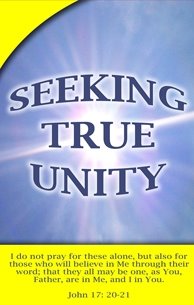
Tomorrow morning Dale Jenkins and I will put the last touches on a new class book designed for teens or adults. We are having 5,000 of these 64-page books printed. Seven preachers (Dale Jenkins, Jeff Jenkins, Mike Baker, Steve Higginbotham, Mike Greene, Wayne Hatcher and I) have been working on this project for months. Due to the kindness of the Horse Cave, KY, congregation, we will be able to get this book out within the next few weeks.
Every church, every elder, every class, and every group should consider the message presented in this book. It reveals the will of God and the path to true, Biblical unity.
The church was torn to shreds from 1860-1900 over the issue of instrumental music. You'll recall that the federal government's census bureau recognized the division between churches of Christ and the Disciples of Christ/Christian Church in that year. This book deals with the problems associated with that division and the current threats to Biblical unity today.
We believe that going back to the Bible and refusing to give in to the innovation and presumption of our day is the only course for the unity for which Jesus prayed in John 17. It is man-made religion that divides, and we believe the only way to find unity is to divest ourselves of any and all man-made religion.
The book will be very reasonably priced, and I will keep you informed about where they are available in coming days!
God bless,
phil
Steve Higginbotham of Glasgow, KY, will be the contact person to buy copies of this important book.
Wednesday, September 06, 2006
A Letter from Jeff Dahmer
While going through my files, I found a copy of this letter my uncle Curt Booth sent to me. It is postmarked April 4, 1994 from Madison, Wisconsin. I remember how excited and joyful Curt was when he called me the day he got the letter!
"Dear Mr. Booth,
Hello, how are you today; fine I hope! Thank you very much for sending me the 'WBS' introductory lesson and Bible; that was very kind of you! I mailed the completed lesson to Mrs. Stafford, so she should have it by now. Also, about a week after I received your package, a 'Mrs. Mott' from Arlington, VA. sent me the WBS 'correspondence course,' and the 'advanced course' booklets. I filled out both of them, and mailed them off to her to be graded. So, I've now take the complete course, but I still have one problem. This prison does not have a baptismal tank, and Mr. Burkum; the prison chaplain, isnot sure if he can find someone to bring a tank in and baptize me. This has me very concerned! Would you be willing to help find someone to baptize me? I've taken all of the other steps; now I need and want to be baptized.
Well, I hope that this letter find's you well and in good health. God Bless You!
Jeff Dahmer
Columbia Corr. Inst.
2925 Columbia Dr.
Portage, WI. 53901-0900"
What a recommendation for the gospel and for WBS. So far as I know, brother Dahmer was baptized and remained faithful until his death later that year.
Phil Sanders
"Dear Mr. Booth,
Hello, how are you today; fine I hope! Thank you very much for sending me the 'WBS' introductory lesson and Bible; that was very kind of you! I mailed the completed lesson to Mrs. Stafford, so she should have it by now. Also, about a week after I received your package, a 'Mrs. Mott' from Arlington, VA. sent me the WBS 'correspondence course,' and the 'advanced course' booklets. I filled out both of them, and mailed them off to her to be graded. So, I've now take the complete course, but I still have one problem. This prison does not have a baptismal tank, and Mr. Burkum; the prison chaplain, isnot sure if he can find someone to bring a tank in and baptize me. This has me very concerned! Would you be willing to help find someone to baptize me? I've taken all of the other steps; now I need and want to be baptized.
Well, I hope that this letter find's you well and in good health. God Bless You!
Jeff Dahmer
Columbia Corr. Inst.
2925 Columbia Dr.
Portage, WI. 53901-0900"
What a recommendation for the gospel and for WBS. So far as I know, brother Dahmer was baptized and remained faithful until his death later that year.
Phil Sanders
On being written up....
A dear friend of mine recently alerted me of an article in a brotherhood periodical, which carried my name. The author, whom I do not know, apparently had done a lot of research on me in order to criticize the Spiritual Sword and Alan Highers for allowing me to write. I was placed in his company and Dan Winkler's (my dear brother since our days at OCC in the early 70s). If this is a reason for guilt, then I gladly give my allegiance to both.
As I mentioned, I do not know the author of the article. He certainly did not honor me with a phone call to make sure that his facts were correct. He did not love me enough to rebuke me privately first for my error. He did not care enough for my soul, Alan's soul, or Dan's soul to speak to any of us before he wrote an article that went nationwide.
As to his charges against me over the Christian Chronicle article, I have answered them in earlier posts to this blog. He does not seem to realize that I don't fellowship these brethren. You'd think by my calling them brothers that I endorsed their use of the instrument! This is not judging with righteous judgment.
I was criticized for endorsing false teachers because the website (www.God-answers.org) had a link to a site where false teachers sometimes write. My critic did not bother to note the obvious disclaimer evident on the link. Such criticism is either out of ignorance or out of careless research. In either case the criticism was patently false.
When people write others up unfairly, they speak more about the character of their own heart than the people they criticize. When the Pharisees condemned Jesus for not washing his hands (according to their man-made traditions), He spoke of the mouth revealing what was in the heart (Matt. 15:1-20).
When tempted to speak negatively of another, let us ask:
As I mentioned, I do not know the author of the article. He certainly did not honor me with a phone call to make sure that his facts were correct. He did not love me enough to rebuke me privately first for my error. He did not care enough for my soul, Alan's soul, or Dan's soul to speak to any of us before he wrote an article that went nationwide.
As to his charges against me over the Christian Chronicle article, I have answered them in earlier posts to this blog. He does not seem to realize that I don't fellowship these brethren. You'd think by my calling them brothers that I endorsed their use of the instrument! This is not judging with righteous judgment.
I was criticized for endorsing false teachers because the website (www.God-answers.org) had a link to a site where false teachers sometimes write. My critic did not bother to note the obvious disclaimer evident on the link. Such criticism is either out of ignorance or out of careless research. In either case the criticism was patently false.
When people write others up unfairly, they speak more about the character of their own heart than the people they criticize. When the Pharisees condemned Jesus for not washing his hands (according to their man-made traditions), He spoke of the mouth revealing what was in the heart (Matt. 15:1-20).
When tempted to speak negatively of another, let us ask:
- Is it true?
- Is it fair?
- Is it how I'd want to be treated?
- Is it kind?
- Will it help him/her go to heaven?
If we cannot answer yes to all of these, then perhaps it's best we keep our mouths shut.
phil
Monday, September 04, 2006
We Need Sound and Faithful Preachers
There are about 13,000 congregations of the churches of Christ in the United States. The many colleges, universities, and schools of preaching among us are graduating about 300 or so preachers per year, but the sad reality is that we are losing about 600 preachers per year. These come from some surveys taken about six years ago, but I don't know that things have changed much since then.
Why are we losing preachers? Some die, some retire, some leave the ministry, and some fall away. Whatever the reason, the service these men rendered is no longer available.
If we lose 300 preachers per year, we will lose 600 in two years, and 3,000 in a decade. The smaller churches who can hardly afford ministers will likely suffer the most. Churches in the areas where New Testament Christians are scarce have been crying for preachers for some time.
Add to this the problem that many of the preachers trained in some of our universities, frankly, do not believe what the congregation believes about many fundamental doctrines. Much of this disagreement arises from a lack of belief in the inerrancy of Scripture. This shred of doubt leaves such questions in the mind of those who serve that they are willing to compromise even the most clear teaching of Scripture. Some examples:
Why are we losing preachers? Some die, some retire, some leave the ministry, and some fall away. Whatever the reason, the service these men rendered is no longer available.
If we lose 300 preachers per year, we will lose 600 in two years, and 3,000 in a decade. The smaller churches who can hardly afford ministers will likely suffer the most. Churches in the areas where New Testament Christians are scarce have been crying for preachers for some time.
Add to this the problem that many of the preachers trained in some of our universities, frankly, do not believe what the congregation believes about many fundamental doctrines. Much of this disagreement arises from a lack of belief in the inerrancy of Scripture. This shred of doubt leaves such questions in the mind of those who serve that they are willing to compromise even the most clear teaching of Scripture. Some examples:
- some are saying that people sprinkled as infants are nonetheless baptized Scripturally, because God's grace covers our ignorance.
- the use of instrumental music in Christian worship is a non-issue
- the Lord's supper should not be reserved for the Lord's Day but may be partaken at any time
- the Lord's church is not distinctive but should be considered as a denomination--just one among many
- the Lord's order of male leadership in worship should be abandoned so as to have gender equity
I have heard all these things from the lips of men who serve as preachers and who have been educated by our universities. Whatever they believe, they do not believe that the patterns taught in Scripture are worthy of our adherence. They oppose rigid patternism as if it were Pharisaism rather than faithful obedience to the text itself. They have not yet replaced the patterns with their own hermeneutic but have launched themselves into a sea of pluralism, where the truth of Scripture falls to desires of the masses.
So when we speak of needing preachers, we mean "faithful" preachers who will preach the Word without compromise and doubt. We need men who will not leave the people whom they serve ignorant about the truth of the gospel. We need men who will stand tall for what they believe and will not back down.
Jesus did not take it back when the people left him (John 6:66-69). We must not listen to the "church growth" experts who deceive us when they say that we must "change" (to suit them) or "die." We will die only if we prove faithless to the truth and to the Lord. We can deceive ourselves into thinking that the crowds we have amassed show that we are doing something "right." But numbers do not prove faithfulness or that one is "right." Faithfulness is more treasured in God's eyes. If you do not believe this, ask these ten men:
Shammua the son of Zaccur; Shaphat the son of Hori; Igal the son of Joseph; Palti the son of Raphu; Gaddiel the son of Sodi; Gaddi the son of Susi; Ammiel the son of Gemalli; Sethur the son of Michael; Nahbi the son of Vophsi; Geuel the son of Machi. These were the names of the men whom Moses sent to spy out the land. They brought back the popular but bad report about the land of Israel. We don't know anything else about them.
But the faithful Joshua and Caleb, we remember. Faithful men who will not flinch in the face of the enemy--that is what we need, and the Lord will be with us.
for the cause of Christ,
Phil
Thursday, August 31, 2006
A Growing Problem in Churches--Pornography
Ephesians 5:3-12,
“But immorality or any impurity or greed must not even be named among you, as is proper among saints; and there must be no filthiness and silly talk, or coarse jesting, which are not fitting, but rather giving of thanks. For this you know with certainty, that no immoral or impure person or covetous man, who is an idolater, has an inheritance in the kingdom of Christ and God. Let no one deceive you with empty words, for because of these things the wrath of God comes upon the sons of disobedience. Therefore do not be partakers with them; for you were formerly darkness, but now you are Light in the Lord; walk as children of Light (for the fruit of the Light consists in all goodness and righteousness and truth), trying to learn what is pleasing to the Lord. Do not participate in the unfruitful deeds of darkness, but instead even expose them; for it is disgraceful even to speak of the things which are done by them in secret.”
Some Startling Statistics
Responses from a recent poll indicated that sexual addictive behaviors are not foreign inside churches and a large number of women in the pews struggle with the same temptations.
According to a poll by ChristiaNet.com and Second Glance Ministries, half of all Christian men are addicted to pornography. While the statistics for men are nothing new, the poll found 20 percent of all Christian women to be addicts to pornography. Additional findings showed
· 60 percent of the women respondents admitted to having significant struggles with lust,
· 40 percent admitted to being involved in sexual sin in the past year,
· 20 percent of the church-going female participants struggled with looking at pornography on an ongoing basis.
Approximately 40 million people in the United States are sexually involved with the InternetExposing Porn: Science, Religion, and the New Addiction, Paul Strand.
Sex is the number 1 topic searched on the Internet. Overdosing on Porn, Rebecca Hagelin. www.worldandi.com, March, 2004.
34 percent of churchgoing women said they have intentionally visited porn websites onlineInternet porn a guy thing? Not really, online rating service says, Mark O’Keefe. The Charlotte Observer.
· In 2004, there were 372 million pornographic Web pages, 2.5 billion emails (8% of total emails), 100 thousand Web sites offering illegal child pornography, and 72 million annual worldwide visitors to pornographic websites (Internet Pornography Statistics. Internet Filter Review, 2004).
· 70% of 18 to 24 year old men visit pornographic sites in a typical month. 66% of men in their 20s and 30s also report being regular users of pornography. First-person: the culture of pornography, R. Albert Mohler, Jr., Baptist Press, 28 December 2005.
· 20 percent of men and 13% of women admit to accessing pornography at work (Dec. 2004)
· Five percent of pastors and 14% or laity have committed adultery. The primary reason was marital dissatisfaction. Christians and Sex: Sexual Issues in the Church. Christianity Today, 2003.
· For every 10 men in church, 5 are struggling with pornography (The Call to Biblical Manhood. Man in the Mirror, 6 July, 2004).
· Median age for the first use of pornography: boys: 11-13 girls: 12-14 (Your Children & Pornography: A guide for Parents, Tom Buford. Tommera Press, 2001).
· Almost half (47.78 percent) of families said pornography is a problem in their homeFocus on the Family Poll, 1 October, 2003.
Internet Pornography was a factor in as many as 25% of divorces in 2003
· There are 800 million rentals each year of adult videos and DVDs (Overdosing on Porn, Rebecca Hagelin. www.worldandi.com, March, 2004).
· 11,000 adult movies are produced each year (Overdosing on Porn, Rebecca Hagelin. www.worldandi.com, March, 2004).
Patrick Means, Men’s Secret Wars, pages 132-133
Men’s Confidential Survey polled 350 mean from more than a dozen evangelical denominations. Ten percent were ministers, of the remaining 90 percent most held leadership positions.
· 64 percent of pastors or church staff struggled with sexual addiction or compulsion, including but not limited to the use of pornography, compulsive masturbation, or other secret sexual activity.
· Twenty-five percent admitted to having sexual intercourse with someone besides their wife while married, and after they became a Christian.
· Another 14 percent admitted some form of sexual contact short of intercourse outside of their marriage since becoming a Christian.
Out of 81 pastors surveyed (74 males 7 female), 98% were exposed to porn; 43% intentionally accessed a sexually explicit website National Coalition survey of pastors. “Seattle.” April 2000.
Referring to I Peter 1:13-21, Stephen Olford notes God's command for His people to "be holy, because I am holy." This command "does not leave any loopholes." "There is no comfort zone there," Olford adds. "Failure to obey is sin, and sin is opposed to holiness." Olford says preachers should be determined to be holy, that it should be an act of will to be in obedience to God. Noting Saul's disobedience in II Kings, Olford says that nothing pleases God as much as obedience. He compared the preacher's willful holiness to that of the Levite priests of the Old Testament, who were not allowed into God's presence unless they were clean. If they failed to do so, they died. "Do you know any Levite to have entered the temple without washing his hands and washing his feet?" Olford asks. "How can I take the Bible into my hand; how can I take the posture to preach without purity?"
Remind yourself regularly of the damaging consequences of moral failure.
When you are tempted, think like this: minimize the pleasure and maximize the consequences. Hebrews 11:25 says, There is pleasure in sin for a season.
Reasons to Maintain Moral Purity
The following is adapted from a list developed by a minister* who would review it whenever he felt vulnerable to sexual temptation. He cited the following as reminders of the negative consequences a wrong moral choice could produce.
• Grieving the Lord who redeemed me.
• Dragging His sacred name into the mud.
• One day having to look Jesus, the Righteous Judge, in the face and give an account for my actions.
• Following in the footsteps of those whose immorality forfeited or crippled their ministries.
• Inflicting untold hurt on my best friend, my wife.
• Losing my wife's respect and trust.
• Hurting my beloved children.
• Destroying my example and credibility with my children, and nullifying both present and future efforts to teach them to obey God ("Why listen to a man who betrayed Mom and us?").
• If my blindness should continue or my wife be unable to forgive, perhaps losing my wife and my children forever.
• Causing shame to my family ("Why isn't Daddy a preacher any more?").
• Losing self-respect.
• Creating a form of guilt awfully hard to shake. Even though God would forgive me, would I forgive myself?
• Forming memories and flashbacks that could plague future intimacy with my wife.
• Wasting years of ministry training and experience for a long time, maybe permanently.
• Forfeiting the effect of years of witnessing to other family members and reinforcing their distrust for ministers. Perhaps contributing to the hardening of their hearts.
• Undermining the faithful example and hard work of other Christians in our community.
• Bringing great pleasure to Satan, the enemy of God and all that is good
• Heaping judgment and endless difficulty on the person with whom I committed adultery.
• Possibly bearing the physical consequences of such diseases as gonorrhea, syphilis, Chlamydia, herpes, and AIDS; perhaps infecting my wife, or in the case of AIDS, even causing her death.
• Possibly causing pregnancy, with the personal and financial implications, including a lifelong reminder of my sin.
• Bringing hurt to my fellow ministers.
• Bringing hurt to my friends, especially those I've led to Christ and discipled.
• Invoking shame and lifelong embarrassment upon myself.
* Randy Alcorn, "Strategies to Keep From Falling" Leadership, Winter 1988.
Where can I get help for my growing problem with Internet pornography?
Pornography is a growing concern among ministers. Almost one of every seven calls they receive on Pastoral Care Line at Focus on the Family is regarding Internet pornography. Some are just dabbling, some are headed down the road to addiction and some are crying for help trying to break free from the addiction.
Churches of Christ are not immune from this problem.
We are seeing this problem as a growing epidemic nationally. There are several factors that make this a particularly pervasive sin:
· Thousands of pornographic web sites are being added each year.
· Internet surfing is very private. Many offenses occur in the preacher's study at church during working hours.
· Internet pornography web sites are too easily accessible.
· Men are the most vulnerable to visual images.
SUGGESTIONS FOR DEALING WITH THIS DANGEROUS SIN:
· Find another man with whom you can open up and be vulnerable. If you are married, you really need to talk with your spouse. Many have not told anyone about their struggles. Read Psalm 32:3-5 for an accurate picture of the challenges we face when we keep silent about our sin.
· The church needs someone courageous enough to work with struggling preachers in a confidential way.
Change our Beliefs that lead to weakness
Old Core Beliefs
New Beliefs
I am basically a bad, unworthy person
I am a worthwhile person, with positive self-esteem
No one would love me as I am
I am loved and accepted by people who know me as I am
My needs are never going to be met if I have to depend on someone else (my wife).
My needs can be met by others if I let them know what I need.
Sex is my most important need (or the most important sign of love).
Sex is but one expression of my need and care for others. The nurturing that I long for can come from a variety of experiences.
Eliminate stress from your life. Addiction is often connected to high performance demands.
Find support in another individual or group
· It would be wise to purchase an Internet software filter. Concord Road Church of Christ has a deacon who checks where ministers and staff go online.
· Get into an accountability relationship. Few preachers have close friends -- folks with whom they can be totally honest and vulnerable. Ask God to help you discern who you should attempt to meet with on a regular basis for prayer, confession and disclosure.
· Immerse yourself in the word of God and prayer. Meditate on such passages as
· Psalms 119:9-11;
· Philippians 4:8;
· Romans 6 and 7;
· Hebrews 12:1-2;
· Romans 12:1-2;
· Psalm 15.
· We must kill the beast inside us. Romans 8:12-13
“But immorality or any impurity or greed must not even be named among you, as is proper among saints; and there must be no filthiness and silly talk, or coarse jesting, which are not fitting, but rather giving of thanks. For this you know with certainty, that no immoral or impure person or covetous man, who is an idolater, has an inheritance in the kingdom of Christ and God. Let no one deceive you with empty words, for because of these things the wrath of God comes upon the sons of disobedience. Therefore do not be partakers with them; for you were formerly darkness, but now you are Light in the Lord; walk as children of Light (for the fruit of the Light consists in all goodness and righteousness and truth), trying to learn what is pleasing to the Lord. Do not participate in the unfruitful deeds of darkness, but instead even expose them; for it is disgraceful even to speak of the things which are done by them in secret.”
Some Startling Statistics
Responses from a recent poll indicated that sexual addictive behaviors are not foreign inside churches and a large number of women in the pews struggle with the same temptations.
According to a poll by ChristiaNet.com and Second Glance Ministries, half of all Christian men are addicted to pornography. While the statistics for men are nothing new, the poll found 20 percent of all Christian women to be addicts to pornography. Additional findings showed
· 60 percent of the women respondents admitted to having significant struggles with lust,
· 40 percent admitted to being involved in sexual sin in the past year,
· 20 percent of the church-going female participants struggled with looking at pornography on an ongoing basis.
Approximately 40 million people in the United States are sexually involved with the InternetExposing Porn: Science, Religion, and the New Addiction, Paul Strand.
Sex is the number 1 topic searched on the Internet. Overdosing on Porn, Rebecca Hagelin. www.worldandi.com, March, 2004.
34 percent of churchgoing women said they have intentionally visited porn websites onlineInternet porn a guy thing? Not really, online rating service says, Mark O’Keefe. The Charlotte Observer.
· In 2004, there were 372 million pornographic Web pages, 2.5 billion emails (8% of total emails), 100 thousand Web sites offering illegal child pornography, and 72 million annual worldwide visitors to pornographic websites (Internet Pornography Statistics. Internet Filter Review, 2004).
· 70% of 18 to 24 year old men visit pornographic sites in a typical month. 66% of men in their 20s and 30s also report being regular users of pornography. First-person: the culture of pornography, R. Albert Mohler, Jr., Baptist Press, 28 December 2005.
· 20 percent of men and 13% of women admit to accessing pornography at work (Dec. 2004)
· Five percent of pastors and 14% or laity have committed adultery. The primary reason was marital dissatisfaction. Christians and Sex: Sexual Issues in the Church. Christianity Today, 2003.
· For every 10 men in church, 5 are struggling with pornography (The Call to Biblical Manhood. Man in the Mirror, 6 July, 2004).
· Median age for the first use of pornography: boys: 11-13 girls: 12-14 (Your Children & Pornography: A guide for Parents, Tom Buford. Tommera Press, 2001).
· Almost half (47.78 percent) of families said pornography is a problem in their homeFocus on the Family Poll, 1 October, 2003.
Internet Pornography was a factor in as many as 25% of divorces in 2003
· There are 800 million rentals each year of adult videos and DVDs (Overdosing on Porn, Rebecca Hagelin. www.worldandi.com, March, 2004).
· 11,000 adult movies are produced each year (Overdosing on Porn, Rebecca Hagelin. www.worldandi.com, March, 2004).
Patrick Means, Men’s Secret Wars, pages 132-133
Men’s Confidential Survey polled 350 mean from more than a dozen evangelical denominations. Ten percent were ministers, of the remaining 90 percent most held leadership positions.
· 64 percent of pastors or church staff struggled with sexual addiction or compulsion, including but not limited to the use of pornography, compulsive masturbation, or other secret sexual activity.
· Twenty-five percent admitted to having sexual intercourse with someone besides their wife while married, and after they became a Christian.
· Another 14 percent admitted some form of sexual contact short of intercourse outside of their marriage since becoming a Christian.
Out of 81 pastors surveyed (74 males 7 female), 98% were exposed to porn; 43% intentionally accessed a sexually explicit website National Coalition survey of pastors. “Seattle.” April 2000.
Referring to I Peter 1:13-21, Stephen Olford notes God's command for His people to "be holy, because I am holy." This command "does not leave any loopholes." "There is no comfort zone there," Olford adds. "Failure to obey is sin, and sin is opposed to holiness." Olford says preachers should be determined to be holy, that it should be an act of will to be in obedience to God. Noting Saul's disobedience in II Kings, Olford says that nothing pleases God as much as obedience. He compared the preacher's willful holiness to that of the Levite priests of the Old Testament, who were not allowed into God's presence unless they were clean. If they failed to do so, they died. "Do you know any Levite to have entered the temple without washing his hands and washing his feet?" Olford asks. "How can I take the Bible into my hand; how can I take the posture to preach without purity?"
Remind yourself regularly of the damaging consequences of moral failure.
When you are tempted, think like this: minimize the pleasure and maximize the consequences. Hebrews 11:25 says, There is pleasure in sin for a season.
Reasons to Maintain Moral Purity
The following is adapted from a list developed by a minister* who would review it whenever he felt vulnerable to sexual temptation. He cited the following as reminders of the negative consequences a wrong moral choice could produce.
• Grieving the Lord who redeemed me.
• Dragging His sacred name into the mud.
• One day having to look Jesus, the Righteous Judge, in the face and give an account for my actions.
• Following in the footsteps of those whose immorality forfeited or crippled their ministries.
• Inflicting untold hurt on my best friend, my wife.
• Losing my wife's respect and trust.
• Hurting my beloved children.
• Destroying my example and credibility with my children, and nullifying both present and future efforts to teach them to obey God ("Why listen to a man who betrayed Mom and us?").
• If my blindness should continue or my wife be unable to forgive, perhaps losing my wife and my children forever.
• Causing shame to my family ("Why isn't Daddy a preacher any more?").
• Losing self-respect.
• Creating a form of guilt awfully hard to shake. Even though God would forgive me, would I forgive myself?
• Forming memories and flashbacks that could plague future intimacy with my wife.
• Wasting years of ministry training and experience for a long time, maybe permanently.
• Forfeiting the effect of years of witnessing to other family members and reinforcing their distrust for ministers. Perhaps contributing to the hardening of their hearts.
• Undermining the faithful example and hard work of other Christians in our community.
• Bringing great pleasure to Satan, the enemy of God and all that is good
• Heaping judgment and endless difficulty on the person with whom I committed adultery.
• Possibly bearing the physical consequences of such diseases as gonorrhea, syphilis, Chlamydia, herpes, and AIDS; perhaps infecting my wife, or in the case of AIDS, even causing her death.
• Possibly causing pregnancy, with the personal and financial implications, including a lifelong reminder of my sin.
• Bringing hurt to my fellow ministers.
• Bringing hurt to my friends, especially those I've led to Christ and discipled.
• Invoking shame and lifelong embarrassment upon myself.
* Randy Alcorn, "Strategies to Keep From Falling" Leadership, Winter 1988.
Where can I get help for my growing problem with Internet pornography?
Pornography is a growing concern among ministers. Almost one of every seven calls they receive on Pastoral Care Line at Focus on the Family is regarding Internet pornography. Some are just dabbling, some are headed down the road to addiction and some are crying for help trying to break free from the addiction.
Churches of Christ are not immune from this problem.
We are seeing this problem as a growing epidemic nationally. There are several factors that make this a particularly pervasive sin:
· Thousands of pornographic web sites are being added each year.
· Internet surfing is very private. Many offenses occur in the preacher's study at church during working hours.
· Internet pornography web sites are too easily accessible.
· Men are the most vulnerable to visual images.
SUGGESTIONS FOR DEALING WITH THIS DANGEROUS SIN:
· Find another man with whom you can open up and be vulnerable. If you are married, you really need to talk with your spouse. Many have not told anyone about their struggles. Read Psalm 32:3-5 for an accurate picture of the challenges we face when we keep silent about our sin.
· The church needs someone courageous enough to work with struggling preachers in a confidential way.
Change our Beliefs that lead to weakness
Old Core Beliefs
New Beliefs
I am basically a bad, unworthy person
I am a worthwhile person, with positive self-esteem
No one would love me as I am
I am loved and accepted by people who know me as I am
My needs are never going to be met if I have to depend on someone else (my wife).
My needs can be met by others if I let them know what I need.
Sex is my most important need (or the most important sign of love).
Sex is but one expression of my need and care for others. The nurturing that I long for can come from a variety of experiences.
Eliminate stress from your life. Addiction is often connected to high performance demands.
Find support in another individual or group
· It would be wise to purchase an Internet software filter. Concord Road Church of Christ has a deacon who checks where ministers and staff go online.
· Get into an accountability relationship. Few preachers have close friends -- folks with whom they can be totally honest and vulnerable. Ask God to help you discern who you should attempt to meet with on a regular basis for prayer, confession and disclosure.
· Immerse yourself in the word of God and prayer. Meditate on such passages as
· Psalms 119:9-11;
· Philippians 4:8;
· Romans 6 and 7;
· Hebrews 12:1-2;
· Romans 12:1-2;
· Psalm 15.
· We must kill the beast inside us. Romans 8:12-13
Monday, August 28, 2006
Christian Baptism
We can all learn a little more about baptism. Baptism is the culmination of our obedience to the gospel. Baptism without faith is useless (Heb. 11:6), without repentance is futile (Luke 13:3; Acts 2:38), and without love is empty (Mt. 22:37-40). It does little good to baptize anyone who doesn’t understand what he is doing or why he is doing it. Baptism is a willful, knowledgeable act of faith and obedience toward God.
Christian baptism takes place by the authority of Jesus Christ. Jesus has all authority and has authorized His followers to preach and to baptize (Mt. 28:18-20). When we are baptized, we act in the name of Jesus Christ, i.e., by His authority. Whatever we do in word or deed, Christians are to do everything in the name of Jesus Christ (Acts 2:38; Col. 3:17).
We are baptized into the name of the Father and the Son and the Holy Spirit (Mt. 28:19). In Christian baptism one comes into the possession, protection, and blessing of God (Rom. 6:4; 1 Cor. 12:13; Gal. 3:27).
We are united with Christ in His death, burial and resurrection. We are crucified with Christ in baptism (Rom. 6:4-7) so that our body of sin may be done away with. We are raised with Christ to walk in newness of life. Baptism is the time of transformation from death to life, from sin to salvation, from slavery to sin to slavery to righteousness (Rom. 6:16-18).
Baptism is passive on the part of man and active on the part of God (Col. 2:12-13). Baptism is an act of faith in the working of God. In baptism, God works on us to cleanse us from sin (Acts 22:16), to cause us to be born again (Tit. 3:3-7), to add us to His church (Acts 2:41, 47), and to raise us up to walk in newness of life (Rom. 6:4).
Baptism is the time the blood of Christ looses us from sin (Rev. 1:5; Eph. 1:7). There is no forgiveness without the blood of Christ (Heb. 9:22). Since we are baptized into the death of Christ (Rom. 6:3), baptism (unlike anything else) unites us with Him in His sacrifice on the cross.
The New Testament records show that people did not put off their baptism until a later date (Acts 2:41; 8:12; 8:34-39; 16:33). They were baptized immediately because they knew their salvation depended upon obedience.
What is hindering you from baptism? What are you waiting for? Arise and be baptized and wash away your sins (Acts 22:16).
kindly,
Phil
Christian baptism takes place by the authority of Jesus Christ. Jesus has all authority and has authorized His followers to preach and to baptize (Mt. 28:18-20). When we are baptized, we act in the name of Jesus Christ, i.e., by His authority. Whatever we do in word or deed, Christians are to do everything in the name of Jesus Christ (Acts 2:38; Col. 3:17).
We are baptized into the name of the Father and the Son and the Holy Spirit (Mt. 28:19). In Christian baptism one comes into the possession, protection, and blessing of God (Rom. 6:4; 1 Cor. 12:13; Gal. 3:27).
We are united with Christ in His death, burial and resurrection. We are crucified with Christ in baptism (Rom. 6:4-7) so that our body of sin may be done away with. We are raised with Christ to walk in newness of life. Baptism is the time of transformation from death to life, from sin to salvation, from slavery to sin to slavery to righteousness (Rom. 6:16-18).
Baptism is passive on the part of man and active on the part of God (Col. 2:12-13). Baptism is an act of faith in the working of God. In baptism, God works on us to cleanse us from sin (Acts 22:16), to cause us to be born again (Tit. 3:3-7), to add us to His church (Acts 2:41, 47), and to raise us up to walk in newness of life (Rom. 6:4).
Baptism is the time the blood of Christ looses us from sin (Rev. 1:5; Eph. 1:7). There is no forgiveness without the blood of Christ (Heb. 9:22). Since we are baptized into the death of Christ (Rom. 6:3), baptism (unlike anything else) unites us with Him in His sacrifice on the cross.
The New Testament records show that people did not put off their baptism until a later date (Acts 2:41; 8:12; 8:34-39; 16:33). They were baptized immediately because they knew their salvation depended upon obedience.
What is hindering you from baptism? What are you waiting for? Arise and be baptized and wash away your sins (Acts 22:16).
kindly,
Phil
Tuesday, August 22, 2006
When Dark Days Come
“I again saw under the sun that the race is not to the swift and the battle is not to the warriors, and neither is bread to the wise nor wealth to the discerning nor favor to men of ability; for time and chance overtake them all. Moreover, man does not know his time: like fish caught in a treacherous net and birds trapped in a snare, so the sons of men are ensnared at an evil time when it suddenly falls on them” (Ecclesiastes 9:11-12).
It is not a question of if dark days come but when. Time and chance overtake us all. It usually happens when we least expect it. Tragedy is usually an interruption that takes our breath away and leaves us stumbling through the motions. Befuddled and distressed, we are never more aware of our need for God and His love.
When tragedy strikes, turn through the pages of your Bible. Find those marked verses that give hope and promise. Too often we read those passages and smile. Now read them and claim them as your own. Believe them with all your heart. God never bears false witness; He is the God of truth.
When tragedy strikes, turn your heart to God not away from Him. He is not unaware of your pain and confusion. You can be assured that not a bird falls outside the knowledge of God. He sees and knows every detail. He hasn’t abandoned you, but He can and does take the hurts of life and make good out of them (Rom. 8:28).
When tragedy strikes, pray more earnestly. When the Lord Jesus faced His harshest night, He spent it praying. He cried out for the will of God to be done. His prayer that fateful night has blessed humanity for two thousand years.
When tragedy strikes, weep in your loss but rejoice anyway in the Lord and in the love of good people. Remember that Paul’s advice, “Rejoice in the Lord always, and again I will say, rejoice” came from a prison cell. Paul did not know whether he would live or die (Phil. 1:21-23; 4:4). He could rejoice, however, in the wonderful promises of God. Whether we live or die, we are the Lord’s (Rom. 14:7-9).
It is not a question of if dark days come but when. Time and chance overtake us all. It usually happens when we least expect it. Tragedy is usually an interruption that takes our breath away and leaves us stumbling through the motions. Befuddled and distressed, we are never more aware of our need for God and His love.
When tragedy strikes, turn through the pages of your Bible. Find those marked verses that give hope and promise. Too often we read those passages and smile. Now read them and claim them as your own. Believe them with all your heart. God never bears false witness; He is the God of truth.
When tragedy strikes, turn your heart to God not away from Him. He is not unaware of your pain and confusion. You can be assured that not a bird falls outside the knowledge of God. He sees and knows every detail. He hasn’t abandoned you, but He can and does take the hurts of life and make good out of them (Rom. 8:28).
When tragedy strikes, pray more earnestly. When the Lord Jesus faced His harshest night, He spent it praying. He cried out for the will of God to be done. His prayer that fateful night has blessed humanity for two thousand years.
When tragedy strikes, weep in your loss but rejoice anyway in the Lord and in the love of good people. Remember that Paul’s advice, “Rejoice in the Lord always, and again I will say, rejoice” came from a prison cell. Paul did not know whether he would live or die (Phil. 1:21-23; 4:4). He could rejoice, however, in the wonderful promises of God. Whether we live or die, we are the Lord’s (Rom. 14:7-9).
We Lost Bernice Dodgen
There are few things in life so wonderful as people who are good. Bernice was so very good. I could not ask for a better mother-in-law. She made our lives so happy and filled with love and support and good things. She was a model for how to live and love the simple and good life.
Bernice had a garden in back with many bird-feeders and flowers. We saw peacocks, deer, squirrels, rabbits, raccoons, quail, and even a bobcat. I did not mention that we had birds of more than 50 varieties right before our eyes. The Lazy J was and is a special place filled with love. The heart of that place was Jack and Bernice; now they are both with the Lord.
Christmas time was magic. We had a wonderfully large family of more than 30 who gathered. Bernice always made the dessert room full with endless treats of every kind: pies, cakes, cookies and candies. We even had Braum's chocolate chip ice cream in the freezer (she knew that was my favorite).
Bernice was sound in her faith, capable in her study, and committed to her Lord. Her children rise and call her blessed. They praise her name because of what she was and is in our hearts.
We will always love you Jack and Bernice. This poem I wrote is dedicated to their memory:
Into Your Hands
December 2, 2003, 9:22 AM
Into Your hands, Father, into Your hands,
I commit my spirit into Your hands.
All I am and have I yield to You.
Your love and grace will bear me through,
For You know what's best and what I should do,
So I leave my soul within Your hands.
{Chorus}
In His body He bore our transgressions;
In the garden He gave in to Your plans.
On the cross He committed His spirit,
So we can live forever in Your hands.
Into Your hands, Father, into Your hands,
I cast all my burdens into Your hands,
All my stress and pain I give to You.
Your love and grace will bear me through,
For You know what's best and what I should do,
So I cast my cares into Your hands.
{Chorus}
Into Your hands, Father, into Your hands,
I cast all my sins into Your hands,
All I've said and done I bring to You.
Your love and grace will bear me through,
For You have told me what I must do,
So I cast my sins into Your hands.
{Chorus}
Into Your hands, Father, into Your hands,
I commit my spirit into Your hands.
My life on earth I leave for You.
Your love and grace will bear me through,
For You have a place I'm going to,
So I leave my soul within Your hands.
{Chorus}
Bernice had a garden in back with many bird-feeders and flowers. We saw peacocks, deer, squirrels, rabbits, raccoons, quail, and even a bobcat. I did not mention that we had birds of more than 50 varieties right before our eyes. The Lazy J was and is a special place filled with love. The heart of that place was Jack and Bernice; now they are both with the Lord.
Christmas time was magic. We had a wonderfully large family of more than 30 who gathered. Bernice always made the dessert room full with endless treats of every kind: pies, cakes, cookies and candies. We even had Braum's chocolate chip ice cream in the freezer (she knew that was my favorite).
Bernice was sound in her faith, capable in her study, and committed to her Lord. Her children rise and call her blessed. They praise her name because of what she was and is in our hearts.
We will always love you Jack and Bernice. This poem I wrote is dedicated to their memory:
Into Your Hands
December 2, 2003, 9:22 AM
Into Your hands, Father, into Your hands,
I commit my spirit into Your hands.
All I am and have I yield to You.
Your love and grace will bear me through,
For You know what's best and what I should do,
So I leave my soul within Your hands.
{Chorus}
In His body He bore our transgressions;
In the garden He gave in to Your plans.
On the cross He committed His spirit,
So we can live forever in Your hands.
Into Your hands, Father, into Your hands,
I cast all my burdens into Your hands,
All my stress and pain I give to You.
Your love and grace will bear me through,
For You know what's best and what I should do,
So I cast my cares into Your hands.
{Chorus}
Into Your hands, Father, into Your hands,
I cast all my sins into Your hands,
All I've said and done I bring to You.
Your love and grace will bear me through,
For You have told me what I must do,
So I cast my sins into Your hands.
{Chorus}
Into Your hands, Father, into Your hands,
I commit my spirit into Your hands.
My life on earth I leave for You.
Your love and grace will bear me through,
For You have a place I'm going to,
So I leave my soul within Your hands.
{Chorus}
Thursday, July 27, 2006
Changes, changes, changes
Over the last few weeks, my wife's family has been tending to my wonderful mother-in-law, Bernice Dodgen, who remains in CCU in a hospital in Oklahoma City. I have such a great love not only for Jackie but for all her family. Bernice has been such a blessing to all our lives. We continue to pray for her comfort and that she will be restored to health.
We ask your prayers for her and all the family who dearly love her. It is a most difficult time.
We ask your prayers for her and all the family who dearly love her. It is a most difficult time.
Monday, July 17, 2006
Fellowship, Approval, and Repentance
It should not seem odd that we ask sinners to repent. Jesus did. And if they did not repent, he predicted they would perish (Luke 13:3,5). Repentance is a change of heart that leads to a change of behavior.
Were we to preach righteousness to a drunkard, we would expect him to repent. In his repentance, he would truly sorrow for his sin, long for righteousness and to please God, and give up his bottle.
Should that drunkard say to us, "I not at all sure that the bottle is sinful. I'm not sure I need to give it up. You are merely pressing your tea-total tradition on me. I am a saved person depending on the grace of God just like you. How dare you judge me for drinking; you are the one who ought to give up your judgmental ways!" The guilty always turn it upon the innocent.
My friend, how seriously would we take that drunkard? Would we not quote to him what the Lord said about the matter (1 Cor. 6:9-1o; Gal. 5:19-21). It is obvious that here is a person who has deceived himself into thinking that he can continue as a drunkard and still have the approval of God. Paul's admonition "be not deceived" is given because people do indeed deceive themselves.
To give approval and fellowship without repentance is to deceive ourselves and to cheat God. We must not deceive ourselves. God won't excuse us and look the other way, while we excuse others.
Those who use instruments in Christian worship have no desire to give it up. Neither did Ahaz. Just because they don't think it is wrong doesn't change things. Error is still error, even if we deny or ignore it.
I am more troubled by the Urijahs (2 Kings 16:10-16) among us, who go along silently and will not speak against the humanly devised altar of our time. By their unwillingness to offend men, they move over the altar of God for the Damascus reproduction. They are more than willing to "get along" and apologize for others' bad attitudes than they are to speak out against the sin.
The instrumentalist says, "I am not at all sure the instrument is sinful. I am not sure I need to give it up. You are merely pressing your a cappella tradition on me. I am a saved person depending upon the grace of God just like you! How dare you judge me for using an instrument; you are the one who ought to give up your judgmental ways."
It is one thing to depend upon the grace of God in repentance, however, and another to presume upon the grace of God with an attitude of self-deception about what is and is not sin. All my wishing doesn't change God's will. All my blaming doesn't remove my responsibility.
Appealing to God's grace does not substitute for repentance--not for the drunkard, not for the instrumentalist, and not for the compromiser who approves error. Jesus meant what he said in Luke 13:3.
loving enough to tell the truth.
Phil
Were we to preach righteousness to a drunkard, we would expect him to repent. In his repentance, he would truly sorrow for his sin, long for righteousness and to please God, and give up his bottle.
Should that drunkard say to us, "I not at all sure that the bottle is sinful. I'm not sure I need to give it up. You are merely pressing your tea-total tradition on me. I am a saved person depending on the grace of God just like you. How dare you judge me for drinking; you are the one who ought to give up your judgmental ways!" The guilty always turn it upon the innocent.
My friend, how seriously would we take that drunkard? Would we not quote to him what the Lord said about the matter (1 Cor. 6:9-1o; Gal. 5:19-21). It is obvious that here is a person who has deceived himself into thinking that he can continue as a drunkard and still have the approval of God. Paul's admonition "be not deceived" is given because people do indeed deceive themselves.
To give approval and fellowship without repentance is to deceive ourselves and to cheat God. We must not deceive ourselves. God won't excuse us and look the other way, while we excuse others.
Those who use instruments in Christian worship have no desire to give it up. Neither did Ahaz. Just because they don't think it is wrong doesn't change things. Error is still error, even if we deny or ignore it.
I am more troubled by the Urijahs (2 Kings 16:10-16) among us, who go along silently and will not speak against the humanly devised altar of our time. By their unwillingness to offend men, they move over the altar of God for the Damascus reproduction. They are more than willing to "get along" and apologize for others' bad attitudes than they are to speak out against the sin.
The instrumentalist says, "I am not at all sure the instrument is sinful. I am not sure I need to give it up. You are merely pressing your a cappella tradition on me. I am a saved person depending upon the grace of God just like you! How dare you judge me for using an instrument; you are the one who ought to give up your judgmental ways."
It is one thing to depend upon the grace of God in repentance, however, and another to presume upon the grace of God with an attitude of self-deception about what is and is not sin. All my wishing doesn't change God's will. All my blaming doesn't remove my responsibility.
Appealing to God's grace does not substitute for repentance--not for the drunkard, not for the instrumentalist, and not for the compromiser who approves error. Jesus meant what he said in Luke 13:3.
loving enough to tell the truth.
Phil
Subscribe to:
Posts (Atom)