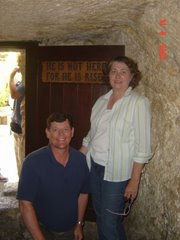
Richard Mansel, a dear Christian, recently sent me a link describing the actions of the House of Deputies in the Episcopal Church. By 72.9 percent of the vote on June 20, they approved the Windsor Report's invitation to engage in a process of healing and reconciliation. This healing and reconciliation actually "compels each church to consult the wider Communion when making significant decisions." Basically, they are not willing to halt the approval of homosexual bishops and clergy nor to refrain from "blessing" same-sex marriages.
It seems the way to union and healing for Episcopalians is to forsake the teaching of God for the "wider" communion. If there are some folks out there who disagree with what God teaches, it seems preferable to them to seek reconciliation with the other folks even if it means forgetting the teaching of God in Scripture. How sad! They would rather have the communion of men than the holiness of God. They would rather sit silent and allow sin to continue. It is not any surprise, then, when the same group of Episcopalians would not endorse a resolution to say that Jesus is the only way to salvation (thus denying John 14:6 and Acts 4:12). When you jettison God's will in one area, you find it easy to throw it all out (thus James 2:10).
Those among churches of Christ who are seeking communion with brethren who err on the instrument are basically saying the same thing. Healing and reconciliation with error is actually breaking communion with God. To give approval, to bid godspeed, to those who teach and practice error is to participate in their evil deeds (2 John 9-11). The Bible still teaches that God will uproot every plant which He has not planted. Where in the New Testament has God planted the use of instruments in Christian worship?
Instrumentalists must appeal to a "wider" understanding than the New Testament. They made the argument in the 1800s that we must "keep up with the times." They believed we must change or die! (And so the doubters speak today.) They said people will not come to our churches unless we change. In spite of their prognostication, in the 1900s a cappella churches outgrew the instrumentalists, thus disproving that we must give in to the world to grow.
It should not surprise us that in 1989, the Disciples also voted that Jesus was not the only way to heaven.
And they say there is no slippery slope! Nonsense.
Real healing does not come with giving up our faith to the world's fickle notions; it comes when we with humility and love give ourselves fully to the will of God. How can righteous people forsake the Lord to get along with people? Will those "people" judge us in the end or will the Lord? Did the people of the world send their Son to die for us?
Romans 12:2 should be shouted to us all: "And do not be conformed to this world, but be transformed by the renewing of your mind, so that you may prove what the will of God is, that which is good and acceptable and perfect."
Let us hold fast to the Lord and not give in to peer pressure and the desires of men.
kindly,
Phil
Friday, June 30, 2006


Tuesday, June 20, 2006
From the Roman period

While Jackie and I were in Israel, I purchased several olive oil lamps, most of which were reproductions of the kind of lamps used in the days of Jesus. We first saw them in Nazareth at the exhibit on the daily life of Jesus. They gave us two round lamps there. Throughout Israel, you could pick up some similar lamps for a few dollars. We found the best price in Bethlehem. An antiquities dealer, however, had one that dated from the Roman period (63 BC to 325 AD). Since it was priced reasonably, I decided to buy one. I wanted something I could say was from the time of Christ and found in the Holy Land. The pattern on this lamp identified it as being from that era.
They put a lesser quality of olive oil in the reserve and put a piece of cloth in the spout. A full lamp could burn for about four hours and provided an amount of light that was somewhere between a candle and a lantern.
As a preacher of the gospel, I thought about Jesus being the light of the world. I also recognized that I was to be a light to the world. I was not to put my light under a basket but on a lampstand that it may give light to all. I was to let my light so shine that men may see good works and glorify the Father in heaven.
My sweet daughter, Tara, is preparing a case to put this lamp in. Eventually, you will find it displayed in my office to remind me always to take the light to the world.
May the light of God bless your life today.
Phil
Friday, June 16, 2006
Go to Israel!


My lovely wife Jackie and I had the best vacation ever, when Concord Rd Church of Christ, in gratitude for our ten years service, sent us to Israel. We will never read the Bible the same way. If you can go to Israel, go!
Yes, I know there was a bombing down on the Gaza strip. This is from a fuss going on between the Fatah and the Hamas Palestinians and does not affect Jerusalem and Galilee. We even into Palestinian Bethlehem with no problems (it is more than 30% Christian).
I cannot express in words how blessed we were to go to see the land where Jesus walked and preached and ministered. Jackie and I will never forget this trip.
We expect some day to go again and perhaps host a group. There was so much to take in, we cannot remember it all.
Just one example. Did you ever think about Jesus in the garden of Gethsemane, looking up from the garden to see the Temple? Did you ever consider the close proximity of Capernaum to Kursi or the Mount of Beatitutdes?
We took a boat ride on a choppy Sea of Galilee, floated in the Dead Sea, and sat in the Garden Tomb. We prayed on the Mount of Olives and saw Joppa, Caesarea, and Nazareth. We went up to Caesarea Philippi and ascended Mount Tabor. Wow. It was wonderful. We also went to the Shepherd's fields in Bethlehem and selected five smooth stones from Elah.
Save your money and go to Israel if you can!
love,
Phil
Tuesday, May 23, 2006
Trilogy on the DaVinci Code
I have three television programs devoted to answering the "Da Vinci Code."
Jesus died for our sins.
Jesus arose from the dead.
We have no need for those "lost" books.
See these sites:
http://thttp://tv.god-answers.org/transcripts/621_Did_Jesus_rise_from_the_dead.pdf
http://tv.god-answers.org/transcripts/621_Did_Jesus_rise_from_the_dead.pdf
http://tv.god-answers.org/transcripts/622_Are_there_lost_books_of_the_Bible.pdf
I hope you'll go to the "God Answers to Life's Questions" website and download these transcripts.
kindly,
phil
Jesus died for our sins.
Jesus arose from the dead.
We have no need for those "lost" books.
See these sites:
http://thttp://tv.god-answers.org/transcripts/621_Did_Jesus_rise_from_the_dead.pdf
http://tv.god-answers.org/transcripts/621_Did_Jesus_rise_from_the_dead.pdf
http://tv.god-answers.org/transcripts/622_Are_there_lost_books_of_the_Bible.pdf
I hope you'll go to the "God Answers to Life's Questions" website and download these transcripts.
kindly,
phil
Going to Israel

My beautiful wife Jackie and I are going to Israel June 5-15. The wonderful Concord Rd. family is sending us. We are going with Dan and Leola Chambers and will see most of the wonderful sites of the Holy Land.
I had always wanted to go but expected that such a trip would come at retirement rather than at this point in my life. I am looking forward to the trip and have been studying the geography of Palestine more intently than ever.
Our trip includes: Joppa, Caesarea, Megiddo, Nazareth, Mount Carmel, Mount Tabor, Sea of Galilee, Tiberias, Capernaum, Bethsaida, Chorazin, the Mount of Beatitudes, Kursi, the Jordan River, Beth-Shan, Dead Sea, Qumran, Masada, Ein Gedi, Jerusalem, Mount of Olives, Gethsemane, Pool of Bethesda, Golgotha, Western Wall, Pool of Siloam, Bethlehem, Valley of Elah, Plain of Sorek, Beth-Shemesh, and will end at the Garden Tomb.
Walking in some of the places Jesus walked will be a great blessing. Seeing perhaps some olive trees He actually saw will be very meaningful.
I expect to take a good number of pictures that I will share when I return. I am getting my camera ready to take as many as I can.
I thank God for the opportunity. Jackie and I have made eight trips overseas separately; this will be our first trip together to a foreign land--after 32 years no less! Jackie celebrated our 32 anniversary last week.
Please keep us in your prayers.
in Christian love,
phil
Tuesday, May 16, 2006
Let All the Earth Keep Silence
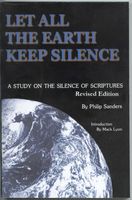 After a couple of years of editing, the revised edition of my book, Let All the Earth Keep Silence, is now back in print. It sold out in 2000 but is now needed again to deal with the topic of silence.
You can order the book at Gospel Advocate or Star Bible:
GA 1-800-251-8446
Star 1-800-433-7507
This book gives the reasons in detail why I believe the silence of the Scriptures do not permit the use of instruments of music. I have updated and enlarged the book from its earlier printing in 1989, and I believe you will appreciate what has been done. I will be teaching this book to my students this summer at Nashville School of Preaching (classes start May 30). If you live the area, tuition is free.
Just come to the Crieve Hall Church of Christ, 4806 Trousdale, Nashville.
If you go 1/4 mile east of the intersection of I-65 and Harding Place and turn south, you'll see the church building on your left. You can find a lot information about the school at
www.crivevehall.org
If you have an interest in why churches should not worship with instruments, this book will help you to understand the hermeneutical basis.
kindly,
Phil
Wednesday, May 10, 2006
Let's think this through
Perhaps the hardest thing to do is swallow your pride. Good men learn to do so. We swallow our pride when we confess sin, when we repent, and when we apologize. We also swallow our pride when we forgive.
I wonder in the end if there will not be more people lost for prideful unwillingness to repent or to forgive than for any other matter. If your pride is too big to allow you to reconcile, then your pride is a stumbling block. It could cost you your soul (Luke 13:3; Matt. 7:14-15).
God is so good to us. He will forgive us of nearly any sin. But God draws a line at continued, willful sin (Heb. 10:26). I worry for the person who refuses to repent. There comes a point when one cannot touch such a person anymore (Heb. 6:4-6). He doesn't want to hear it, and you can't get through to him/her.
I want to go to heaven, and I want all my brethren to be there. If we go, it means that we will have to let go of some of the past. Those who sin against God must give it up. Those who see their brothers and sisters truly repent need to give up their animosity and forgive. The problems come along when someone decides he/she will not give up their sin or when others decide they will not forgive.
Unity is important, but unity apart from Biblical reconciliation is not unity. It is compromise.
To say that I am willing to open my arms to a brother who willfully hangs on to an unauthorized practice may sound attractive to a postmodern world (that thinks little of truth); but that kind of friendship is hostility with God (James 4:4-5). Kindness, yes; but an embrace that endorses sin cannot be. We cannot flirt with those who have no intention of giving up their sins and take for granted the grace of Christ.
If we leave the impression that these unwilling folks are still okay, have we not overruled God? Does our "friendship" mean that we choose to embrace them in spite of God's will? No wonder God feels we are adulterous. He just got shut out.
We cannot adopt the worship practices of worldly religious groups and claim that we are listening to God. We cannot turn God's church into a theater and believe that God is well-pleased. Do we think so little of God that we can ignore what He desires for our own desires?
Paul said he wished everyone were (a Christian right with God) like himself (Acts 26:29). So do I. But all Paul's wishing, and all my wishing, will not change a person who is unwilling to let go of the world. But we will not give up trying.
kindly,
phil
I wonder in the end if there will not be more people lost for prideful unwillingness to repent or to forgive than for any other matter. If your pride is too big to allow you to reconcile, then your pride is a stumbling block. It could cost you your soul (Luke 13:3; Matt. 7:14-15).
God is so good to us. He will forgive us of nearly any sin. But God draws a line at continued, willful sin (Heb. 10:26). I worry for the person who refuses to repent. There comes a point when one cannot touch such a person anymore (Heb. 6:4-6). He doesn't want to hear it, and you can't get through to him/her.
I want to go to heaven, and I want all my brethren to be there. If we go, it means that we will have to let go of some of the past. Those who sin against God must give it up. Those who see their brothers and sisters truly repent need to give up their animosity and forgive. The problems come along when someone decides he/she will not give up their sin or when others decide they will not forgive.
Unity is important, but unity apart from Biblical reconciliation is not unity. It is compromise.
To say that I am willing to open my arms to a brother who willfully hangs on to an unauthorized practice may sound attractive to a postmodern world (that thinks little of truth); but that kind of friendship is hostility with God (James 4:4-5). Kindness, yes; but an embrace that endorses sin cannot be. We cannot flirt with those who have no intention of giving up their sins and take for granted the grace of Christ.
If we leave the impression that these unwilling folks are still okay, have we not overruled God? Does our "friendship" mean that we choose to embrace them in spite of God's will? No wonder God feels we are adulterous. He just got shut out.
We cannot adopt the worship practices of worldly religious groups and claim that we are listening to God. We cannot turn God's church into a theater and believe that God is well-pleased. Do we think so little of God that we can ignore what He desires for our own desires?
Paul said he wished everyone were (a Christian right with God) like himself (Acts 26:29). So do I. But all Paul's wishing, and all my wishing, will not change a person who is unwilling to let go of the world. But we will not give up trying.
kindly,
phil
Wednesday, May 03, 2006
The Great Commission and participles
Having recently read a lengthy paper on the great commission in which I was criticized by name along with my friend and brother Ralph Gilmore, I thought it needful to clarify some matters. I said in an interview in the Christian Chronicle:
"I believe baptized believers in the Independent Christian Church are my brethren, since everyone who is scripturally born of water and the Spirit is a child of God."
The question arose earlier this year whether one must know everything Jesus teaches in order to become a disciple of the Lord. Earl Edwards, in defense of Ralph, noted at FHU in February that he did not feel one had to know everything Jesus taught first before becoming a Christian. I share that view.
Part of the problem here is in trying to understand the phrase "make disciples" as it is used in Matt. 28:19. Discipleship begins when one who penitently believes is immersed into Christ for the forgiveness of his sins.
But discipleship is a lifelong pursuit, and the goal is discipleship maturity. One can only mature as a disciple by learning to observe all that Jesus commands. Many people who obey the gospel by believing and being baptized do not grow to maturity (Luke 8:13). Throughout the New Testament we have saved Christians needing further teaching (Heb. 5:11-14; 1 Pet. 2:1-3). Being a disciple, like believing and repenting and confessing, is a lifelong pursuit.
On the other hand, obeying the gospel, is culminated (after faith, love, repentance and confession) in the act of baptism. Baptism is the means by which the covenant relationship is sealed, while observing the commandments is how the relationship is lived out. One may consequently enter into a relationship in a moment but lives it out over a lifetime.
If one later fails to obey the teaching, this does not mean one never became a brother or sister in Christ. It means that one has failed to continue learning and observing all the commandments and loses fellowship with Christ. Baptism is a once-for-all act, but teaching and learning last for a lifetime. One can baptize after teaching the gospel on the same hour of the night (thus saving and making a new disciple) as Paul did the jailer in Acts 16 and Philip did the Eunuch in Acts 8; but discipleship lasts for a lifetime. It is only the one who endures that is saved (Matt. 10:22; 24:13). Those who turn back are not fit to be disciples (Luke 9:62).
We do not suggest here that a baptism apart from faith or repentance is sufficient (Please see the chapters on the ConversionProcess and Salvation in the Evangelism Handbook: www.God-answers.org/Online_Tools/Evangelism_Handbook/evangelism_handbook.htm ).
Consider: did these people know all the commandments of Jesus before baptism?
"I believe baptized believers in the Independent Christian Church are my brethren, since everyone who is scripturally born of water and the Spirit is a child of God."
The question arose earlier this year whether one must know everything Jesus teaches in order to become a disciple of the Lord. Earl Edwards, in defense of Ralph, noted at FHU in February that he did not feel one had to know everything Jesus taught first before becoming a Christian. I share that view.
Part of the problem here is in trying to understand the phrase "make disciples" as it is used in Matt. 28:19. Discipleship begins when one who penitently believes is immersed into Christ for the forgiveness of his sins.
But discipleship is a lifelong pursuit, and the goal is discipleship maturity. One can only mature as a disciple by learning to observe all that Jesus commands. Many people who obey the gospel by believing and being baptized do not grow to maturity (Luke 8:13). Throughout the New Testament we have saved Christians needing further teaching (Heb. 5:11-14; 1 Pet. 2:1-3). Being a disciple, like believing and repenting and confessing, is a lifelong pursuit.
On the other hand, obeying the gospel, is culminated (after faith, love, repentance and confession) in the act of baptism. Baptism is the means by which the covenant relationship is sealed, while observing the commandments is how the relationship is lived out. One may consequently enter into a relationship in a moment but lives it out over a lifetime.
If one later fails to obey the teaching, this does not mean one never became a brother or sister in Christ. It means that one has failed to continue learning and observing all the commandments and loses fellowship with Christ. Baptism is a once-for-all act, but teaching and learning last for a lifetime. One can baptize after teaching the gospel on the same hour of the night (thus saving and making a new disciple) as Paul did the jailer in Acts 16 and Philip did the Eunuch in Acts 8; but discipleship lasts for a lifetime. It is only the one who endures that is saved (Matt. 10:22; 24:13). Those who turn back are not fit to be disciples (Luke 9:62).
We do not suggest here that a baptism apart from faith or repentance is sufficient (Please see the chapters on the ConversionProcess and Salvation in the Evangelism Handbook: www.God-answers.org/Online_Tools/Evangelism_Handbook/evangelism_handbook.htm ).
Consider: did these people know all the commandments of Jesus before baptism?
- the people at Pentecost (Acts 2:36-42) why then the devotion to the apostles teaching after baptism?
- the Eunuch after only one sermon (Acts 8)
- Saul of Tarsus after the brief encounters with Jesus and Ananias (Acts 9:1-11; 22:12-16)
- Lydia (Acts 16)
- the jailer (Acts 16)
The belief that we must teach people all that the Lord commands breaks down in the practice of the apostles and prophets of the early church. We must not make rules for God and demand more of people than the Scriptures require.
Lest anyone accuse me here of saying there are no necessary things one must know to become a Christian, let me point them to www.tv.God-answers.org/transcripts/616_What_Must_I_know_to_become_a_Christian.pdf.
I am not alone in suggesting that a person believing in the Lord, loving Him, penitently confessing Him before others, and being immersed in water in His name for the remission of sins is my brother. There are congregations of the Lord's church that teach exactly what I teach in the matter of gospel obedience, and I count them brethren.
This does not mean that because of other teachings and practices, I can embrace them. I will call a person in the Independent Christian Church my brother; but I will also ask him to repent of using the instrument in worship. I will call the one-cupper my brother, but I will also call on him to repent of making a law where God has not made one (in binding the one cup). Are the teachers on pre-millennialism in Kentucky in churches of Christ my brethren? Yes, but I call on them to leave that false doctrine. Being my brother is one thing; fellowshipping my brother is another.
We should not so harden our hearts against a brother who teaches error that we no longer consider him a brother. James said, "My brethren, if any among you strays from the truth and one turns him back, let him know that he who turns a sinner from the error of his way will save his soul from death and will cover a multitude of sins" (James 5:19-20).
H. Leo Boles, in that 1937 unity meeting, gave a stirring rebuke to those who use the instrument in his hour and a half speech "The Way of Unity between the Christian Church and the Churches of Christ." But he called them brethren again and again.
Must those who come out of the Christian Church be baptized again? My answer is no, if they were Scripturally baptized to begin with.
Dan Goddard, who came out of the Christian church tells his own story:
"When I came to the truth in 1972 my wife and I decided that we wanted to be baptized over again. I asked several Old time gospel preachers what we ought to do. Men like Guy N. Woods, Gus Nichols, G. K. Wallace, Tom Warren and the list would include several others. These men told me all that was necessary for me to do was repent. To be baptized again was not necessary. So for a while I didn't do anything. I studied the question and decided that to be sure and safe in my relationship to God my wife and I would be baptized over again."
I certainly encourage those who have doubts to be baptized again; it is better to be sure and safe. But I think the "Old time gospel preachers" were right: rebaptism here is not necessary. I will not bind my opinion on others.
Were this a person who had not been immersed, had not believed at time of baptism, had not repented of sin, had not been willing to confess the name of Jesus, believed in some cultish prophet, or believed some great falsehood about the one God, I would have counseled proper, Scriptural baptism. But I see little need of counseling Scriptural baptism to the one who is already Scripturally baptized.
Those who disagree might do well to check out some of the sites online associated with the Independent Christian Church/Churches of Christ. There are many there that teach the gospel just as do we. (There are even a few that I feel more in common with than I do with those who destroy the need for immersion among churches of Christ.)
There are others who are denominational and compromising of the faith, committing the same error as those in churches of Christ who deny the one baptism. I cannot recommend them. I would have to ask some questions to know which are brethren and which are not.
I hope this clears up some of the ambiguity.
kindly,
Phil
Saturday, April 15, 2006
The Spiritual Sword
The April 2006 issue of the Spiritual Sword is entitled, "A Century of Controversy: 1906-2006." I encourage you to get a copy and read it. I think this is one of the finest and most important issues of this periodical. Alan Highers, editor, has done a marvelous job in laying out a periodical that shows the underlying controversy and why many of us will not relinquish our desire to hold to Biblical authority for popular religion. You can subscribe to the Spiritual Sword at 901-743-0464. The cost is a mere $6.00 per year. I urge you to do so.
Christianity holds that Christ is Lord (Acts 2:36). As Lord, He is the one and only head of His church. Only He can make the laws or rules of the church. Some folks don't like laws or rules, but we wonder how the Lord can rule in our lives if there are no rules. Of course, that is the point. They want Jesus as their Savior and Lord, but they do not want the Bible making rules in their lives.
The all-sufficient New Testament is final and authoritative. Since it lacks any instruction for the use of the instrument, we have no authority for its use. Apparently the early church understood this well. They did not use it and were vehemently opposed to its use because it was worldly.
I have heard a number of psallo and psalmos arguments in recent years that supposedly support the use of instruments in Christian worship. They all break down, however, when you consider that if psallo or psalmos enjoined the instrument, the early church would have known it and practiced it. They knew Greek. The simple fact is that this argument fails. It was first hatched up by George P. Slade in 1878 in order to justify the use of the instrument. First they said it had to be used. When they were corrected, they then argued it could be used. But if it could be used, why didn't anyone in the early church for hundreds of years use it? Instruments were available. Instruments were used in all the pagan religions. They didn't use them, because God gave no consent for them.
If Christianity belongs to God, then shouldn't we do God's will rather than relinquish our "freedom" to the imitation of worldly sects? One fellow demands his Christian "freedom" to do what God never enjoined, authorized, or instructed. He is finding his freedom by imitating those outside of the Lord's church, not inside. Our freedom in Christ is not a warrant to imitate those who practice things outside the authority of Christ, like instruments of music. Ought we not to find our freedom by imitating the Lord's teaching rather than abberations of it? Paul spoke of those who left the freedom of Christ by embracing the thinking of the Judaizers (Galatians 5). Real freedom is found in "abiding in my words" (Jn 8:31-32) not by embracing that which is outside of Christ.
I hope you'll read this issue of Spiritual Sword. It speaks clearly and truthfully.
kindly,
phil
Christianity holds that Christ is Lord (Acts 2:36). As Lord, He is the one and only head of His church. Only He can make the laws or rules of the church. Some folks don't like laws or rules, but we wonder how the Lord can rule in our lives if there are no rules. Of course, that is the point. They want Jesus as their Savior and Lord, but they do not want the Bible making rules in their lives.
The all-sufficient New Testament is final and authoritative. Since it lacks any instruction for the use of the instrument, we have no authority for its use. Apparently the early church understood this well. They did not use it and were vehemently opposed to its use because it was worldly.
I have heard a number of psallo and psalmos arguments in recent years that supposedly support the use of instruments in Christian worship. They all break down, however, when you consider that if psallo or psalmos enjoined the instrument, the early church would have known it and practiced it. They knew Greek. The simple fact is that this argument fails. It was first hatched up by George P. Slade in 1878 in order to justify the use of the instrument. First they said it had to be used. When they were corrected, they then argued it could be used. But if it could be used, why didn't anyone in the early church for hundreds of years use it? Instruments were available. Instruments were used in all the pagan religions. They didn't use them, because God gave no consent for them.
If Christianity belongs to God, then shouldn't we do God's will rather than relinquish our "freedom" to the imitation of worldly sects? One fellow demands his Christian "freedom" to do what God never enjoined, authorized, or instructed. He is finding his freedom by imitating those outside of the Lord's church, not inside. Our freedom in Christ is not a warrant to imitate those who practice things outside the authority of Christ, like instruments of music. Ought we not to find our freedom by imitating the Lord's teaching rather than abberations of it? Paul spoke of those who left the freedom of Christ by embracing the thinking of the Judaizers (Galatians 5). Real freedom is found in "abiding in my words" (Jn 8:31-32) not by embracing that which is outside of Christ.
I hope you'll read this issue of Spiritual Sword. It speaks clearly and truthfully.
kindly,
phil
Wednesday, April 05, 2006
Papyrus 46
Next week I'm traveling to Flint, Michigan to the Schwartz Creek Church of Christ for a gospel meeting. I'm excited about going, since I have never been to Michigan to preach. Mark Aites is the wonderful preacher there.
During the time I'm there, I plan to go over to the University of Michigan in Ann Arbor to see the UM Papyrus Collection. It is housed in the Harlan Hatcher Graduate Library. I have called ahead and hope that all will go well.
I'm particularly interested in the exhibit on the New Testament "From Papyri to King James." I am particularly interested in seeing a leaf from the codex P46, dating from 200 AD. UM owns 30 of the 86 extant leaves of this codex. The other 56 are in the Chester Beatty Library in Dublin, Ireland. This codex was discovered in 1931 and is more than a century older than Sinaiticus or Vaticanus. The leaf I will see displayed contains the opening paragraphs of the Epistle to the Hebrews, preceded by the last line of the Letter to the Romans. P46 is the earliest known codex containing the epistles of Paul. I cannot tell you how I have longed to see this exhibit. I have been waiting four or five years for this trip to Michigan. I'd rather see this papyrus than spit in the Grand Canyon or shake the hand of Mickey Mouse.
This, of course, is a significant argument that the collector of this codex believed Paul wrote Hebrews. It may make us all take a second look at Paul as the author of Hebrews.
A personal note: Jackie (my wife) and Tara (one of my four daughters) are in Oklahoma with Jackie's mother, Bernice Dodgen. Bernice will have surgery on Friday to fix an anuerism. Please keep the family in your prayers. I have a really wonderful mother-in-law. She gave me my wife.
During the time I'm there, I plan to go over to the University of Michigan in Ann Arbor to see the UM Papyrus Collection. It is housed in the Harlan Hatcher Graduate Library. I have called ahead and hope that all will go well.
I'm particularly interested in the exhibit on the New Testament "From Papyri to King James." I am particularly interested in seeing a leaf from the codex P46, dating from 200 AD. UM owns 30 of the 86 extant leaves of this codex. The other 56 are in the Chester Beatty Library in Dublin, Ireland. This codex was discovered in 1931 and is more than a century older than Sinaiticus or Vaticanus. The leaf I will see displayed contains the opening paragraphs of the Epistle to the Hebrews, preceded by the last line of the Letter to the Romans. P46 is the earliest known codex containing the epistles of Paul. I cannot tell you how I have longed to see this exhibit. I have been waiting four or five years for this trip to Michigan. I'd rather see this papyrus than spit in the Grand Canyon or shake the hand of Mickey Mouse.
This, of course, is a significant argument that the collector of this codex believed Paul wrote Hebrews. It may make us all take a second look at Paul as the author of Hebrews.
A personal note: Jackie (my wife) and Tara (one of my four daughters) are in Oklahoma with Jackie's mother, Bernice Dodgen. Bernice will have surgery on Friday to fix an anuerism. Please keep the family in your prayers. I have a really wonderful mother-in-law. She gave me my wife.
Wednesday, March 22, 2006
Few in truth is better than many in error
I like what Baptist leader Adrian Rogers said:
"It is better to be divided by truth than to be united in error. It is better to speak the truth that hurts and then heals, than falsehood that comforts and then kills.
"It is not love and it is not friendship if we fail to declare the whole counsel of God. It is better to be hated for telling the truth than to be loved for telling a lie.
"It is impossible to find anyone in the Bible who was a power for God who did not have enemies and was not hated. It's better to stand alone with the truth than to be wrong with a multitude. It is better to ultimately succeed with the truth than to temporarily succeed with a lie."
(The Berean Call, December 1996)
my thinking exactly,
Phil
"It is better to be divided by truth than to be united in error. It is better to speak the truth that hurts and then heals, than falsehood that comforts and then kills.
"It is not love and it is not friendship if we fail to declare the whole counsel of God. It is better to be hated for telling the truth than to be loved for telling a lie.
"It is impossible to find anyone in the Bible who was a power for God who did not have enemies and was not hated. It's better to stand alone with the truth than to be wrong with a multitude. It is better to ultimately succeed with the truth than to temporarily succeed with a lie."
(The Berean Call, December 1996)
my thinking exactly,
Phil
Tuesday, March 21, 2006
Freedom in Christ
A speaker recently argued that a belief in prohibitive silence was a real threat to the freedom we have "in" Christ. Now Americans and people the world over treasure the concept of freedom, and we should. We are blessed to be a free people. But the freedom we have in America as a democracy, where each man has a voice and a vote, should not be confused with New Testament Christianity which is not a democracy but a kingdom. Only the Lord Jesus is King, and only King Jesus can make the rules. We have no vote and no legislature.
Freedom in Christ does not give us license to add to His word. We cannot, in the name of freedom, overrule the will of God. We cannot plead for two gospels, when the Lord has proclaimed there is but one (Gal. 1:6-9). We cannot plead for two baptisms, when the Lord has declared there is but one (Eph. 4:5); and we cannot say there are two bodies (or churches), when the Lord says there is but one (Eph. 4:4; 1:22-23; 5:23). Freedom in Christ is not a license to add new forms of worship either.
The freedom we have "in" Christ is not a freedom to act "outside" of His will. We cannot claim we are free "in" Him, while we are pleading for things foreign to His will and outside His instructions.
Notice John 8:31-32
“If you abide in my word, you are truly my disciples, and you will know the truth, and the truth will set you free.”
Freedom in Christ is found only when one abides in the word, not when one goes outside the word to innovate whatever he finds pleasing and popular. The truth sets us free.
Humanly devised religion is a return to the things that enslave people to the world. It doesn't get very far with God (Matt. 15:14). Why should we adopt what the world thinks? Should we not go back to the Bible and do Bible things in Bible ways?
Don't be fooled into thinking that we have to be like others to be free. There is nothing out there in the religious world that surpasses New Testament Christianity. Doing things God's way sets us free from the delusions and confusions of the world and allows us to exercise a pure faith and a spiritual worship.
Let us offer to God what He desires, free from all the contamination of worldly desires. This is what makes us free, and as sons we are free indeed!
kindly,
Phil
Freedom in Christ does not give us license to add to His word. We cannot, in the name of freedom, overrule the will of God. We cannot plead for two gospels, when the Lord has proclaimed there is but one (Gal. 1:6-9). We cannot plead for two baptisms, when the Lord has declared there is but one (Eph. 4:5); and we cannot say there are two bodies (or churches), when the Lord says there is but one (Eph. 4:4; 1:22-23; 5:23). Freedom in Christ is not a license to add new forms of worship either.
The freedom we have "in" Christ is not a freedom to act "outside" of His will. We cannot claim we are free "in" Him, while we are pleading for things foreign to His will and outside His instructions.
Notice John 8:31-32
“If you abide in my word, you are truly my disciples, and you will know the truth, and the truth will set you free.”
Freedom in Christ is found only when one abides in the word, not when one goes outside the word to innovate whatever he finds pleasing and popular. The truth sets us free.
Humanly devised religion is a return to the things that enslave people to the world. It doesn't get very far with God (Matt. 15:14). Why should we adopt what the world thinks? Should we not go back to the Bible and do Bible things in Bible ways?
Don't be fooled into thinking that we have to be like others to be free. There is nothing out there in the religious world that surpasses New Testament Christianity. Doing things God's way sets us free from the delusions and confusions of the world and allows us to exercise a pure faith and a spiritual worship.
Let us offer to God what He desires, free from all the contamination of worldly desires. This is what makes us free, and as sons we are free indeed!
kindly,
Phil
Can we worship with the instrument?
For many years I have heard that worshiping with the instrument is a matter of conscience and tradition. The thought was that while churches of Christ preferred to sing a cappella, that this was a tradition and optional. The other option for them was to use the instrument.
It is to their benefit to proclaim a cappella music merely as a tradition, because this would put singing and playing in their mind on equal footing--one as good as the other. The only problem is that singing (speaking, teaching, admonishing, confessing, giving thanks) is Biblically instructed (Eph. 5:19; Col. :16; Heb. 13:15) as the fruit of our lips. It is not a human tradition but a divine one (2 Thess. 2:15; 3:6). There is Biblical injunction and exhortation to do that. As for playing instruments, the Scriptures are silent. Opponents from the beginning have clearly admitted that.
George P. Slade argued as late as 1878 that psallo and psalmos meant that we ought to use the instrument of music in our worship. They took an old view of psallo and psalmos out of context and pressed it to mean something it did not mean. Later debaters stepped back from the view that we "ought" to use the instrument to the view that psallo and psalmos "permitted" the use of the instrument.
Everett Ferguson said of psallo, “If the precise meaning of certain verses may be in doubt, what is clear is that an instrument did not inhere in the word psallo in the Septuagint (the Greek translation of the Hebrew Old Testament, dating 150-250 BC). Psallo could translate a word meaning ‘play’ (nagan), or a general word (zamar). The meaning which would cover all occurrences is ‘make melody.’ This could include making melody on an instrument, but in the preponderance of occurrences it clearly refers to making melody with the voice.”
F. F. Bruce said of psallo in Eph. 5:19, “Nor should the etymological force of the terms be pressed, as though psalmos inevitably meant a song sung to the accompaniment of a stringed instrument…while such plucking of the strings is the original sense of psallo…it is used in the NT with the meaning ‘to sing psalms.’” In confirmation of this view, the Greek Orthodox Church
(who knows Greek better than anyone) has never used instruments of music in worship.
While some have abandoned the idea that psallo requires the use of an instrument, they today suggest that it permits the use of the instrument in Ephesians 5:19. If this were so, the first readers of the epistle of Ephesians and early churches did not know it. If Paul indeed was permitting the use instruments, we are at a loss to explain why early churches so adamantly and uniformly opposed them. Actually, no ancient writer ever made the argument that psallo and psalmos permitted the use of instruments is worship.
In fact, George P. Slade in 1878 was the first ever to argue that psallo or psalmos permitted the
instrument even if the instrument is not mentioned. Early Christians never understood the context of Ephesians or Colossians to demand or permit instruments.
The first rule of hermeneutics in the study of words is that a word does not and cannot mean what the author and the first readers did not understand it to mean. Whatever the words psalmos and psallo meant to them, it could not have demanded or permitted the use of instruments. The universal opposition to the use of instruments among the early church fathers makes it clear they understood the epistles of Ephesians and Colossians to teach vocal music only.
Ferguson explained that early Christians drew the meaning of the words psallo and psalmos from their regular practice in the synagogue (which did not use instruments of music). They frequently psalloed psalms in the synagogue without the use of instruments at all. So when the early Christians thought of singing psalms from their hearts, their first thought was not to grab a harp but merely to sing. And that's what they did for centuries, considering the use of instruments to be Judaizing or worldly in nature. They wanted pure worship without the corruptions of the religions around them or the worship of the Temple.
We can read the practice and instruction to sing in the New Testament. But one must use extraordinary means to try to find an instrument in Christian worship. Indeed one must be guilty of eisegesis (reading into the text).
Would it not be better simply to do what God's word says? Would it not be better to simply sing and end the division between us? Loving the Lord means that we will follow His teaching and obey His will (John 14:15). We urge all men everywhere to follow the New Testament pattern of singing and to avoid adding an instrument to their musical worship.
May God open our eyes and hearts to a deeper love for truth and for each other.
For more about Music in New Testament worship go to:
http://tv.god-answers.org/transcripts/other/Music%20in%20NT%20Church.pdf
In Christian love,
Phil
It is to their benefit to proclaim a cappella music merely as a tradition, because this would put singing and playing in their mind on equal footing--one as good as the other. The only problem is that singing (speaking, teaching, admonishing, confessing, giving thanks) is Biblically instructed (Eph. 5:19; Col. :16; Heb. 13:15) as the fruit of our lips. It is not a human tradition but a divine one (2 Thess. 2:15; 3:6). There is Biblical injunction and exhortation to do that. As for playing instruments, the Scriptures are silent. Opponents from the beginning have clearly admitted that.
George P. Slade argued as late as 1878 that psallo and psalmos meant that we ought to use the instrument of music in our worship. They took an old view of psallo and psalmos out of context and pressed it to mean something it did not mean. Later debaters stepped back from the view that we "ought" to use the instrument to the view that psallo and psalmos "permitted" the use of the instrument.
Everett Ferguson said of psallo, “If the precise meaning of certain verses may be in doubt, what is clear is that an instrument did not inhere in the word psallo in the Septuagint (the Greek translation of the Hebrew Old Testament, dating 150-250 BC). Psallo could translate a word meaning ‘play’ (nagan), or a general word (zamar). The meaning which would cover all occurrences is ‘make melody.’ This could include making melody on an instrument, but in the preponderance of occurrences it clearly refers to making melody with the voice.”
F. F. Bruce said of psallo in Eph. 5:19, “Nor should the etymological force of the terms be pressed, as though psalmos inevitably meant a song sung to the accompaniment of a stringed instrument…while such plucking of the strings is the original sense of psallo…it is used in the NT with the meaning ‘to sing psalms.’” In confirmation of this view, the Greek Orthodox Church
(who knows Greek better than anyone) has never used instruments of music in worship.
While some have abandoned the idea that psallo requires the use of an instrument, they today suggest that it permits the use of the instrument in Ephesians 5:19. If this were so, the first readers of the epistle of Ephesians and early churches did not know it. If Paul indeed was permitting the use instruments, we are at a loss to explain why early churches so adamantly and uniformly opposed them. Actually, no ancient writer ever made the argument that psallo and psalmos permitted the use of instruments is worship.
In fact, George P. Slade in 1878 was the first ever to argue that psallo or psalmos permitted the
instrument even if the instrument is not mentioned. Early Christians never understood the context of Ephesians or Colossians to demand or permit instruments.
The first rule of hermeneutics in the study of words is that a word does not and cannot mean what the author and the first readers did not understand it to mean. Whatever the words psalmos and psallo meant to them, it could not have demanded or permitted the use of instruments. The universal opposition to the use of instruments among the early church fathers makes it clear they understood the epistles of Ephesians and Colossians to teach vocal music only.
Ferguson explained that early Christians drew the meaning of the words psallo and psalmos from their regular practice in the synagogue (which did not use instruments of music). They frequently psalloed psalms in the synagogue without the use of instruments at all. So when the early Christians thought of singing psalms from their hearts, their first thought was not to grab a harp but merely to sing. And that's what they did for centuries, considering the use of instruments to be Judaizing or worldly in nature. They wanted pure worship without the corruptions of the religions around them or the worship of the Temple.
We can read the practice and instruction to sing in the New Testament. But one must use extraordinary means to try to find an instrument in Christian worship. Indeed one must be guilty of eisegesis (reading into the text).
Would it not be better simply to do what God's word says? Would it not be better to simply sing and end the division between us? Loving the Lord means that we will follow His teaching and obey His will (John 14:15). We urge all men everywhere to follow the New Testament pattern of singing and to avoid adding an instrument to their musical worship.
May God open our eyes and hearts to a deeper love for truth and for each other.
For more about Music in New Testament worship go to:
http://tv.god-answers.org/transcripts/other/Music%20in%20NT%20Church.pdf
In Christian love,
Phil
Friday, March 17, 2006
Formless Christianity?
Recently a speaker argued that Christianity was amorphous (formless). His point was that the New Testament did not provide any patterns for the church to follow, so that he felt free to exercise his faith any way he felt would cause the church to grow. He said that form matters little, but function matters much.
This is an interesting perspective. If the church is patternless, it is the only thing God ever created that is!
God took a formless and void universe and organized it (Genesis 1). We can see God's wisdom and purpose for everything He has made. We can see design in the leaf of a tree, in the paths of the sun and moon, in the precision of the movements of the earth, and in our own bodies. Every cell in our bodies has an extremely complicated DNA pattern that defines and controls its functions. Every leaf on a tree has a vein pattern to match the other leaves on that tree.
When God created the world both plants and animals were given a seed that produces after its own kind--and only after its own kind.
The seed of the kingdom was designed to produce after its own kind too (Luke 8:11; 1 Peter 1:22-25). It was not amorphous; it had standards and boundaries, form and function.
Our obedience to the gospel was from the heart to a form (pattern) of teaching. We died with Christ, were buried with Him, and raised with Him (Rom. 6:3-18). Our response of obedience to the gospel unites us with Him, giving us a pattern to follow, a pattern which culminates in baptism.
When Paul returned to visit the churches, he appointed elders for them in every church--that looks like a pattern to me (Acts 14:23). In 1 Tim. 3:1-13 there are qualifications of elders and deacons. These qualifications lay out the kind of person God wants in leadership roles in His church. The same pattern was to be followed in every church.
When Jesus instituted the Lord's supper, which was observed on the Lord's day (Acts 20:7), He laid out a pattern of remembering His body and blood with unleavened bread and fruit of the vine (Matt. 26:26-29; 1 Cor. 11:23-31).
Paul said, "Follow the pattern of the sound words that you have heard from me, in the faith and love that are in Christ Jesus" (2 Tim. 1:13 ESV). These sound (healthy) words deal with many things: life, morals, and the church. It is pretty hard to say we don't have to observe the patterns for the church, and then insist we are to imitate Jesus in His love, forgiveness, purity and devotion! Carrying a cross is itself a pattern for us, is it not?
It seems only natural that if God had a pattern for the ark and a pattern for the tabernacle, that He would also have a pattern for His church. Indeed, if the Old Testament had types for the New Testament, then patterns are a necessity.
Now, we admit that the Lord's Supper isn't anywhere near as complicated as observing the Passover meal; but that doesn't mean there is no pattern to it.
It is not wisdom that mocks patternism; it is foolishness. Wisdom hears the words of Jesus and does them; foolishness hears the words of Jesus and does not do them. Foolishness disrespects the words of Jesus, builds where it wants and does what it wants. But look at the difference between the results (Matt. 7:21-27). Calling ourselves disciples but failing to do the will of the Father and failing to do the words of Jesus is self-deception.
There are indeed forms, patterns, and standards to Christianity, and those who will not observe them do so to their own harm.
kindly,
phil
This is an interesting perspective. If the church is patternless, it is the only thing God ever created that is!
God took a formless and void universe and organized it (Genesis 1). We can see God's wisdom and purpose for everything He has made. We can see design in the leaf of a tree, in the paths of the sun and moon, in the precision of the movements of the earth, and in our own bodies. Every cell in our bodies has an extremely complicated DNA pattern that defines and controls its functions. Every leaf on a tree has a vein pattern to match the other leaves on that tree.
When God created the world both plants and animals were given a seed that produces after its own kind--and only after its own kind.
The seed of the kingdom was designed to produce after its own kind too (Luke 8:11; 1 Peter 1:22-25). It was not amorphous; it had standards and boundaries, form and function.
Our obedience to the gospel was from the heart to a form (pattern) of teaching. We died with Christ, were buried with Him, and raised with Him (Rom. 6:3-18). Our response of obedience to the gospel unites us with Him, giving us a pattern to follow, a pattern which culminates in baptism.
When Paul returned to visit the churches, he appointed elders for them in every church--that looks like a pattern to me (Acts 14:23). In 1 Tim. 3:1-13 there are qualifications of elders and deacons. These qualifications lay out the kind of person God wants in leadership roles in His church. The same pattern was to be followed in every church.
When Jesus instituted the Lord's supper, which was observed on the Lord's day (Acts 20:7), He laid out a pattern of remembering His body and blood with unleavened bread and fruit of the vine (Matt. 26:26-29; 1 Cor. 11:23-31).
Paul said, "Follow the pattern of the sound words that you have heard from me, in the faith and love that are in Christ Jesus" (2 Tim. 1:13 ESV). These sound (healthy) words deal with many things: life, morals, and the church. It is pretty hard to say we don't have to observe the patterns for the church, and then insist we are to imitate Jesus in His love, forgiveness, purity and devotion! Carrying a cross is itself a pattern for us, is it not?
It seems only natural that if God had a pattern for the ark and a pattern for the tabernacle, that He would also have a pattern for His church. Indeed, if the Old Testament had types for the New Testament, then patterns are a necessity.
Now, we admit that the Lord's Supper isn't anywhere near as complicated as observing the Passover meal; but that doesn't mean there is no pattern to it.
It is not wisdom that mocks patternism; it is foolishness. Wisdom hears the words of Jesus and does them; foolishness hears the words of Jesus and does not do them. Foolishness disrespects the words of Jesus, builds where it wants and does what it wants. But look at the difference between the results (Matt. 7:21-27). Calling ourselves disciples but failing to do the will of the Father and failing to do the words of Jesus is self-deception.
There are indeed forms, patterns, and standards to Christianity, and those who will not observe them do so to their own harm.
kindly,
phil
Thursday, March 16, 2006
The Gospel Advocate
The Gospel Advocate is one of my favorite magazines, and they let me write for them once in a while. If you are not subscribed to it, I hope you will. You can subscribe by calling 1.800.251.8446. (No, I don't get paid; I just love the guys there). The GA's last issue dealt with unity. They are my brethren, and I read them each month. I want to hear what they have to say, and I hope you'll read them too.
Neil Anderson urges us to take a stand for truth. Amen!
Several articles are greatly needed; and I was thankful to see one from the pen of my dear friend, brother, and mentor Jimmy Jividen.
Kerry Anderson asks, "If our beliefs on issues like worship, roles of men and women, and baptism are right, why should we apologize?"
We should not apologize for holding to a hermeneutic that goes back to the Scriptures. We should not apologize for saying no to humanly devised forms of worship and organization. We should not apologize for taking a view that it is presumptuous to act by our own authority.
The belief that silence is prohibitive (we should not believe or practice things not found in the New Testament teaching or approved examples) is not a flawed hermeneutic.
We are told by others (not GA) that a silence that forbids is divisive. Is it really? One speaker recently characterized all the division among churches of Christ as the result of this hermeneutic of silence. But a closer look at the situations at hand shows that personalities, not hermeneutics caused many of these splits. In many cases people began applying the hermeneutic before they had finished studying the text.
Now the situation is sometimes like a man who has a dispute with a person who is saved by faith only without baptism. If one thinks baptism necessary and another thinks it optional, they are divided. How do we decide between the two? We study the text and find that baptism preceeds salvation, that baptism is for the remission of sins (Acts 2:38). By looking at the bigger picture we learn that the "faith only" view is unscriptural.
Likewise, one man thinks we cannot have multiple cups in communion for the fruit of the vine and another thinks it okay. The Bible says nothing about multiple cups. They are divided. How do we solve this problem? Well, we recognize that the word "cup" is a figure of speech referring to the contents of the cup not the container itself. In this case, the number of cups is of no importance. What they drank was to be one, not the number of containers. It wasn't a flawed hermeneutic that caused this problem; it is that misinformed people believed the wrong thing and could not accept the change. The speaker did not show his wisdom about the matter but his bias against the hermeutic.
Some think we ought not to have Bible classes, while others believe it okay. The Bible says nothing about Bible classes per se. So the speaker argued that that our hermeneutic is flawed, because people are divided over Bible classes. Is it really? Our hermeneutic speaks of expediency. An expedient is a lawful way to do what God instructs. The instruction is to teach the lost and to further teach the saved (Mt. 28:19-20; 2 Tim. 2:2). Alexander Campbell spoke of expediencies in his Christian System long before the division over the instrument. It wasn't the hermeneutic that is broken; it is that some didn't want the classes. Expedients merely help one do what God instructs him to do. The apostle Paul, for instance, took a ship to Macedonia in answer to the Macedonian call, even though there was no mention of a ship in the instruction. The ship helped him do exactly what he was instrcted to do (Acts 16:9ff.); that's what makes it expedient. Classes are an expedient way to teach God's word--that's all. They don't do something else--they do what God expects to be done.
That silence should be prohibitive not neutral is an implication of the fact that the Scriptures are all-sufficient(2 Tim. 3:16-17; 2 Pet. 1:3; Jude 3). God spoke; He said what He intended to say; He said all He intended to say; and when He finished, He intentionally hushed. Because He didn't say more, it is presumptuous for people to add new forms of baptism or worship to the practices of the church. If God had wanted Christians to use instruments, He would have said so. He told us everything we needed to know for life and godliness. To go beyond the Scriptures and to practice a humanly devised form of worship or a substitute for baptism is to disrespect God. When God is silent, so should we be.
Now when someone hasn't respected God's silence and has added a new worship form (instrumental music), then the person who respects God's silence feels obligated to speak out against the innovation. The hermeneutic of silence keeps the church pure from the human innovations and practices of men. It keeps people from showing irreverence and disrespect to the holiness and the instructions of God.
Now if someone demands that we use the innovation (instruments of music), he is driving a wedge between himself and the one who will not innovate. Since in an assembly, everyone has to participate in musical worship, the one who seeks to remain pure from the innovation is forced either to join in the innovation (which is sin) and to violate his conscience (which is sin--Rom. 14:23) or to leave. He must either compromise with sin or separate himself from that innovation which is irreverent. It seems a bit unfair that those who innovate accuse the person who wills to remain pure with the division. The innovators almost always blast the committed man with namecalling: "legalist," "Pharisee," and "judge." Is he really?
Who caused the problem? When churches of Christ first began, they were all a cappella. In 1859 L. L. Pinkerton introduced the first instrument into the worship of the churches of Christ in Midway, KY. It was the irreverent innovation that called for a choice that the one who wishes to remain with the teaching of the Scripture cannot make. If he is to remain pure, he must side with what the Scripture teaches and cannot go with the innovation. Who caused the problem? The innovater, the one who brought in the unscriptural, unauthorized innovation. The right choice is to stay with Scripture, for to do otherwise is to separate oneself from God Himself.
In all ages God has shown displeasure with presumptuous innovation. Those who love God will not consider innovation as one option among many. They will keep themselves abiding in the word and so prove themselves to be true disciples (Jn 8:31).
Well, read the Gospel Advocate, subscribe to it. It's telling the truth about this controversy.
Phil
Neil Anderson urges us to take a stand for truth. Amen!
Several articles are greatly needed; and I was thankful to see one from the pen of my dear friend, brother, and mentor Jimmy Jividen.
Kerry Anderson asks, "If our beliefs on issues like worship, roles of men and women, and baptism are right, why should we apologize?"
We should not apologize for holding to a hermeneutic that goes back to the Scriptures. We should not apologize for saying no to humanly devised forms of worship and organization. We should not apologize for taking a view that it is presumptuous to act by our own authority.
The belief that silence is prohibitive (we should not believe or practice things not found in the New Testament teaching or approved examples) is not a flawed hermeneutic.
We are told by others (not GA) that a silence that forbids is divisive. Is it really? One speaker recently characterized all the division among churches of Christ as the result of this hermeneutic of silence. But a closer look at the situations at hand shows that personalities, not hermeneutics caused many of these splits. In many cases people began applying the hermeneutic before they had finished studying the text.
Now the situation is sometimes like a man who has a dispute with a person who is saved by faith only without baptism. If one thinks baptism necessary and another thinks it optional, they are divided. How do we decide between the two? We study the text and find that baptism preceeds salvation, that baptism is for the remission of sins (Acts 2:38). By looking at the bigger picture we learn that the "faith only" view is unscriptural.
Likewise, one man thinks we cannot have multiple cups in communion for the fruit of the vine and another thinks it okay. The Bible says nothing about multiple cups. They are divided. How do we solve this problem? Well, we recognize that the word "cup" is a figure of speech referring to the contents of the cup not the container itself. In this case, the number of cups is of no importance. What they drank was to be one, not the number of containers. It wasn't a flawed hermeneutic that caused this problem; it is that misinformed people believed the wrong thing and could not accept the change. The speaker did not show his wisdom about the matter but his bias against the hermeutic.
Some think we ought not to have Bible classes, while others believe it okay. The Bible says nothing about Bible classes per se. So the speaker argued that that our hermeneutic is flawed, because people are divided over Bible classes. Is it really? Our hermeneutic speaks of expediency. An expedient is a lawful way to do what God instructs. The instruction is to teach the lost and to further teach the saved (Mt. 28:19-20; 2 Tim. 2:2). Alexander Campbell spoke of expediencies in his Christian System long before the division over the instrument. It wasn't the hermeneutic that is broken; it is that some didn't want the classes. Expedients merely help one do what God instructs him to do. The apostle Paul, for instance, took a ship to Macedonia in answer to the Macedonian call, even though there was no mention of a ship in the instruction. The ship helped him do exactly what he was instrcted to do (Acts 16:9ff.); that's what makes it expedient. Classes are an expedient way to teach God's word--that's all. They don't do something else--they do what God expects to be done.
That silence should be prohibitive not neutral is an implication of the fact that the Scriptures are all-sufficient(2 Tim. 3:16-17; 2 Pet. 1:3; Jude 3). God spoke; He said what He intended to say; He said all He intended to say; and when He finished, He intentionally hushed. Because He didn't say more, it is presumptuous for people to add new forms of baptism or worship to the practices of the church. If God had wanted Christians to use instruments, He would have said so. He told us everything we needed to know for life and godliness. To go beyond the Scriptures and to practice a humanly devised form of worship or a substitute for baptism is to disrespect God. When God is silent, so should we be.
Now when someone hasn't respected God's silence and has added a new worship form (instrumental music), then the person who respects God's silence feels obligated to speak out against the innovation. The hermeneutic of silence keeps the church pure from the human innovations and practices of men. It keeps people from showing irreverence and disrespect to the holiness and the instructions of God.
Now if someone demands that we use the innovation (instruments of music), he is driving a wedge between himself and the one who will not innovate. Since in an assembly, everyone has to participate in musical worship, the one who seeks to remain pure from the innovation is forced either to join in the innovation (which is sin) and to violate his conscience (which is sin--Rom. 14:23) or to leave. He must either compromise with sin or separate himself from that innovation which is irreverent. It seems a bit unfair that those who innovate accuse the person who wills to remain pure with the division. The innovators almost always blast the committed man with namecalling: "legalist," "Pharisee," and "judge." Is he really?
Who caused the problem? When churches of Christ first began, they were all a cappella. In 1859 L. L. Pinkerton introduced the first instrument into the worship of the churches of Christ in Midway, KY. It was the irreverent innovation that called for a choice that the one who wishes to remain with the teaching of the Scripture cannot make. If he is to remain pure, he must side with what the Scripture teaches and cannot go with the innovation. Who caused the problem? The innovater, the one who brought in the unscriptural, unauthorized innovation. The right choice is to stay with Scripture, for to do otherwise is to separate oneself from God Himself.
In all ages God has shown displeasure with presumptuous innovation. Those who love God will not consider innovation as one option among many. They will keep themselves abiding in the word and so prove themselves to be true disciples (Jn 8:31).
Well, read the Gospel Advocate, subscribe to it. It's telling the truth about this controversy.
Phil
Monday, March 13, 2006
Jesus' prayer for Unity
Unity is precious in God’s sight. The Lord Jesus on the night He was betrayed prayed that his disciples might be one, “even as You, Father, are in Me and I in You, that they also may be in Us, so that the world may believe that You sent Me” (John 17:21). Certainly, a fractured Christianity loses its power to influence the world.
Unity comes from a commitment of love toward God and to His Son Jesus Christ. Before Jesus prayed for unity, He recognized that He had given his disciples the words and commandments His Father had given Him and that they had kept that word (17:6-8).
These words were important to Jesus, because they were the Truth. Jesus also prayed to the Father, “Sanctify them in the truth; Your word is truth. As You sent Me into the world, I also have sent them into the world. For their sakes I sanctify Myself, that they themselves also may be sanctified in truth” (17:17-19). Before there can be unity, there must be sanctification in the truth. Unity without truth is not unity; it is only the appearance of unity.
Postmodern thinking suggests that we dismiss the concept of truth altogether and find our unity in our respect for one another. They believe truth cannot be known, so we don’t have to fear opposing views. Jesus knew better. He knew that there are wolves who will tear apart the flock.
A wolf may appear in sheep’s clothing and join a flock, but he will always be a wolf. Paul warned about wolves who “will come in among you, not sparing the flock; and from among your own selves men will arise, speaking perverse things, to draw away the disciples after them” (Acts 20:28-30). Allowing a wolf to come in among the flock unguarded will always result in loss.
This is why, as much as the Lord wants unity, faithful shepherds must mark and avoid those who cause dissension by their teaching and turn away from them (Rom. 16:17-18). The Lord’s desire for unity must never become an opportunity for the wolf to get in the fold.
Unity comes from a commitment of love toward God and to His Son Jesus Christ. Before Jesus prayed for unity, He recognized that He had given his disciples the words and commandments His Father had given Him and that they had kept that word (17:6-8).
These words were important to Jesus, because they were the Truth. Jesus also prayed to the Father, “Sanctify them in the truth; Your word is truth. As You sent Me into the world, I also have sent them into the world. For their sakes I sanctify Myself, that they themselves also may be sanctified in truth” (17:17-19). Before there can be unity, there must be sanctification in the truth. Unity without truth is not unity; it is only the appearance of unity.
Postmodern thinking suggests that we dismiss the concept of truth altogether and find our unity in our respect for one another. They believe truth cannot be known, so we don’t have to fear opposing views. Jesus knew better. He knew that there are wolves who will tear apart the flock.
A wolf may appear in sheep’s clothing and join a flock, but he will always be a wolf. Paul warned about wolves who “will come in among you, not sparing the flock; and from among your own selves men will arise, speaking perverse things, to draw away the disciples after them” (Acts 20:28-30). Allowing a wolf to come in among the flock unguarded will always result in loss.
This is why, as much as the Lord wants unity, faithful shepherds must mark and avoid those who cause dissension by their teaching and turn away from them (Rom. 16:17-18). The Lord’s desire for unity must never become an opportunity for the wolf to get in the fold.
Friday, March 10, 2006
H. Leo Boles on the Unity of the Church
From H. Leo Boles speech in 1939 when he addressed a unity forum between the Christian church and churches of Christ.
The Lord's people remained a united body from the meeting in Lexington, Ky., in 1832 to 1849. At that time in Lexington my grandfather presented the New Testament teaching for unity. He said, in part, the following:
"God has but one people on the earth. He has given to them but one Book, and therein exhorts and commands them to be one family. A union such as we plead for—a union of God's people on that one Book—must, then, be practicable.
"Every Christian desires to stand complete in the whole will of God. The prayer of the Savior, and the whole tenor of this teaching, clearly show that it is God's will that his children should be united. To the Christian, then, such a union must be desirable.
"But an amalgamation of sects is not such a union as Christ prayed for and God enjoins. To agree to be one upon any system of human inventions would be contrary to his will, and could never be a blessing to the church or the world; therefore, the only union practicable or desirable must be based on the word of God as the only rule of faith and practice... "I have the more cheerfully resolved on this course, because the gospel is a system of facts, commands, and promises, and no deduction or inference from them, however logical or true, forms any part of the gospel of Jesus Christ. No heaven is promised to those who hold them, and no hell is threatened to those who deny them. They do not constitute, singly or together, an item of the ancient and apostolic gospel. While there is but one faith, there may be ten thousand opinions; and, hence, if Christians are ever to be one, they must be one in faith, and not in opinion. When certain subjects arise, even in conversation or social discussion, about which there is a contrariety of opinion and sensitiveness of feeling, speak of them in the words of the Scripture, and no offense will be given and no pride of doctrine will be encouraged. We may even come, in the end, by thus speaking the same things, to think the same things.
"For several years past I have stood pledged to meet the religious world, or any part of it, on the ancient gospel and order of things as presented in the words of the Book. This is the foundation on which Christians once stood, and on it they can, and ought to, stand again. From this I cannot depart to meet any man, or set of men, in the wide world. While, for the sake of peace and Christian union, I have long since waived the public maintenance of any speculation I may hold, yet no one gospel fact, commandment, or promise will I surrender for the world" (Life of Elder John Smith, pages 452-454.)
This is the ground of unity that was accepted in 1832 by the Stone and Campbell groups; it is the fundamental teaching of the New Testament. Such a unity honors the truth of God, respects the authority of Christ, and glorifies God. Brethren, this is where the churches of Christ stand today; it is where unity may be found now; it is where you left the New Testament; it is where you left the churches of Christ, and it is where you can find them when you come back. On this ground and teaching, and only on this, can scriptural unity be had now; on these basic principles of the New Testament Christian unity may always be had. The people of God were united on these principles from 1832 to 1849; they were united on these principles when the church began. Christians enjoyed the sweet fellowship of the people of God and made marvelous progress when so united. They made deep inroads on denominationalism and increased more rapidly in number than at any other period in the history of the Restoration Movement.
for the whole speech, see http://www.therestorationmovement.com/unity1.htm
May the Lord help us find unity in the truth.
The Lord's people remained a united body from the meeting in Lexington, Ky., in 1832 to 1849. At that time in Lexington my grandfather presented the New Testament teaching for unity. He said, in part, the following:
"God has but one people on the earth. He has given to them but one Book, and therein exhorts and commands them to be one family. A union such as we plead for—a union of God's people on that one Book—must, then, be practicable.
"Every Christian desires to stand complete in the whole will of God. The prayer of the Savior, and the whole tenor of this teaching, clearly show that it is God's will that his children should be united. To the Christian, then, such a union must be desirable.
"But an amalgamation of sects is not such a union as Christ prayed for and God enjoins. To agree to be one upon any system of human inventions would be contrary to his will, and could never be a blessing to the church or the world; therefore, the only union practicable or desirable must be based on the word of God as the only rule of faith and practice... "I have the more cheerfully resolved on this course, because the gospel is a system of facts, commands, and promises, and no deduction or inference from them, however logical or true, forms any part of the gospel of Jesus Christ. No heaven is promised to those who hold them, and no hell is threatened to those who deny them. They do not constitute, singly or together, an item of the ancient and apostolic gospel. While there is but one faith, there may be ten thousand opinions; and, hence, if Christians are ever to be one, they must be one in faith, and not in opinion. When certain subjects arise, even in conversation or social discussion, about which there is a contrariety of opinion and sensitiveness of feeling, speak of them in the words of the Scripture, and no offense will be given and no pride of doctrine will be encouraged. We may even come, in the end, by thus speaking the same things, to think the same things.
"For several years past I have stood pledged to meet the religious world, or any part of it, on the ancient gospel and order of things as presented in the words of the Book. This is the foundation on which Christians once stood, and on it they can, and ought to, stand again. From this I cannot depart to meet any man, or set of men, in the wide world. While, for the sake of peace and Christian union, I have long since waived the public maintenance of any speculation I may hold, yet no one gospel fact, commandment, or promise will I surrender for the world" (Life of Elder John Smith, pages 452-454.)
This is the ground of unity that was accepted in 1832 by the Stone and Campbell groups; it is the fundamental teaching of the New Testament. Such a unity honors the truth of God, respects the authority of Christ, and glorifies God. Brethren, this is where the churches of Christ stand today; it is where unity may be found now; it is where you left the New Testament; it is where you left the churches of Christ, and it is where you can find them when you come back. On this ground and teaching, and only on this, can scriptural unity be had now; on these basic principles of the New Testament Christian unity may always be had. The people of God were united on these principles from 1832 to 1849; they were united on these principles when the church began. Christians enjoyed the sweet fellowship of the people of God and made marvelous progress when so united. They made deep inroads on denominationalism and increased more rapidly in number than at any other period in the history of the Restoration Movement.
for the whole speech, see http://www.therestorationmovement.com/unity1.htm
May the Lord help us find unity in the truth.
The Way to Unity
Since there is so much talk about unity this year, I felt the need to talk a little about the way to unity. That Jesus wants his people unified is no small matter. The Lord desired it enough to pray for it, and it behooves all of us to desire it as well.
The unity for which Jesus prayed however is not the postmodern kind. By that I mean that Jesus did not pray for unity which sells out the truth and tolerates humanly devised religion. Before Jesus prayed for unity in John 17:20-23, he prayed, "Sanctify (set them apart) them in Your truth; Your word is truth." Jesus believed that a relationship between himself and the Father came through the words that the Father had given Him and that He in turn gave to His apostles. That relationship of unity was held together by the disciples keeping the commandments and instructions that came from the Father (17:6-19).
There is unity within the Truth, but there can be no unity without it. How can men ever be unified with the Lord Jesus, if the words that the Lord Jesus are not given their proper place of prominence. I can never be one with Jesus if I hold that my opinion or my persuasion is as valid and as authoritative as the words of Jesus. Unity in Christ means that He is the Lord and the only Lord. No one can presume to step up into His place with their own religious teachings or practices.
In 1906 the Christian churches and the churches of Christ divided over several issues: 1) the missionary society, 2) the use of instruments of music in worship, 3) the fellowship of the denominations, and 4) the role of women in the worship of the church.
There were no Scriptures authorizing a missionary society in addition to the church, no Scriptures authorizing instrumental music in Christian worship, no Scriptures permitting denominationalism or the fellowship of humanly-devised religion, and no Scrputres endorsing a leadership role for women in worship.
The mindset of one group was to hold to the teaching of the Scriptures and not presume to act in the absence of any instruction from God. At one time, all the members of the churches of Chrsist and Christian church held this view. As time went by a second mindset developed, disrupting the unity of the church and causing division.
Those who objected to the missionary societies, to instrumental music, to the fellowship of denominations, and to the leadership of women could not conscientiously support those who were insisting on them.
With broken hearts, they loved their brethren. They love them still but love the Truth of God and His will even more--just as they should. If some ask for unity, the way to unity is not through continued rejection of God's will for an accommodation to worldliness; but the way to unity is through the rejection of the world's desires and a return to the teaching of the Scripture alone. We can have it no other way and please God.
We can have some form of union by setting aside the will of God and tolerating one another, but this is a union built upon sand. Sand theology is doing what we want and what looks good in the eyes of others. Rock theology is listening to God and doing the words of Jesus (Matt. 7:24-27).
Rather than seek for unity by compromising, let us return to God's way of singing without the use of instruments, of male leadership, of working through the church, and by remaining undenominational. This is God's way, God's will; and we can do no other.
One man recently criticized this mindset of churches of Christ, thinking that by insisting we stay with the Truth of the Word, we are making laws. He wittily said, “Where the Bible speaks, we speak,” referring to a cappella churches. “And where the Bible is silent, we have even more to say.”
We certainly see no value in making laws where God hasn't made any laws; but as far as the instrument of music in worship is concerned, it is not the churches of Christ who have spoken out of turn. Actually it is those who have presumptuously added the instrument who are speaking out of turn. They have added what was not there for centuries and now must find some way to justify an unauthorized, unwarranted, unscriptural form of worship.
The silence of the Scripture is prohibitive not permissive. God's silence is not some license for men to add whatever they please to the worship of the church. And why is it not permissive? It is not permissive because it is complete and final. The all-sufficient word is final. God spoke. He said all He intended to say; and when He finished, He purposefully hushed.
It is those who add to the word of God that have even more to say. Some indeed (as this speaker) have themselves already begun to divide the church once more by embracing the use of instruments of music in worship. He is calling for unity with the Christian church, while he divides himself from those in churches of Christ whom he knows will not follow him in his presumptuous pursuit of an unauthorized practice.
Unity can only come when all decide they will leave the human and embrace only the Divine. We are calling for all men to do just that. This is the true heart of restoration thinking. This is the true heart of real disciples--they want no creed but Christ.
with love for all and especially God.
Phil
The unity for which Jesus prayed however is not the postmodern kind. By that I mean that Jesus did not pray for unity which sells out the truth and tolerates humanly devised religion. Before Jesus prayed for unity in John 17:20-23, he prayed, "Sanctify (set them apart) them in Your truth; Your word is truth." Jesus believed that a relationship between himself and the Father came through the words that the Father had given Him and that He in turn gave to His apostles. That relationship of unity was held together by the disciples keeping the commandments and instructions that came from the Father (17:6-19).
There is unity within the Truth, but there can be no unity without it. How can men ever be unified with the Lord Jesus, if the words that the Lord Jesus are not given their proper place of prominence. I can never be one with Jesus if I hold that my opinion or my persuasion is as valid and as authoritative as the words of Jesus. Unity in Christ means that He is the Lord and the only Lord. No one can presume to step up into His place with their own religious teachings or practices.
In 1906 the Christian churches and the churches of Christ divided over several issues: 1) the missionary society, 2) the use of instruments of music in worship, 3) the fellowship of the denominations, and 4) the role of women in the worship of the church.
There were no Scriptures authorizing a missionary society in addition to the church, no Scriptures authorizing instrumental music in Christian worship, no Scriptures permitting denominationalism or the fellowship of humanly-devised religion, and no Scrputres endorsing a leadership role for women in worship.
The mindset of one group was to hold to the teaching of the Scriptures and not presume to act in the absence of any instruction from God. At one time, all the members of the churches of Chrsist and Christian church held this view. As time went by a second mindset developed, disrupting the unity of the church and causing division.
Those who objected to the missionary societies, to instrumental music, to the fellowship of denominations, and to the leadership of women could not conscientiously support those who were insisting on them.
With broken hearts, they loved their brethren. They love them still but love the Truth of God and His will even more--just as they should. If some ask for unity, the way to unity is not through continued rejection of God's will for an accommodation to worldliness; but the way to unity is through the rejection of the world's desires and a return to the teaching of the Scripture alone. We can have it no other way and please God.
We can have some form of union by setting aside the will of God and tolerating one another, but this is a union built upon sand. Sand theology is doing what we want and what looks good in the eyes of others. Rock theology is listening to God and doing the words of Jesus (Matt. 7:24-27).
Rather than seek for unity by compromising, let us return to God's way of singing without the use of instruments, of male leadership, of working through the church, and by remaining undenominational. This is God's way, God's will; and we can do no other.
One man recently criticized this mindset of churches of Christ, thinking that by insisting we stay with the Truth of the Word, we are making laws. He wittily said, “Where the Bible speaks, we speak,” referring to a cappella churches. “And where the Bible is silent, we have even more to say.”
We certainly see no value in making laws where God hasn't made any laws; but as far as the instrument of music in worship is concerned, it is not the churches of Christ who have spoken out of turn. Actually it is those who have presumptuously added the instrument who are speaking out of turn. They have added what was not there for centuries and now must find some way to justify an unauthorized, unwarranted, unscriptural form of worship.
The silence of the Scripture is prohibitive not permissive. God's silence is not some license for men to add whatever they please to the worship of the church. And why is it not permissive? It is not permissive because it is complete and final. The all-sufficient word is final. God spoke. He said all He intended to say; and when He finished, He purposefully hushed.
It is those who add to the word of God that have even more to say. Some indeed (as this speaker) have themselves already begun to divide the church once more by embracing the use of instruments of music in worship. He is calling for unity with the Christian church, while he divides himself from those in churches of Christ whom he knows will not follow him in his presumptuous pursuit of an unauthorized practice.
Unity can only come when all decide they will leave the human and embrace only the Divine. We are calling for all men to do just that. This is the true heart of restoration thinking. This is the true heart of real disciples--they want no creed but Christ.
with love for all and especially God.
Phil
Friday, February 24, 2006
Legalism
Legalism has the tendency to pervert the law. It is often through not hearing all that the Law says. Legalism is always out of balance. It must sustain its point to the expense of other vital truths. Faith only, to the exclusion of baptism, is a kind of legalism--though its prononents think of themselves as understanding grace better than others. Some KJV-only people among us make laws from their devotion to the KJV to the exclusion of anyone else's understanding. The one-cup brethren lose sight of various passages implying the need for multiple cups and stress the one cup to the exclusion of any other option. When the canon came down that one could not be a good Christian without observing Christmas and Easter, we see legalism clearly.
Legalism is always out-of-balance. The Pharisees embraced their oral torah so strongly that they rebuked Jesus for not observing the traiditon of the elders (Matthew 15; Mark 7). They did not realize they had given a place to their humanly-devised tradition that equaled written revelation. They supposed Moses had orally handed down their traditions. It was not that Jesus was unclean but that he did not follow their tradition. At the same time, they replace the written revelation about honoring parents with their self-serving practice of making contributions.
Legalism despises the true law of God. It edits it, confuses it, ignores it, annuls it, or changes it to the benefit of the legalist.
A legalist will blast others for not following his revered edicts. Like the Pharisees, he will assign others to condemnation for not following his rules.
Jesus shows the folly of not following His words in Matt. 7:21-27 (cf. John 8:31), but He is no legalist. There is a difference between the real Divine standard of truth and the humanly devised one. The problem comes in that the legalist is fully persuaded that his humanly-devised belief or practice is from God (when, in point of fact, it is not).
To press what God says to the exclusion of other revealed matters can become legalistic. But to press what God has said in context, because God said it is not legalism. It is obedience and compliance.
If I press John 3:3-7 to a Baptist friend, I am no legalist. I should press it, because the Lord pressed it. If I press immersion to a sprinkled friend, I am no legalist. I should by all means press it, because it is indeed the only manner of baptism into Christ. Now, I didn't make up baptism or immersion. I can read it in Scripture.
What is legalistic is when someone defends the notion that sprinkling an infant is as good as immersing a penitent believer. They are saying their humanly-devised practice is as valid as God's own way. This is an editing of the command that in reality despises it. It says we have a better way that is just as good as the Scriptural way.
The Pharisees were blind guides, and legalism tends to blind people to the truth. They must turn their eyes from the whole picture that they might press others with their partial picture.
I want to know and hear about the grace of Christ, but not to the exclusion of His teaching on truth and repentance. I want to hear of the need for unity in Christ but not to the exclusion of the Truth which is the basis of that unity. I do not believe in a baptism without faith or without repentance or without love.
Legalism is out-of-balance because at its heart is the desire to pepetuate the doctrines of the self more than the doctrine of God.
Kindly,
phil
Legalism is always out-of-balance. The Pharisees embraced their oral torah so strongly that they rebuked Jesus for not observing the traiditon of the elders (Matthew 15; Mark 7). They did not realize they had given a place to their humanly-devised tradition that equaled written revelation. They supposed Moses had orally handed down their traditions. It was not that Jesus was unclean but that he did not follow their tradition. At the same time, they replace the written revelation about honoring parents with their self-serving practice of making contributions.
Legalism despises the true law of God. It edits it, confuses it, ignores it, annuls it, or changes it to the benefit of the legalist.
A legalist will blast others for not following his revered edicts. Like the Pharisees, he will assign others to condemnation for not following his rules.
Jesus shows the folly of not following His words in Matt. 7:21-27 (cf. John 8:31), but He is no legalist. There is a difference between the real Divine standard of truth and the humanly devised one. The problem comes in that the legalist is fully persuaded that his humanly-devised belief or practice is from God (when, in point of fact, it is not).
To press what God says to the exclusion of other revealed matters can become legalistic. But to press what God has said in context, because God said it is not legalism. It is obedience and compliance.
If I press John 3:3-7 to a Baptist friend, I am no legalist. I should press it, because the Lord pressed it. If I press immersion to a sprinkled friend, I am no legalist. I should by all means press it, because it is indeed the only manner of baptism into Christ. Now, I didn't make up baptism or immersion. I can read it in Scripture.
What is legalistic is when someone defends the notion that sprinkling an infant is as good as immersing a penitent believer. They are saying their humanly-devised practice is as valid as God's own way. This is an editing of the command that in reality despises it. It says we have a better way that is just as good as the Scriptural way.
The Pharisees were blind guides, and legalism tends to blind people to the truth. They must turn their eyes from the whole picture that they might press others with their partial picture.
I want to know and hear about the grace of Christ, but not to the exclusion of His teaching on truth and repentance. I want to hear of the need for unity in Christ but not to the exclusion of the Truth which is the basis of that unity. I do not believe in a baptism without faith or without repentance or without love.
Legalism is out-of-balance because at its heart is the desire to pepetuate the doctrines of the self more than the doctrine of God.
Kindly,
phil
Subscribe to:
Posts (Atom)