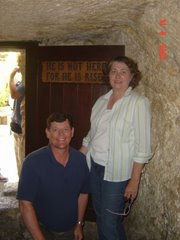
"But we have renounced disgraceful, underhanded ways. We refuse to practice cunning or to tamper with God’s word, but by the open statement of the truth we would commend ourselves to everyone’s conscience in the sight of God" (2 Cor. 4:2, ESV).
The word tamper (doloo) occurs only twice in the Greek New Testament (2 Cor. 4:2 and in 1 Cor. 5:6, ms D). BDAG says it generally means "to beguile by craft, then: to make false through deception or distortion, falsify, adulterate" (256). The goal of tampering is to leave the impression the Word says something that it does not actually say. The person who uses God's word cunningly to advance his agenda is in Paul's eyes disgraceful and underhanded. We must not be ignorant of the devices Satan uses (2 Cor. 2:11).
John MacArthur provides this wonderful insight into Satan's devices in his book, The Truth War (40). I have adapted this from him.
One of Satan's devices follows a common pattern. Satan, first, loves to ask questions that create doubt in the Word of God. “Did God actually say, ‘You shall not eat of any tree in the garden’?” (Gen. 3:2) Satan knew what God had said; he didn't want information but wanted Adam and Eve to change. Doubt is always the first step to apostasy.
Satan, second, contradicts what God says. "You shall surely not die" (3:4). Satan always wants people to know how much he knows. He knows things others don't know. He has the inside tract to what is really true. The desire to know His secrets, to be one of the elite, to buy into his arrogance, has led many unfortunate souls down the path to perdition. He is a liar and the father of lies (Jn 8:44). He will tell you what he thinks you want to hear. Eve was deceived by this lie; Adam was not. Adam knew that eating the fruit was wrong.
Satan, third, produces an alternate version of "truth." He said, "God knows that when you eat of it your eyes will be opened, and you will be like God, knowing good and evil.” (3:5) The devil's alternate always has a mix of truth in with the error. There is enough truth to sound persuasive, but his message is full of misrepresentations and distortions. MacArthur says, "Add it all up and the bottom line is a big lie." The father of lies was a murderer from the beginning, and he is costing souls today with his half-truths and alternatives.
Satan has always pretended to be what he is not (2 Cor. 11:13-15). He wants everyone to believe he has a better way, that God is trying to fool you, and that God is not your friend but is cheating you out of something really good. His strategy is to get people to rely upon him for real "progress."
There simply is nothing better "out there" than New Testament Christianity. The entertainment religions don't have anything better than congregational singing in worship. The church growth experts don't have a plan (from sociology) better than preaching the truth in love. You can't improve on God's way or God's will. The subterfuge will always ask questions to create doubt, contradict, and provide an alternative. Don't fall for it.
Phil
Wednesday, April 11, 2007


Monday, April 09, 2007
A Great Issue of Spiritual Sword
I hope you will read the April issue of the Spiritual Sword, entitled, "Wolves in Sheep's Clothing." It contains a devastating rebuke and refutation of the current movement to get instruments of music into the worship of the church. Alan Highers has masterfully refuted most of the current arguments that appear to permit the use of instruments.
I hope every elder of the Richland Hills church will read this issue. They said that they spent years studying the issue of the instrument. By the course of action they have taken, I would suggest they studied poorly. The case made by their senior minister is full of fallacies and contradictions. His arguments are weak, and only the naive are fooled by them.
I hope and pray elders and preachers all over the brotherhood will read this issue and cease arguing over the matter. There is not now, nor has there ever been in the last 2,000 years, one shred of evidence to support the use of instruments in the musical worship of the church.
If Biblical truth has any importance to those who profess New Testament Christianity and if brotherly love is to continue, then let the advocates of this innovation and self-made religion cease from reviving this terrible division. It is the human practice that caused the division a century ago, and it is the insistence on having this innovation that is causing the division today. To suggest that we ought to be together again and overlook humanly devised worship is merely to defect to error from truth.
Those who claim to be ambassadors for unity are in reality recruiters for compromise. Before there can be unity, there must first be repentance of error. We plead with our instrumental brethren, if you are so bent on unity, to give up the instrument and self-made religion and to come back to a cappella worship--where we were before you demanded change. Only then can there be unity.
kindly,
Phil
I hope every elder of the Richland Hills church will read this issue. They said that they spent years studying the issue of the instrument. By the course of action they have taken, I would suggest they studied poorly. The case made by their senior minister is full of fallacies and contradictions. His arguments are weak, and only the naive are fooled by them.
I hope and pray elders and preachers all over the brotherhood will read this issue and cease arguing over the matter. There is not now, nor has there ever been in the last 2,000 years, one shred of evidence to support the use of instruments in the musical worship of the church.
If Biblical truth has any importance to those who profess New Testament Christianity and if brotherly love is to continue, then let the advocates of this innovation and self-made religion cease from reviving this terrible division. It is the human practice that caused the division a century ago, and it is the insistence on having this innovation that is causing the division today. To suggest that we ought to be together again and overlook humanly devised worship is merely to defect to error from truth.
Those who claim to be ambassadors for unity are in reality recruiters for compromise. Before there can be unity, there must first be repentance of error. We plead with our instrumental brethren, if you are so bent on unity, to give up the instrument and self-made religion and to come back to a cappella worship--where we were before you demanded change. Only then can there be unity.
kindly,
Phil
Sunday, April 08, 2007
Humble ambiguity and arrogant certainty!
I am reading John MacArthur's new book, The Truth War, wherein he tells of the need to fulfill the instructions of Jude 3 to contend earnestly for the faith. I recommend this book to all, understanding that it is written from and evangelical and Calvinist perspective. He makes many good points about the need for a militant Christianity rather than a sensuous accommodation to the culture of our time.
God's Word is eternally true, eternally binding, and eternally clear.
This book does a good job of describing the postmodern, Emerging Church movement. I found this criticism of the Emerging church quite revealing:
Postmodernism casts us on a sea of uncertainty and glorifies agnosticism as supposedly a virtuous "humility." Frankly, such humility is realistically simple faithlessness. No, I'm not suggesting that we ought to be "know-it-alls." But at the same time, can we not have the saving knowledge that sets us free? Is the promise of Jesus found in John 8:31-32 true? Not if you believe the postmodern, religiously-correct crowd.
We don't have to have perfect, infinite knowledge to know some things. As for our Christianity, we know God is right when He speaks. We believe Him. He, after all, does know it all and is perfect in knowledge. If He says so, then who are we to correct Him? He doesn't need our elite help. We need His. Proverbs 3:5 is true about life and true about "doctrine."
The call of our time is not to compromise but to faith in God's word. Believe it.
kindly,
phil
God's Word is eternally true, eternally binding, and eternally clear.
This book does a good job of describing the postmodern, Emerging Church movement. I found this criticism of the Emerging church quite revealing:
Christ's headship in the church is likewise being challenged by those in the Emerging Church movement who have suggested that Scripture is simply not clear enough to allow us to preach its truth with any degree of clarity, certainty, or conviction. Most would never come right out and deny that the Bible is the Word of God, but they accomplish exactly the same thing when they insist that no one has any right to say for sure what the Bible means. (155)MacArthur notes that postmodernism has transformed doubt, uncertainty, and qualms about practically every teaching of Scripture into high virtue. Strong convictions plainly stated are invariably labeled "arrogance" by those who favor postmodern dialogue.
Postmodernism casts us on a sea of uncertainty and glorifies agnosticism as supposedly a virtuous "humility." Frankly, such humility is realistically simple faithlessness. No, I'm not suggesting that we ought to be "know-it-alls." But at the same time, can we not have the saving knowledge that sets us free? Is the promise of Jesus found in John 8:31-32 true? Not if you believe the postmodern, religiously-correct crowd.
We don't have to have perfect, infinite knowledge to know some things. As for our Christianity, we know God is right when He speaks. We believe Him. He, after all, does know it all and is perfect in knowledge. If He says so, then who are we to correct Him? He doesn't need our elite help. We need His. Proverbs 3:5 is true about life and true about "doctrine."
The call of our time is not to compromise but to faith in God's word. Believe it.
kindly,
phil
Friday, April 06, 2007
Can We Know Enough?
Rick Atchley and Bob Russell in their book, Together Again, argue for their unity on the basis of what we don't know. They place the instrument in the area of "disputable matters" (65), arguing that since Christians differ on the matter and Bible-believing brethren come to different conclusions, we should not divide over such matters (64).
If you think this argument through, Atchley and Russell are making an argument from ignorance or an argument from agnosticism. They say that in the light of the fact there is no specific prohibition of the instrument, we should not divide over the matter. We don't know enough from Scripture, since it is silent on the instrument, to make a ruling one way or the other--so let's accept both views as equally correct.
So, in the absence of what we know, we will discuss but make no judgments.
Are we really so ignorant? We know that:
If you think this argument through, Atchley and Russell are making an argument from ignorance or an argument from agnosticism. They say that in the light of the fact there is no specific prohibition of the instrument, we should not divide over the matter. We don't know enough from Scripture, since it is silent on the instrument, to make a ruling one way or the other--so let's accept both views as equally correct.
So, in the absence of what we know, we will discuss but make no judgments.
Are we really so ignorant? We know that:
- God wants us to sing (Eph. 5:19; Col. 3:16; Heb. 13:15)
- Christ wants His true disciples to abide in His Word (Jn 8:31-32; Mt. 7:21-27)
- Neither Christ nor the Holy Spirit ever acted on their own initiative with regard to the Word of God (Jn 12:48-50; 14:31; 16:12-13).
- Adding to the word of God is condemned (Mt 15:7-9; Gal. 1:6-9; 2 John 9-11)
- The unity for which Jesus prayed was first sanctified by truth (John 17:17-23)
We can know that it is wrong to act on a guess. Nadab and Abihu acted without authority; David and Uzzah acted without authority; Saul acted without authority at Gilgal; Ahaz acted without authority in adding an altar; and the Judaizers acted without authority in adding the Law to the Gospel. These examples are in the Scriptures for a reason, and they are for our learning (Rom. 15:4) so that we might have hope and not make the same mistakes. Are the Scriptures of the Old Testament never to reprove or correct us (2 Tim. 3:16-17)?
To say "we don't know enough about what God desires about music in worship, so we feel free to do as we wish" is bad business. It presumes the right to act on a guess. It is sand theology. I might just as well ignore all the positive things the Bible says about marriage and feel free to enter into a polygamous union (since there is no specific, New Testament prohibition of polygamy; by that I mean a specific "thou shalt not!" Interestingly, the same duo argue against drawing conclusions from inferences. Does God not imply and can we not infer a prohibition of polygamy from Romans 7:3 and 1 Corinthians 7:2?).
I would rather act on what I know than presume freedom in what I don't know. There really is a difference between building our houses on rock and on sand. Jesus wanted us to build on what we know, not build upon a guess.
kindly,
Phil
Wednesday, April 04, 2007
"Religion Degenerating into Music"
W. K. Pendleton was twice son-in-law of Alexander Campbell, and coeditor
of the Millennial Harbinger. He also succeeded Mr. Campbell as editor of the
Harbinger and president of Bethany College. He had an article in the Millennial
Harbinger, 1868, pages 36-42, "Religion Degenerating Into Music." W. K. Pendleton wrote this rather stinging piece about the introduction of the instrument into the worship of the church:
If the people will have an idol, music is perhaps as respectable a one as the
religious development of the nineteenth century can invent. We are not arguing
the relative merit of human inventions. We are denying that the Christian religion is, in any part--jot or tittle--a human invention at all. "Development" has nothing to do with it. It came from its divine Author perfect and complete, and the great work of the church is to hold the people to it; to protest, to remonstrate, to anathematize against anything that sets itself up beside it, till every imagination of man is crushed under its feet and withered by the breath of its nostrils. "Pure religion and undefiled"--sublimated into music! The sweet charities, that fall like heavenly dew upon the arid places of human woe--expired in screaming ecstasies of sound! 'Tis too impious. Better for the people, that some stern iconoclast should rise in the holy indignation of the old prophets, and break to pieces all the senseless organs and scatter all the godless choirs that desecrate our fashionable cathedrals, than that this fatal tendency to substitute a musical sentimentalism for a living Christianity should be allowed to go unrebuked until it has fixed itself, with the power of a fatal delusion, upon the habits and the credulity of the age. (Page 40.)
of the Millennial Harbinger. He also succeeded Mr. Campbell as editor of the
Harbinger and president of Bethany College. He had an article in the Millennial
Harbinger, 1868, pages 36-42, "Religion Degenerating Into Music." W. K. Pendleton wrote this rather stinging piece about the introduction of the instrument into the worship of the church:
If the people will have an idol, music is perhaps as respectable a one as the
religious development of the nineteenth century can invent. We are not arguing
the relative merit of human inventions. We are denying that the Christian religion is, in any part--jot or tittle--a human invention at all. "Development" has nothing to do with it. It came from its divine Author perfect and complete, and the great work of the church is to hold the people to it; to protest, to remonstrate, to anathematize against anything that sets itself up beside it, till every imagination of man is crushed under its feet and withered by the breath of its nostrils. "Pure religion and undefiled"--sublimated into music! The sweet charities, that fall like heavenly dew upon the arid places of human woe--expired in screaming ecstasies of sound! 'Tis too impious. Better for the people, that some stern iconoclast should rise in the holy indignation of the old prophets, and break to pieces all the senseless organs and scatter all the godless choirs that desecrate our fashionable cathedrals, than that this fatal tendency to substitute a musical sentimentalism for a living Christianity should be allowed to go unrebuked until it has fixed itself, with the power of a fatal delusion, upon the habits and the credulity of the age. (Page 40.)
Time article on the Bible
http://www.time.com/time/magazine/article/0,9171,1601845-1,00.html
The above link to a Time Magazine article on using the Bible in school is well worth reading.
Phil
The above link to a Time Magazine article on using the Bible in school is well worth reading.
Phil
Key stats
http://www.christianitytoday.com/money/articles/keystatistics.html
Some really valuable insights and statistics can be found at the site above.
Some really valuable insights and statistics can be found at the site above.
No impact
A March 2007 Gallup poll reported:
Our Easter research did not stop there. We werealso aware of the recent and controversial documentary by James Cameron, “The Lost Tomb of Jesus.”This documentary, recently aired on the DiscoveryChannel, investigated the supposed ossuary containing the skeletal remains of Jesus. While the Bible is very clear that Jesus died, was buried, and came back to life, we wanted to see how this documentary may affect the general public’s belief in the resurrection.
The research showed that 57 percent of the population either read about, heardabout, or watched this documentary. Familiarity with the documentary had no impact on the public view of the resurrection, as about 75 percent of both those with and without knowledge of the documentary believe in the bodily resurrection of Christ. It appears that belief in theresurrection neither drew them to watch the documentary nor influenced their belief.
http://www.namb.net/site/apps/nl/content2.asp?c=9qKILUOzEpH&b=1648583&ct=3710909
Our Easter research did not stop there. We werealso aware of the recent and controversial documentary by James Cameron, “The Lost Tomb of Jesus.”This documentary, recently aired on the DiscoveryChannel, investigated the supposed ossuary containing the skeletal remains of Jesus. While the Bible is very clear that Jesus died, was buried, and came back to life, we wanted to see how this documentary may affect the general public’s belief in the resurrection.
The research showed that 57 percent of the population either read about, heardabout, or watched this documentary. Familiarity with the documentary had no impact on the public view of the resurrection, as about 75 percent of both those with and without knowledge of the documentary believe in the bodily resurrection of Christ. It appears that belief in theresurrection neither drew them to watch the documentary nor influenced their belief.
http://www.namb.net/site/apps/nl/content2.asp?c=9qKILUOzEpH&b=1648583&ct=3710909
Well the proof is in the pudding, and Cameron's pudding is nothing to worry about.
Phil
Tuesday, April 03, 2007
Such is our folly..
In his excellent book, John Price quotes John Calvin, who is lamenting the natural progression to more and more departure once a departure from the truth has started:
Some seem all too blind to slippery slopes. They think little of the consequences of so slight an adjustment in policy. They think that just "bumping the boat" will have little affect on the direction. What's the harm in a little fun while we worship? What's the harm in a Saturday night rather than a Sunday morning? What's the harm in a little music?
I suppose the folks in Matthew 6 felt that way. What's the harm in a little paint on my face? What's the harm in praying before others? What's the harm in letting others know I give?
I can just imagine someone saying some of these things:
Open the door to more and more digression and departure from the simple teaching of the New Testament and we will come to be a church after our own imagination. How easily people justify their departures... How easily they justify their desires...
Phil
Such is our folly, that when we are left at liberty, all we are able to do
is go astray. And then when once we have turned aside from the right path, there is no end to our wanderings, until we get buried under a multitude of superstition. (Necessity of Reforming the Church, 17)
Some seem all too blind to slippery slopes. They think little of the consequences of so slight an adjustment in policy. They think that just "bumping the boat" will have little affect on the direction. What's the harm in a little fun while we worship? What's the harm in a Saturday night rather than a Sunday morning? What's the harm in a little music?
I suppose the folks in Matthew 6 felt that way. What's the harm in a little paint on my face? What's the harm in praying before others? What's the harm in letting others know I give?
I can just imagine someone saying some of these things:
"If we can play the instrument, why can't we serve roast lamb on
the Lord's Table? If we can play the instrument, let us also burn incense, offer grain offerings, and dance before the Lord. Why not just become Jews? Jesus was a Jew. The apostles were Jews. What difference does it make whether we bring in God's approved worship under the Old Covenant? Perhaps we should build an altar like Ahaz and put it up front for our offerings?"
Open the door to more and more digression and departure from the simple teaching of the New Testament and we will come to be a church after our own imagination. How easily people justify their departures... How easily they justify their desires...
Phil
Tuesday, March 27, 2007
John Price's book on Music
John Price, Old Light on New Worship (Avinger, Texas: Simpson Publishing Co., 2005). ca $15.99.
Jeff Jenkins of Lewisburg, Texas, recommended this book; and I have been delighted to read it. There is much to commend within its pages. Price is the pastor of Grace Baptist Church in Rochester, NY and a graduate of Trinity Ministerial Academy. He has done a thorough job of presenting the Reformed view on music and describing the Regulative Principle (what we would call prohibitive silence). He is well-acquainted with John Girardeau's work (found in Foy E. Wallace's book and online). He has done a good job of looking into history.
I have only had a chance to glance at the book since I arrived home from Ghana and went to the office yesterday (Mon., 03/26). I ordered the book before I left. I am glad I did.
Price notes that Luther regarded IM as an indifferent matter, but his colleagues Carlstadt and Melanchthon certainly did oppose it as sinful. I had always heard Luther called IM an "ensign of Baal." The other leaders of the Reformation belileved that the truth of the gospel could only be upheld within the context of a "biblically ordered worship." (They could not see IM in Christian worship either.) The other reformation leaders believed the central issue was the restoration of pure and spiritual worship according to the New Testament." (94. See the footnote: Carlos M. N. Eire, War Against Idols [Cambride University Press, 1986], 2, 195-233).
Sounds like us. Zwingli based his arguments on Scriptural principles and said that "only what Christ has explicitly commanded in His word should be part of the worship of the church" (94). Zwingli specifically applied this to the use of musical instruments. "Everything which is added to the true institutions of Christ is an abuse." Amen and amen.
Of course, Zwingli went to far and also forbade vocal music. Fortunately his edict to Zurich did not become the norm, which was unaccompanied congregational singing.
The book has much to commend it. Since I have not read it all, I cannot give it an unqualified recommendation. Reader beware: eat the fish and throw the bones away. But by all means, eat the fish.
I am considering writing a book on the music God desires in Christian worship. Should I?
Phil
Jeff Jenkins of Lewisburg, Texas, recommended this book; and I have been delighted to read it. There is much to commend within its pages. Price is the pastor of Grace Baptist Church in Rochester, NY and a graduate of Trinity Ministerial Academy. He has done a thorough job of presenting the Reformed view on music and describing the Regulative Principle (what we would call prohibitive silence). He is well-acquainted with John Girardeau's work (found in Foy E. Wallace's book and online). He has done a good job of looking into history.
I have only had a chance to glance at the book since I arrived home from Ghana and went to the office yesterday (Mon., 03/26). I ordered the book before I left. I am glad I did.
Price notes that Luther regarded IM as an indifferent matter, but his colleagues Carlstadt and Melanchthon certainly did oppose it as sinful. I had always heard Luther called IM an "ensign of Baal." The other leaders of the Reformation belileved that the truth of the gospel could only be upheld within the context of a "biblically ordered worship." (They could not see IM in Christian worship either.) The other reformation leaders believed the central issue was the restoration of pure and spiritual worship according to the New Testament." (94. See the footnote: Carlos M. N. Eire, War Against Idols [Cambride University Press, 1986], 2, 195-233).
Sounds like us. Zwingli based his arguments on Scriptural principles and said that "only what Christ has explicitly commanded in His word should be part of the worship of the church" (94). Zwingli specifically applied this to the use of musical instruments. "Everything which is added to the true institutions of Christ is an abuse." Amen and amen.
Of course, Zwingli went to far and also forbade vocal music. Fortunately his edict to Zurich did not become the norm, which was unaccompanied congregational singing.
The book has much to commend it. Since I have not read it all, I cannot give it an unqualified recommendation. Reader beware: eat the fish and throw the bones away. But by all means, eat the fish.
I am considering writing a book on the music God desires in Christian worship. Should I?
Phil
Monday, March 26, 2007
Out of Africa
Dewayne and I have come home from our 16-day trip to Kumasi, Ghana, West Africa, where we were teaching in Ghana Bible College. It was an exhausting trip with 95 degree, humid weather most days. The 60+ students we taught, however, made the trip very successful and meaningful.
Ghana celebrated its 50th Anniversary as a free country while we were there. They have made remarkable progress since my first trip there in 1999.
Ghana Bible College has doubled its number of students but is in serious financial need. It takes about $70,000 to $80,000 per year to run this wonderful school that trains preachers for that part of the world. They need your financial help. If you can do anything to help in this matter, please contact me.
God bless,
Phil
Ghana celebrated its 50th Anniversary as a free country while we were there. They have made remarkable progress since my first trip there in 1999.
Ghana Bible College has doubled its number of students but is in serious financial need. It takes about $70,000 to $80,000 per year to run this wonderful school that trains preachers for that part of the world. They need your financial help. If you can do anything to help in this matter, please contact me.
God bless,
Phil
Friday, March 02, 2007
The Problems with the Lost Tomb
When Simcha Jacobovici and James Cameron get together to make a blockbuster, $4 million "documentary" about an old find and act like there is a radical, new, life-changing discovery of the bones of Jesus and his family, we must object with more than a little skepticism.
This tomb on Talpiot street, found in 1980 by Amos Kloner, with ten ossuaries (bone boxes) has been featured at the Rockefeller Museum in Jerusalem for several years. The fact that the boxes contain names similar to those in the early family of Jesus (Joseph, Mary, Jesus) is really not that odd. These were very popular names and are found on several ossuaries.
Richard Bauckman of St Andrews University released a catalog of Palestinian ossuaries in 2002. Among the top ten names for males were both Joseph and Jesus. There are a total of 45 ossuaries from this period with the name of Joseph, 22 with the name of Jesus, and 42 with the name of Mary or Mariam. When you consider that these names appear even more often in other settings, it should not surprise us to find an ossuary with "Jesus, son of Joseph" and a Mary in the collective tomb. Finding boxes with these names on it does not mean that the family of Jesus of Nazareth has been found; it means that a Jesus, a Joseph, and a Mary has been found. Whether this Joseph and this Mary were married is not certain. Whether Mariam (thought to be Mary Magdalene) is here the wife of Jesus is only speculation.
But there is DNA evidence! DNA tests were only taken of the residue found in the ossuaries of Jesus and Mariam; they found that they were not blood kin. Jacobovici presumes Jesus and Mariam were married, but how do we know that? Could she not have been the wife of one of the other men? Since we don't have any indisputable DNA from the Jesus of history, how do we know this is Jesus of Nazareth? We don't. Jacobovici is speculating. It is at best a guess, and considering the evidence, an impossible one.
Why Jerusalem? Poor Galileans had little money to buy an expensive gravesite in Jerusalem, 75 miles away. Since there is no embalming, the body of Joseph (who likely died in Nazareth) would be stinking by the time they got it there.
Joseph's family of origin came from Bethlehem not Jerusalem. He lived and worked in Nazareth. Why would he be buried in Jerusalem?
If you research the web site, you will see that the "scholars" behind this film end up denying the resurrection and the ascension. They suggest the story behind the story is that the disciples stole the body of Jesus from the tomb of Joseph of Arimathea and buried him again at the Talpiot family site.
How did they get the body past the guards (Mt. 27:65)?
Why did they leave the grave clothes (John 20:6)?
How did they keep it a secret from Jesus' brothers James and Jude, who died beleiving in a resurrection?
The whole idea is preposterous! It ignores the history given by eyewitnesses in the New Testament to embrace the wide-eyed, fantasy find of a bunch of filmmakers who admit they are not scholars.
This supposed find is as bogus as can be.
Phil
The Lost Tomb of Jesus???? Give me a break!
mms://65.23.21.189/20070228.asf
copy and paste this link into your web browser to view our response
This appeared on Tennessean.com Tuesday 2/27/07
Published: Tuesday, 02/27/07
BRENTWOOD — Phil Sanders, minister of Concord Road Church of Christ and Dewayne Bryant, an archaeologist and deacon at the church, will present a response tomorrow night to a filmmaker who claims to have discovered the tomb and bones of Jesus.
Filmmaker James Cameron and the Discovery Channel on March 4 will present “The Lost Tomb of Jesus,” a documentary claiming that the Talipot tomb, opened in 1980, contained several ossuaries containing the bones of Jesus and his family.
The film calls into question the resurrection and the ascension of Jesus, suggests that Jesus was married to Mary Magdalene, and that Jesus had a son named Judah. To back up their claims the filmmaker appealed to DNA evidence and statistical analysis.
The program by Sanders and Bryan in response to the claims starts at 7 p.m. Wednesday at 7:00 PM at the church, located at 8221 Concord Road in Brentwood.
Bryant is a PhD candidate at Regions University and has more than 130 hours in graduate studies related to archaeology and the Old Testament. He currently teaches courses in archaeology and the Old Testament at Regions University in Montgomery, Ala. Bryant writes a monthly column for Think magazine, based in Brentwood and travels widely speaking to churches on topics relating to archaeology and the Bible.Sanders has an earned doctorate in Biblical studies and serves as an instructor at Nashville School of Preaching and Regions University, where he teaches courses related to the Passion of the Christ and Christian Evidences. Sanders appears weekly on a television program in the Nashville area and writes for Think magazine.
copy and paste this link into your web browser to view our response
This appeared on Tennessean.com Tuesday 2/27/07
Published: Tuesday, 02/27/07
BRENTWOOD — Phil Sanders, minister of Concord Road Church of Christ and Dewayne Bryant, an archaeologist and deacon at the church, will present a response tomorrow night to a filmmaker who claims to have discovered the tomb and bones of Jesus.
Filmmaker James Cameron and the Discovery Channel on March 4 will present “The Lost Tomb of Jesus,” a documentary claiming that the Talipot tomb, opened in 1980, contained several ossuaries containing the bones of Jesus and his family.
The film calls into question the resurrection and the ascension of Jesus, suggests that Jesus was married to Mary Magdalene, and that Jesus had a son named Judah. To back up their claims the filmmaker appealed to DNA evidence and statistical analysis.
The program by Sanders and Bryan in response to the claims starts at 7 p.m. Wednesday at 7:00 PM at the church, located at 8221 Concord Road in Brentwood.
Bryant is a PhD candidate at Regions University and has more than 130 hours in graduate studies related to archaeology and the Old Testament. He currently teaches courses in archaeology and the Old Testament at Regions University in Montgomery, Ala. Bryant writes a monthly column for Think magazine, based in Brentwood and travels widely speaking to churches on topics relating to archaeology and the Bible.Sanders has an earned doctorate in Biblical studies and serves as an instructor at Nashville School of Preaching and Regions University, where he teaches courses related to the Passion of the Christ and Christian Evidences. Sanders appears weekly on a television program in the Nashville area and writes for Think magazine.
Thursday, February 22, 2007
If you want to know about Jihad...
http://www.terrorismawareness.org/files/WANTKAJ.pdf
You may want to download Robert Spencer's brochure.
Also see this short film about the matter:
http://www.terrorismawareness.org/know-about-jihad/
Be informed.
Phil
You may want to download Robert Spencer's brochure.
Also see this short film about the matter:
http://www.terrorismawareness.org/know-about-jihad/
Be informed.
Phil
Wednesday, February 21, 2007
Chocolate Chip Ice Cream or Cherry Pie
As a child my favorite dessert was my grandmother's cherry pie (actually it was cobbler, but the only difference is the pan). Later in life I discovered Braum's Chocolate Chip Ice Cream, which I must have on every trip back to my home state of Oklahoma. Then, there is momma's apple pie, and Jackie's cakes--so delicious.
Sometimes life is like choosing between the several very wonderful things. Many are wonderful, delicious, and heart-warming with memories. I wish I could have them all, but that is not possible. The hardest decisions are not necessarily between good and evil but between what seems to be two equally-good choices.
The work of ministry is often that way. I love it all. I love the study. I love the people. I love the preaching and teaching. I love the writing. I love the challenge. I love seeing souls saved. I love life.
The problem is if I choose this, I can't also choose that. There is, after all, only one of me.
When I can't decide on my own, I just leave it in God's hands and do my best. God will see to the rest. I belong to Him..
Phil
Sometimes life is like choosing between the several very wonderful things. Many are wonderful, delicious, and heart-warming with memories. I wish I could have them all, but that is not possible. The hardest decisions are not necessarily between good and evil but between what seems to be two equally-good choices.
The work of ministry is often that way. I love it all. I love the study. I love the people. I love the preaching and teaching. I love the writing. I love the challenge. I love seeing souls saved. I love life.
The problem is if I choose this, I can't also choose that. There is, after all, only one of me.
When I can't decide on my own, I just leave it in God's hands and do my best. God will see to the rest. I belong to Him..
Phil
Saturday, February 10, 2007
Don't Be Ashamed to Be a Christian
We have been told there is too much baggage with the name "church of Christ," so we need to change our name to something with less baggage. The assumption is that if we change the name of the congregation, then we can avoid having that baggage. It does not seem to occur to those seeking such change that the names they come up with appears to have the baggage of a start-up, community church, more tied to the personality of the preacher than with some belief. Hmmm.
If I went to a Catholic church, I would expect Catholics to worship like Catholics. If I went into a synagogue, I would expect to see Jews worshiping like Jews. If I went to a Mormon tabernacle, I would expect to see Mormons singing their songs in the style in which they have become accustomed. Why then is it some are ashamed that we are a cappella? Why do some feel that we are odd to worship without accompaniment? Can we not simply be who we are without apology or strategizing that if we don't change, we'll be left behind?
The reasoning of the church in the 1870s was that if we don't upgrade and progress in religion like the denominations around us, we'll not be able to appeal to the community around us. Many of our brethren did "progress" beyond the common practice of a cappella music to be like the religionists (nations) around them and put in a melodeon or organ. They sacrificed the sacred way to appeal to the common. The constant drumbeat of "we must change to grow" fills the progressive media today--as if no one had ever heard that before. (This generation--unfamiliar with our history--hasn't heard it, and the gullible clamor for change.)
They sell the nonsensical notion that the restoration plea divides, so we must change and be like everyone around us. We must jettison the truth to continue on our journey of growth.
But those who did not jettison the truth or embrace the instrument back when it seemed change was the answer for everything stayed the course; and a century later we are nearly eight times larger. Others who followed path of compromise ended up a century later affirming almost nothing. They could not even say that Jesus was the only way to heaven in 1989, lest they hurt their interfaith talks (the vote in Cincinnati showed a very divided group). They thought, "Let's be open, and the world will beat a path to our door." They ended up looking wimpy and losing members rapidly.
Who wants to unite with a people who are ashamed of who they are and what they believe?
Let us stop apologizing for believing the truth! for obeying the Lord! We need some Shadrachs, Meshachs, and Abednegos today who will do what is right whatever the cost! Instead our self-proclaimed church growth "experts" continue to beat a drum of compromise and confusion. Christianity does not call us to be wimps or to "take back what we believe" simply because others don't agree.
Identity crisis?
Do we have an identity crisis in churches of Christ? Some do. Elijah knew who he was, because he believed in God. Those Israelites at Carmel who hesitated between two opinions either did not know who they were or were afraid to admit it. Their fear created the crisis. They were the ones who kept their mouths shut until the fire came down. Would to God some fire would come down today to wake up our brethren!
Why an identity crisis? Because shallow preachers of compromise have been allowed to usurp elders and churches and create doubt in the truth of the gospel and replace it with their imitation of evangelicalism. They have laughed at us and mocked us ceaselessly, and we kept silent. It did not matter that what they said was false and showed their own confusion and shame. We not only kept silent, we invited them to speak again and again to our kids and infect them with their compromise. When godly men and women did speak up, they were called legalistic and dismissed as troublemakers. Elijah the troublemaker?
They were ashamed before their denominational friends, ashamed of our doctrines and practices, and ashamed to speak the truth. We let their insecurity and shame become ours, when we kept silent. We let the wolves speak to our children and desensitize them to what is true and right, just as they did over a century ago. We found it fashionable to be casual (rather than holy) with our faith and presume upon the grace of God with our morals and doctrine. In our insipid and compromised state, we lacked the ability to make an impact on the communities around us. The very things these wolves told us we "must do to grow" robbed us of the power of our message.
There is no identity crisis with those who believe the truth of the gospel. There is an identity crisis with those who hearts long to be what they are not. When they long to be like the religions around them and to remake churches of Christ in their own desires, they create confusion and insecurity.
Part of maturing is learning to accept who you are, Whose you are, and what you are. Do we really need permission to be the people of God? Jesus is crying out for His people to stand up and be who they are. Let's quit listening to a bunch of compromising wimps (religious fashion experts) and start listening to the Lord. Instead of wearing what they call the fashion of the year, let's put back on the armor of God.
Phil
If I went to a Catholic church, I would expect Catholics to worship like Catholics. If I went into a synagogue, I would expect to see Jews worshiping like Jews. If I went to a Mormon tabernacle, I would expect to see Mormons singing their songs in the style in which they have become accustomed. Why then is it some are ashamed that we are a cappella? Why do some feel that we are odd to worship without accompaniment? Can we not simply be who we are without apology or strategizing that if we don't change, we'll be left behind?
The reasoning of the church in the 1870s was that if we don't upgrade and progress in religion like the denominations around us, we'll not be able to appeal to the community around us. Many of our brethren did "progress" beyond the common practice of a cappella music to be like the religionists (nations) around them and put in a melodeon or organ. They sacrificed the sacred way to appeal to the common. The constant drumbeat of "we must change to grow" fills the progressive media today--as if no one had ever heard that before. (This generation--unfamiliar with our history--hasn't heard it, and the gullible clamor for change.)
They sell the nonsensical notion that the restoration plea divides, so we must change and be like everyone around us. We must jettison the truth to continue on our journey of growth.
But those who did not jettison the truth or embrace the instrument back when it seemed change was the answer for everything stayed the course; and a century later we are nearly eight times larger. Others who followed path of compromise ended up a century later affirming almost nothing. They could not even say that Jesus was the only way to heaven in 1989, lest they hurt their interfaith talks (the vote in Cincinnati showed a very divided group). They thought, "Let's be open, and the world will beat a path to our door." They ended up looking wimpy and losing members rapidly.
Who wants to unite with a people who are ashamed of who they are and what they believe?
Let us stop apologizing for believing the truth! for obeying the Lord! We need some Shadrachs, Meshachs, and Abednegos today who will do what is right whatever the cost! Instead our self-proclaimed church growth "experts" continue to beat a drum of compromise and confusion. Christianity does not call us to be wimps or to "take back what we believe" simply because others don't agree.
Identity crisis?
Do we have an identity crisis in churches of Christ? Some do. Elijah knew who he was, because he believed in God. Those Israelites at Carmel who hesitated between two opinions either did not know who they were or were afraid to admit it. Their fear created the crisis. They were the ones who kept their mouths shut until the fire came down. Would to God some fire would come down today to wake up our brethren!
Why an identity crisis? Because shallow preachers of compromise have been allowed to usurp elders and churches and create doubt in the truth of the gospel and replace it with their imitation of evangelicalism. They have laughed at us and mocked us ceaselessly, and we kept silent. It did not matter that what they said was false and showed their own confusion and shame. We not only kept silent, we invited them to speak again and again to our kids and infect them with their compromise. When godly men and women did speak up, they were called legalistic and dismissed as troublemakers. Elijah the troublemaker?
They were ashamed before their denominational friends, ashamed of our doctrines and practices, and ashamed to speak the truth. We let their insecurity and shame become ours, when we kept silent. We let the wolves speak to our children and desensitize them to what is true and right, just as they did over a century ago. We found it fashionable to be casual (rather than holy) with our faith and presume upon the grace of God with our morals and doctrine. In our insipid and compromised state, we lacked the ability to make an impact on the communities around us. The very things these wolves told us we "must do to grow" robbed us of the power of our message.
There is no identity crisis with those who believe the truth of the gospel. There is an identity crisis with those who hearts long to be what they are not. When they long to be like the religions around them and to remake churches of Christ in their own desires, they create confusion and insecurity.
Part of maturing is learning to accept who you are, Whose you are, and what you are. Do we really need permission to be the people of God? Jesus is crying out for His people to stand up and be who they are. Let's quit listening to a bunch of compromising wimps (religious fashion experts) and start listening to the Lord. Instead of wearing what they call the fashion of the year, let's put back on the armor of God.
Phil
Friday, February 02, 2007
Watch out for the Bank scam!!
You probably get warnings to never, never, never, NEVER give your personal information to anyone for any reason. Well, pay attention.
My local bank, I thought, had a message for me to update my information. Since it came in a secured area and was in the message center of the bank, I figured it was important for me to update. Wrong, wrong, WRONG. The identity thieves sent over $3,000 of my money via a wire service to who knows where.
Now I'll get the money back and will go through a little grief, but my bank and the card company will be defrauded because of my moment of confusion.
Banks never, never, NEVER ask for this kind of information online or in any other way. Once an account is opened, it does not go through occasional updates. So, don't get suckered and give info to anybody online for any reason. Never, never, NEVER.
Nuff said.
Foolish Phil
My local bank, I thought, had a message for me to update my information. Since it came in a secured area and was in the message center of the bank, I figured it was important for me to update. Wrong, wrong, WRONG. The identity thieves sent over $3,000 of my money via a wire service to who knows where.
Now I'll get the money back and will go through a little grief, but my bank and the card company will be defrauded because of my moment of confusion.
Banks never, never, NEVER ask for this kind of information online or in any other way. Once an account is opened, it does not go through occasional updates. So, don't get suckered and give info to anybody online for any reason. Never, never, NEVER.
Nuff said.
Foolish Phil
James Hayes article on the Superbowl
Who Wins on Super Bowl Sunday?
Today is Super Bowl Sunday. It has become a worldwide event. Last year an estimated 90 million people watched the Super Bowl. This year a 30-second commercial during the game costs the advertiser $2.5 million. There is a two-week gap between the league championship games and the Super Bowl to accommodate the hype. Professional football is now our national pastime, which makes the Super Bowl the most beloved sporting event.
But as the world focuses its attention on the Bears and Colts, who is focusing on God? Every Sunday is the Lord’s day (Rev. 1:10). The Lord was raised on the first day of the week (John 20:1). First-century Christians met on the first day of the week to worship and fellowship (Acts 20:7; I Cor. 16:2). Undoubtedly, millions of believers will meet to honor God on this day. But those who are lost, those who are spiritually bankrupt, and those who are lost in sin are giving no thought to Christ this day. Their focus is on the Colts and Bears…
…which leads me to this question: Who will win today? I’m not thinking about the final score of the game; I’m wondering about who will gain a foothold in the hearts and minds of 90 million people. Will it be Satan or Christ?
When Anheuser-Busch, the self-described King of Beers, spends over $20 million on commercials during the game, who will win, Satan or Christ? When GoDaddy.com, who had to film three commercials in order to produce just one that was not obscene, airs its ad, who will gain the advantage, Satan or Christ? When hundreds of millions—if not billions—of dollars are wagered on everything from who will win the coin toss to how long it will take Billy Joel to sing the National Anthem, who will have the influence, Satan or Christ? When Christians, yes Christians, use this game as yet another excuse not to worship the Lord, are they being faithful to Satan or Christ?
Football is amoral. Like so many things, it is not inherently good or bad. The question is, how are you using it? To faithful believers, this game will be just another game to enjoy after they have given God the praise and devotion He deserves. To others, it will be another opportunity for them to submit to the schemes of the devil (Eph. 6:11).
--James Hayes
I thought this was an excellent article and makes a great point. Thanks to James who is a good friend and a capable gospel preacher.
Phil
Today is Super Bowl Sunday. It has become a worldwide event. Last year an estimated 90 million people watched the Super Bowl. This year a 30-second commercial during the game costs the advertiser $2.5 million. There is a two-week gap between the league championship games and the Super Bowl to accommodate the hype. Professional football is now our national pastime, which makes the Super Bowl the most beloved sporting event.
But as the world focuses its attention on the Bears and Colts, who is focusing on God? Every Sunday is the Lord’s day (Rev. 1:10). The Lord was raised on the first day of the week (John 20:1). First-century Christians met on the first day of the week to worship and fellowship (Acts 20:7; I Cor. 16:2). Undoubtedly, millions of believers will meet to honor God on this day. But those who are lost, those who are spiritually bankrupt, and those who are lost in sin are giving no thought to Christ this day. Their focus is on the Colts and Bears…
…which leads me to this question: Who will win today? I’m not thinking about the final score of the game; I’m wondering about who will gain a foothold in the hearts and minds of 90 million people. Will it be Satan or Christ?
When Anheuser-Busch, the self-described King of Beers, spends over $20 million on commercials during the game, who will win, Satan or Christ? When GoDaddy.com, who had to film three commercials in order to produce just one that was not obscene, airs its ad, who will gain the advantage, Satan or Christ? When hundreds of millions—if not billions—of dollars are wagered on everything from who will win the coin toss to how long it will take Billy Joel to sing the National Anthem, who will have the influence, Satan or Christ? When Christians, yes Christians, use this game as yet another excuse not to worship the Lord, are they being faithful to Satan or Christ?
Football is amoral. Like so many things, it is not inherently good or bad. The question is, how are you using it? To faithful believers, this game will be just another game to enjoy after they have given God the praise and devotion He deserves. To others, it will be another opportunity for them to submit to the schemes of the devil (Eph. 6:11).
--James Hayes
I thought this was an excellent article and makes a great point. Thanks to James who is a good friend and a capable gospel preacher.
Phil
Thursday, February 01, 2007
The Most Foolish Decision of Our Age
Prov. 10:14-27 Do not enter the path of the wicked, and do not walk in the way of the evil.
15 Avoid it; do not go on it; turn away from it and pass on.
16 For they cannot sleep unless they have done wrong;
they are robbed of sleep unless they have made someone stumble.
17 For they eat the bread of wickedness and drink the wine of violence.
18 But the path of the righteous is like the light of dawn,
which shines brighter and brighter until full day.
19 The way of the wicked is like deep darkness; they do not know over what they stumble.
20 My son, be attentive to my words; incline your ear to my sayings.
21 Let them not escape from your sight; keep them within your heart.
22 For they are life to those who find them, and healing to all their flesh.
23 Keep your heart with all vigilance, for from it flow the springs of life.
24 Put away from you crooked speech, and put devious talk far from you.
25 Let your eyes look directly forward, and your gaze be straight before you.
26 Ponder the path of your feet; then all your ways will be sure.
27 Do not swerve to the right or to the left; turn your foot away from evil.
Prov. 16:17 The highway of the upright turns aside from evil;
whoever guards his way preserves his life.
Prov. 22:3 The prudent sees danger and hides himself,
but the simple go on and suffer for it. (cf. Prov. 27:12)
The most foolish decision made in our culture is to embrace moral and theological non-judgmentalism. This is more than just saying yes to sin; it is embracing a point of view that ignores the evidence of the harmfulness of sin. It says, "I will do as I please; I won't tell anybody what they can or can't do; and I won't let anybody tell anybody what they can or can't do." Non-judgmentalism makes every perverted, dangerous, illogical behavior and ideology permissible. Sin is sinful anymore, and heresy doesn't matter to the non-judgmental, progressive inclusivists. They have grace.
The simple go on and suffer for it. Non-judgmentalism is an excuse to be "simple" and "naive."
So what do we have? Millions of couples cohabiting; a record 38 percent illegitimacy in births; a gay agenda taught in elementary schools; 40+ million aborted babies; pornography on television; polyamory (group marriage); a 50 percent failure rate for marriage; and rampant addiction to a multitude of destructive behaviors. In the church, we have nothing as a salvation issue anymore. One denomination (following the 1989 lead of the Disciples of Christ) voted not to say that Jesus is the only way to heaven anymore, so that we don't hurt our interfaith discussions.
When the Middle East folks look at the West and call us Satan, do you wonder why? Our inability or unwillingness to overcome our foolishness has made us weak and ungodly, not strong and spiritual.
We have so sold out to moral and theological compromise and so weakened our resolve against evil that we have lost any sense of character or strength.
We today face a radical threat who has resolved to conquer the world and kill us or control us with dhimmitude. Instead of foolishly claiming a destructive moral freedom, our nation ought to humble itself before the one true and living God and His Son Jesus.
Is it not time to call our nation to repentance? Can we not see where the future leads if we continue in our foolishness?
Phil
15 Avoid it; do not go on it; turn away from it and pass on.
16 For they cannot sleep unless they have done wrong;
they are robbed of sleep unless they have made someone stumble.
17 For they eat the bread of wickedness and drink the wine of violence.
18 But the path of the righteous is like the light of dawn,
which shines brighter and brighter until full day.
19 The way of the wicked is like deep darkness; they do not know over what they stumble.
20 My son, be attentive to my words; incline your ear to my sayings.
21 Let them not escape from your sight; keep them within your heart.
22 For they are life to those who find them, and healing to all their flesh.
23 Keep your heart with all vigilance, for from it flow the springs of life.
24 Put away from you crooked speech, and put devious talk far from you.
25 Let your eyes look directly forward, and your gaze be straight before you.
26 Ponder the path of your feet; then all your ways will be sure.
27 Do not swerve to the right or to the left; turn your foot away from evil.
Prov. 16:17 The highway of the upright turns aside from evil;
whoever guards his way preserves his life.
Prov. 22:3 The prudent sees danger and hides himself,
but the simple go on and suffer for it. (cf. Prov. 27:12)
The most foolish decision made in our culture is to embrace moral and theological non-judgmentalism. This is more than just saying yes to sin; it is embracing a point of view that ignores the evidence of the harmfulness of sin. It says, "I will do as I please; I won't tell anybody what they can or can't do; and I won't let anybody tell anybody what they can or can't do." Non-judgmentalism makes every perverted, dangerous, illogical behavior and ideology permissible. Sin is sinful anymore, and heresy doesn't matter to the non-judgmental, progressive inclusivists. They have grace.
The simple go on and suffer for it. Non-judgmentalism is an excuse to be "simple" and "naive."
So what do we have? Millions of couples cohabiting; a record 38 percent illegitimacy in births; a gay agenda taught in elementary schools; 40+ million aborted babies; pornography on television; polyamory (group marriage); a 50 percent failure rate for marriage; and rampant addiction to a multitude of destructive behaviors. In the church, we have nothing as a salvation issue anymore. One denomination (following the 1989 lead of the Disciples of Christ) voted not to say that Jesus is the only way to heaven anymore, so that we don't hurt our interfaith discussions.
When the Middle East folks look at the West and call us Satan, do you wonder why? Our inability or unwillingness to overcome our foolishness has made us weak and ungodly, not strong and spiritual.
We have so sold out to moral and theological compromise and so weakened our resolve against evil that we have lost any sense of character or strength.
We today face a radical threat who has resolved to conquer the world and kill us or control us with dhimmitude. Instead of foolishly claiming a destructive moral freedom, our nation ought to humble itself before the one true and living God and His Son Jesus.
Is it not time to call our nation to repentance? Can we not see where the future leads if we continue in our foolishness?
Phil
Wednesday, January 31, 2007
Good but not baptized?
The following is an article written by Hugo McCord, which expresses truth. We must never allow our feelings to re-write what God proclaims.
What Will Happen
To Good But Unbaptized People?[1]
A person of unquestioned sincerity, convinced she should be baptized, hesitated because she knew of many fine people who were not baptized. “What will happen to good unbaptized people?” she asked. Certainly it is easy to understand her reasoning.
That there are excellent moral people, fair to all men, merciful to the unfortunate, who have not been baptized into the Lord is a well-known fact. But if a good man touches a highly charged electric wire, God’s law about electricity is not changed.
That good people have not been immersed does not change God’s law about immersion (Rom. 6:3,4; Col. 2:12).
That many millions of people were baptized as infants does not change God’s law that baptism is for believers (Mark 16:15,16; Acts 8:36).
That millions of people have been baptized into various sects and denominations does not change God’s law that baptism is into one body, one church (1 Cor. 12:13; Col. 1:18).
That many sincere Jews and upright Mohammedans have not confessed Jesus does not change God’s law about the deity of His Son (John 3:18; Mark 16:6; Acts 4:12).
That some are moral and yet deny the existence of God does not change God’s law about faith in him (Heb. 11:6).
But the laws of God also reveal that some people are better off in God’s sight unbaptized than some who have been immersed (2 Pet. 2:20-22). God’s laws also reveal that some heathen people, not being as stubborn as some who have heard the message of Jesus are going to have it easier in the day of judgment (Matt. 11:20-24). God’s word also reveals that some without a Bible have lived better before God than some knowing the Bible (Rom. 2:14-24).
Certainly one should conclude that no matter what mercy some may have in the day of judgment, that mercy will not be extended to one who knows God’s law on baptism and who refuses to obey (James 4:17; 1 John 2:4).
[1] Hugo McCord, “What Will Happen to Good Unbaptized People,” in Fifty Years of Lectures, Vol. 2, pp. 252,253.
What Will Happen
To Good But Unbaptized People?[1]
A person of unquestioned sincerity, convinced she should be baptized, hesitated because she knew of many fine people who were not baptized. “What will happen to good unbaptized people?” she asked. Certainly it is easy to understand her reasoning.
That there are excellent moral people, fair to all men, merciful to the unfortunate, who have not been baptized into the Lord is a well-known fact. But if a good man touches a highly charged electric wire, God’s law about electricity is not changed.
That good people have not been immersed does not change God’s law about immersion (Rom. 6:3,4; Col. 2:12).
That many millions of people were baptized as infants does not change God’s law that baptism is for believers (Mark 16:15,16; Acts 8:36).
That millions of people have been baptized into various sects and denominations does not change God’s law that baptism is into one body, one church (1 Cor. 12:13; Col. 1:18).
That many sincere Jews and upright Mohammedans have not confessed Jesus does not change God’s law about the deity of His Son (John 3:18; Mark 16:6; Acts 4:12).
That some are moral and yet deny the existence of God does not change God’s law about faith in him (Heb. 11:6).
But the laws of God also reveal that some people are better off in God’s sight unbaptized than some who have been immersed (2 Pet. 2:20-22). God’s laws also reveal that some heathen people, not being as stubborn as some who have heard the message of Jesus are going to have it easier in the day of judgment (Matt. 11:20-24). God’s word also reveals that some without a Bible have lived better before God than some knowing the Bible (Rom. 2:14-24).
Certainly one should conclude that no matter what mercy some may have in the day of judgment, that mercy will not be extended to one who knows God’s law on baptism and who refuses to obey (James 4:17; 1 John 2:4).
[1] Hugo McCord, “What Will Happen to Good Unbaptized People,” in Fifty Years of Lectures, Vol. 2, pp. 252,253.
Friday, January 26, 2007
A Great Gift and Opportunity
Last year, Mack Lyon of "In Search of the Lord's Way" offered me a wonderful opportunity to be a guest speaker on his television program, which airs to 25-50 million viewers (this is the actual audience not the potential). I will be speaking on the subject of the "Love of God." Craig Dodgen, Jackie's brother and a employee of Search, informs me that the program will air on February 4. You will have to check your local listings for the station and time or go to http://www.searchtv.org to find where and when the program airs in your area. Search is one of the three most watched religious television programs in America; it is the only program produced by churches of Christ to reach that distinction.
Mack is a marvelous preacher and one of most longest and dearest friends. He has been a mentor to me and much like a father. I can hardly express enough my deep appreciation for what he has done in the cause of Christ.
This is certainly the most exciting opportunity of my life. I am deeply grateful to Mack and to Search for inviting me. God is so very good.
In the meantime, go to our website http://www.tv.God-answers.org to visit what we are doing with God's Answers to Life's Questions, the television production of Concord Rd. Church of Christ.
May the Lord bless,
Phil
Monday, January 22, 2007
I love this song
http://www.youtube.com/watch?v=2A2Jt4WOxN8
Iz, though no longer with us, has touched so many with this encouraging song. I wish I had met him to thank him for this song.
Iz, though no longer with us, has touched so many with this encouraging song. I wish I had met him to thank him for this song.
The Lord's Supper and Saturday night? Let's Think
Lord’s Supper on Saturday night?
Acts 20:7
Acts 20:6-7
6 And we sailed from Philippi after the days of Unleavened Bread, and came to them at Troas within five days; and there we stayed seven days.
7 And on the first day of the week, when we were gathered together to break bread, Paul began talking to them, intending to depart the next day, and he prolonged his message until midnight.
8 And there were many lamps in the upper room where we were gathered together.
9 And there was a certain young man named Eutychus sitting on the window sill, sinking into a deep sleep; and as Paul kept on talking, he was overcome by sleep and fell down from the third floor, and was picked up dead.
10 But Paul went down and fell upon him and after embracing him, he said, "Do not be troubled, for his life is in him."
And when he had gone back up, and had broken the bread and eaten, he talked with them a long while, until daybreak, and so departed.
12 And they took away the boy alive, and were greatly comforted.
“Upon the first day of the week”
En de th mia twn sabbatwn
“On the first day of the week” (KJV, ASV, RSV, NASB, NRSV, ESV, NIV, McCord, CEV, NKJV, ISV, NCV, NLT, Weymouth, )
“On Sunday” (GWT, IE, Living Bible)
“Saturday night” (NEB, TEV)
Why did the church meet on the first day of the week?
Jesus was resurrected (Mark 16:1,2; Luke 24:1,7,13,20-22; John 20:1,19)
Pentecost always came then (Lev. 23:15,16).
(a) the Holy Spirit came upon the apostles;
(b) the first preaching of the gospel in fulfillment of Isa. 2:2-4
(c) the beginning of the church (Acts 11:15).
The church gave its contribution (1 Cor. 16:1-2)
The Jewish day was from sunset to sunset.
The Way Nations Reckoned Time
n Babylonians: sunrise to sunrise
n Umbrians: noon to noon
n Romans: midnight to midnight
n Athenians: sunset to sunset
n Jews: sunset to sunset
The statement that at Troas the travelers and their fellow-Christians dwelling in that port met together for the breaking of the bread "upon the first day of the week" is the earliest unambiguous evidence we have for the Christian practice of gathering for worship on that day. The breaking of the bread probably denotes a fellowship meal in the course of which the Eucharist was celebrated (cf. 2:42).[1]
[1] F.F. Bruce, The Book of Acts in the New International Commentary on the New Testament Series, p. 408.
Acts 20:7-11 describes a meeting on the evening of the first day of the week, but whether this was Saturday night or Sunday night is uncertain, because it is disputed whether the method of time reckoning was Jewish (Saturday night) or Greek or Roman (Sunday night). Thereafter, Christian sources give uniform testimony to meetings on Sunday (Did. 14; Justin 1 Apol. 67; Bardesanes, On Fate). Apart from Acts 2:46, which is ambiguous, there is no evidence in early Christian literature for a daily Lord's supper, or indeed for its observance on any day other than Sunday.[2]
[2] Everett Ferguson, "Sunday," in Encyclopedia of Early Christianity, p. 874).
A.T. Robertson on Acts 20:7
“They probably met on our Saturday evening, the beginning of the first day at sunset. So these Christians began the day (Sunday) with worship. But, since this is a Gentile community, it is quite possible that Luke means our Sunday evening as the time when this meeting occurs, and the language in John 20:19 “it being evening on that day the first day of the week” naturally means the evening following the day, not the evening preceding the day.”
Word Pictures in the New Testament, III:339.
This is the clearest verse in the New Testament which indicates that Sunday was the normal meeting day of the apostolic church. Paul stayed in Troas for seven days (v. 6) and the church met on the first day of the week. Luke’s method of counting days here was not Jewish, which measures from sundown to sundown, but Roman, which counted from midnight to midnight. This can be stated dogmatically because “daylight” (v. 11) was the next day (v. 7).
Probably the church met at night because most people had to work during the day. Because Paul was leaving them, possibly for the final time, he prolonged his discourse until midnight.[1] [1]Walvoord, J. F., R. B. Zuck, & Dallas Theological Seminary. The Bible Knowledge Commentary : An Exposition of the Scriptures. Wheaton, IL: Victor Books, 1983-c1985. Ac 20:7.
On Sunday evening, not Saturday evening; Luke is not using the Jewish reckoning from sunset to sunset but the Roman reckoning from midnight to midnight; although it was apparently after sunset that they met, "break of day" (vs. 11) was "on the morrow" (vs. 7).[1]
[1]F. F. Bruce, The Book of Acts, p. 408, fn 25.
“since Troas was a Gentile community, it is quite probable that Sunday evening is meant. This becomes almost certain when the expression used here is compared with its use in John 20:19, where the “first day of the week” cannot possibly refer to Saturday evening, but must refer to Sunday evening”
Henry Waterman, Zondervan Pictorial Bible Encyclopedia of the Bible, Vol. 3, p. 965.
Thus this passage [Acts 20:7] provides a connecting link between the first meeting of Jesus with his disciples on the evening of the resurrection day (John 20:19-23; Luke 24:36-43) and the established custom of the church of the 2nd and 3rd centuries of assembling together for worship on the first day of the week.”
Henry Waterman, Zondervan Pictorial Bible Encyclopedia of the Bible, Vol. 3, p. 965.
“It is significant that the meeting of Jesus with the disciples on the first Lord’s day, the meeting of Paul with the disciples at Troas, and the meeting of the disciples in succeeding generations, each took place on Sunday evening; each was observed by the breaking of bread; and each was characterized by a discourse on the holy Scripture.”
Henry Waterman, Zondervan Pictorial Bible Encyclopedia of the Bible, Vol. 3, p. 965.
Dr. Willy Rordorf of Neuchatel University in Switzerland:
After years of study, Rordorf concluded that for early Christians, there was no “day of the Lord” without the Lord’s Supper, nor was there ever the observance of the Lord’s Supper on any other day except on the day of the Lord. He said, “We have no right to call Sunday the ‘Lord’s Day,’ if the Lord’s Supper is lacking.”
Willy Rordorf, Sunday, (Westminster Press, 1968), 306.
“There is nothing more certain than that the division of time which made the day begin at six pm was not continued in New Testament times, and especially among the Gentile nations.
Matt. 28:1 Now after the Sabbath, as it began to dawn toward the first day of the week, Mary Magdalene
Mark 16:1-2 And when the Sabbath was over…2 And very early on the first day of the week, they came to the tomb when the sun had risen.
Christians had their regular meeting, particularly to partake of the Eucharist, on the first day of the week. The likely origin of this practice was the meeting of Jesus with his disciples on the day of the resurrection and the following Sunday, as noted in John 20:1, 19, 26). The Greek adjective "the Lord's" (kuriakos) occurs in the New Testament for the Lord's day (Rev. 1:10) and the Lord's Supper (1 Cor. 11:20) and had its principal usage in Christianity in reference to Sunday.
Everett Ferguson
The phrase “the Lord’s Day” occurs only once in the New Testament, in Revelation 1:10 , where John declared, “I was in the Spirit on the Lord’s Day.” In Asia Minor, where the churches to which John wrote were situated, the pagans celebrated the first day of each month as the Emperor’s Day. Some scholars also believe that a day of the week was also called by this name.
When the early Christians called the first day of the week the Lord’s Day, this was a direct challenge to the emperor worship to which John refers so often in the Book of Revelation. Such a bold and fearless testimony by the early Christians proclaimed that the Lord’s Day belonged to the Lord Jesus Christ and not the emperor Caesar.[1]
[1]Youngblood, R. F., F. F. Bruce, R. K. Harrison, & Thomas Nelson Publishers. Nelson's New Illustrated Bible Dictionary. Nashville: T. Nelson, 1995.
A designation for Sunday, the first day of the week, used only once in the New Testament (Rev. 1:10). The Greek word for “Lord’s,” however, is precisely the same as that used in the term for “Lord’s Supper” (1 Cor. 11:20). In fact, the Didache, an early Christian manual for worship and instruction, links the two terms together, indicating that the Lord’s Supper was observed each Lord’s Day (14:1). Herein may lie the origin of the term. Because the first day of the week was the day on which the early Christians celebrated Lord’s Supper, it became known as Lord’s Day, the distinctively Christian day of worship.
Holman Bible Dictionary, “Lord’s Day.”
The earliest account of a first-day worship experience is found in Acts 20:7-12. Here Paul joined the Christians of Troas on the evening of the first day of the week for the breaking of bread (probably a reference to the Lord’s Supper). The actual day is somewhat uncertain. Evening of the first day could refer to Saturday evening (by Jewish reckoning) or to Sunday evening (by Roman reckoning). Since the incident involved Gentiles on Gentile soil, however, the probable reference is to Sunday night.
Holman Bible Dictionary, “The Lord’s Day”
My thoughts:
The observance of the Lord's Supper at Troas was on the first day of the week. Whether this was determined by Jewish time (Saturday night) or by Roman time (Sunday night) is at question here. While we do not seek to be dogmatic, there is not enough evidence to convince this student that Acts 20:7 could only be speaking of Saturday night.
The fact that John 20:19 (written by John and likely from Ephesus) speaks of the evening of the first day of the week as "that day" that Jesus arose, shows to me that as time passed the apostles reckoned and wrote of time in the way the Romans did rather than the way Jews did. Would the church at Troas (a Gentile port not far from Ephesus) have operated on Jewish time?
The suggestion that we may partake of the Lord's Supper on Saturday evening actually lies on a very shaky foundation--perhaps sand, not rock.
Let's think this one through before we launch an effort to make Saturday night into Sunday--at least based on Acts 20:7.
Phil
Wednesday, January 17, 2007
Doctrinal Desensitizing
Desensitize: to make emotionally insensitive or callous specif : to extinguish an emotional response (as of fear, anxiety, or guilt) to stimuli that formerly induced it — (Merriam-Webster's Collegiate Dictionary, 11th ed.)
Paul said, "Bad company ruins good morals" (1 Cor. 15:33, ESV).
Television has displayed so much profanity, fornication, adultery, violence, deception, crime, addiction, and abuse that many people believe that it is the norm. As a nation, America is slowly desensitizing to moral sin.
The courtrooms, the media, and the schools have so silenced Christianity that many believe God should never have a voice in anything. When Christians are portrayed they should be seen as hypocrites, idiots or extremists. America is slowly desensitizing to commitment to Christ as Lord.
God still opposes those who turn morality and truth upside down (Isa. 5:20ff.) Desensitizing is one of the devil's methods of bringing about corruption. If the devil can get you over feeling guilty about sin, he can get you to do anything.
Bad people who want moral change find ways to mock and disparage what they oppose. Their witty blasphemy of what is good desensitizes the naive. This is true of moral desensitization, but it is also true of doctrinal desensitization. Doctrinal desensitization is a process that takes place when people who once believed the truth feel no guilt about abandoning it.
Doctrinal desensitization comes from these things: (1) making fun of the godly and right views; (2) quietly introducing the corrupting practice to the young who have not yet come to understand fully the truth; (3) making it fashionable to despise what is right by labeling and stereotyping; (4) creating doubt in the word of God and its teaching; (5) making heroes out of doctrinal dissidents; and (6) disseminating inaccurate information (or teaching error).
Here are some examples of desensitization and misinformation with an answer in the parenthesis:
Paul said, "Bad company ruins good morals" (1 Cor. 15:33, ESV).
Television has displayed so much profanity, fornication, adultery, violence, deception, crime, addiction, and abuse that many people believe that it is the norm. As a nation, America is slowly desensitizing to moral sin.
The courtrooms, the media, and the schools have so silenced Christianity that many believe God should never have a voice in anything. When Christians are portrayed they should be seen as hypocrites, idiots or extremists. America is slowly desensitizing to commitment to Christ as Lord.
God still opposes those who turn morality and truth upside down (Isa. 5:20ff.) Desensitizing is one of the devil's methods of bringing about corruption. If the devil can get you over feeling guilty about sin, he can get you to do anything.
Bad people who want moral change find ways to mock and disparage what they oppose. Their witty blasphemy of what is good desensitizes the naive. This is true of moral desensitization, but it is also true of doctrinal desensitization. Doctrinal desensitization is a process that takes place when people who once believed the truth feel no guilt about abandoning it.
Doctrinal desensitization comes from these things: (1) making fun of the godly and right views; (2) quietly introducing the corrupting practice to the young who have not yet come to understand fully the truth; (3) making it fashionable to despise what is right by labeling and stereotyping; (4) creating doubt in the word of God and its teaching; (5) making heroes out of doctrinal dissidents; and (6) disseminating inaccurate information (or teaching error).
Here are some examples of desensitization and misinformation with an answer in the parenthesis:
- Baptism can mean wash, so it's wrong to say that one has to be immersed to be baptized. "Legalists" demand immersion. (When you can't answer an argument, just call your opponent a name. Immersion was the uniform practice of the early church in Christian baptism.)
- Psallo and psalmos can only refer to instrumental songs, since David played the harp. (It doesn't seem to matter that for hundreds of years the regular worship of synagogue included psalloing psalmoi with the use of any instrument.)
- The reason for baptism doesn't matter as long as a person is obeying the Lord. (Of course, one has to wonder if obedience to the Lord includes denying what the Lord says. Does a person who denies baptism is for the forgiveness of sins obey the Lord in baptism, or does he obey a false teaching?)
- We can worship any way we want to as long as we are not in the assembly. Jesus didn't die over the instrument issue. (So that makes using a piano in the classroom and a guitar in your youth gatherings okay? That makes calling Christian musical worship a concert okay? It seems to me that if people are not willing to obey the Lord everyday and everywhere, they are still disobedient. Being outside the assembly doesn't turn disobedience into obedience. Ephesians 5:19 and Colossians 3:16 refer to our musical worship not only on Sunday but everyday and in every group setting.)
- Acts 20:7 is talking about Saturday night. (Is it? Did the people of Troas operate on Jewish time? Did the Gentile Luke far away from Israel obeserve Jewish or Roman time? Could this not have been Sunday night instead? See John 20:19.)
- If we don't loosen up and do things people expect out of church, we won't ever grow. Don't you love the souls of people? (The church doesn't belong to people; the church belongs only to the Lord. Jesus is the only King and the only one who has a right to rule the church. It is not loving or obedient to give in to popular demand rather than to listen to the words of the Lord--1 Samuel 15; Matthew 7:21-27. We love souls by telling them the truth, not by allowing them to believe error.)
Callous people are past feeling guilt. They not only willfully ignore (deliberately overlook, ESV) the truth (2 Pet. 3:5) but also like the devil keep the truth from reaching the ears of those who are young and naive in the faith (Luke 8:11-13). It is manifestly true that many young people among us have never heard the debates over the distintive nature of the church, baptism, or instrumental music. It is no wonder they are so easily persuaded to follow error!
The answer to this process of desensitization is a sincere study of the truth and a heart given to God's will rather than to popular desires. Preachers must be willing to speak the truth in love. We must not fear the rude name-calling of progressives; they are speaking out of their own nature. Callous people don't care whom they call names or whom they run off from their churches. The best thing they can do is show how callous they are to the truth; then we will know them for what they are.
Let us fill our hearts with commitment to the Lord and beware of wolves.
Phil
Wednesday, January 10, 2007
Great News
John and Laura have announced that they will be having a baby in May. found out today what the gender is.. It is not up on their blog yet, but I am sure they will reveal the news (I know but won't tell till they do).
go to http://lauralynnwilson.com/blog.html
love,
poppa
go to http://lauralynnwilson.com/blog.html
love,
poppa
Joe Blue--a preacher of commitment and character
My dear friend Hugh Fulford tells of this marvelous preacher who began preaching more than 100 years ago. Brother Fulford told about this brother in Arkansa at the FHU lectures last year.
BROTHER JOE BLUE.
Born Sept. 18, 1875 in Izard Co., Ark. Obeyed the gospel when he was 16. Preached his first sermon on Nov. 1, 1896 near Poughkeepsie, Ark. (21 yrs. old). Preached all of 1897…Baptized 75 people…Established one cong…Paid $19 for his entire year's work!
Preached once a month for a cong. and held their meeting. Paid $4 for all his efforts. Preached monthly for another cong. 20 miles from his home…held their meeting…was paid $1 and given a bushel of seed corn.
Jan. 1904 – he and Bro. O. L. Hays (song leader) were called to Cotter, Ark. to hold a meeting. Each was paid $2 and given a handkerchief "apiece" for their efforts. When the meeting closed, a 3 in. snow on the ground. They walked home – a distance of 46 miles!
"I have gotten off the train at Hardy, Ark. in the night and taken my suitcase and walked home that night, a distance of 25 miles. Many times I have set (sic) up in a cold depot all night because I did not have the price of a bed and enough to take me on to my meeting. I have done without something to eat in my travels just because I did not have money to buy it and get on to my meeting." (Arkansas Angels, Boyd Morgan, 81).
"I made four crops after we were married (he married on Nov. 9, 1897), and the rest of the time I have been doing evangelistic work. We have remained on the farm all the time. We have our orchard, garden, cows, hens, hogs, horses, and goats. We have been married 46 years, and Mary has made two trips with me for meetings. She has been busy on the farm caring for the children, stock, garden, and chickens. We have bought 25 pounds of meat in 46 years. We have never bought any butter, laundry soap, or vegetables of any kind. We never did buy any wood. We have raised three children, two of our own and an orphan girl. I have conducted 107 debates. I have one of the best collections of religious books in the state. I have never been the man to complain about what the brethren paid me for my work." (Morgan, 80-81).
"When we were married we had six members of the church of Christ in the neighborhood. In the same neighborhood we had a Baptist Church, Methodist Church, Holiness, and Pres-byterians, but today we have only the church in the neighborhood, and there has not been a sectarian sermon preached in the neighborhood in 35 years." (Morgan, 80).
Fulford: "When I read these words (and those describing the work and sacrifices of many others like Bro. Blue), tears come to my eyes. I am reminded of the words of Heb. 11:37-38a-- They were stoned, they were sawn in two, were tempted, were slain with the sword. They wandered about in sheepskins and goatskins, being destitute, afflicted, and tormented – of whom the world was not worthy!
We who preach today stand on the shoulders of such men. I bristle when I hear them put down as ignorant and unlearned men. Few, if any, of us would be willing to suffer as they suffered – and without complaint!"
Thank you, brother Hugh, for reminding us of what others have done so that we might have a church to love and serve today.
Phil
BROTHER JOE BLUE.
Born Sept. 18, 1875 in Izard Co., Ark. Obeyed the gospel when he was 16. Preached his first sermon on Nov. 1, 1896 near Poughkeepsie, Ark. (21 yrs. old). Preached all of 1897…Baptized 75 people…Established one cong…Paid $19 for his entire year's work!
Preached once a month for a cong. and held their meeting. Paid $4 for all his efforts. Preached monthly for another cong. 20 miles from his home…held their meeting…was paid $1 and given a bushel of seed corn.
Jan. 1904 – he and Bro. O. L. Hays (song leader) were called to Cotter, Ark. to hold a meeting. Each was paid $2 and given a handkerchief "apiece" for their efforts. When the meeting closed, a 3 in. snow on the ground. They walked home – a distance of 46 miles!
"I have gotten off the train at Hardy, Ark. in the night and taken my suitcase and walked home that night, a distance of 25 miles. Many times I have set (sic) up in a cold depot all night because I did not have the price of a bed and enough to take me on to my meeting. I have done without something to eat in my travels just because I did not have money to buy it and get on to my meeting." (Arkansas Angels, Boyd Morgan, 81).
"I made four crops after we were married (he married on Nov. 9, 1897), and the rest of the time I have been doing evangelistic work. We have remained on the farm all the time. We have our orchard, garden, cows, hens, hogs, horses, and goats. We have been married 46 years, and Mary has made two trips with me for meetings. She has been busy on the farm caring for the children, stock, garden, and chickens. We have bought 25 pounds of meat in 46 years. We have never bought any butter, laundry soap, or vegetables of any kind. We never did buy any wood. We have raised three children, two of our own and an orphan girl. I have conducted 107 debates. I have one of the best collections of religious books in the state. I have never been the man to complain about what the brethren paid me for my work." (Morgan, 80-81).
"When we were married we had six members of the church of Christ in the neighborhood. In the same neighborhood we had a Baptist Church, Methodist Church, Holiness, and Pres-byterians, but today we have only the church in the neighborhood, and there has not been a sectarian sermon preached in the neighborhood in 35 years." (Morgan, 80).
Fulford: "When I read these words (and those describing the work and sacrifices of many others like Bro. Blue), tears come to my eyes. I am reminded of the words of Heb. 11:37-38a-- They were stoned, they were sawn in two, were tempted, were slain with the sword. They wandered about in sheepskins and goatskins, being destitute, afflicted, and tormented – of whom the world was not worthy!
We who preach today stand on the shoulders of such men. I bristle when I hear them put down as ignorant and unlearned men. Few, if any, of us would be willing to suffer as they suffered – and without complaint!"
Thank you, brother Hugh, for reminding us of what others have done so that we might have a church to love and serve today.
Phil
The Nobility of Preaching
God had only one son, and He was a preacher! Where would the church be without faithful gospel preachers who sacrificed much to proclaim the gospel. I would not be a Christian were it not for a gospel preacher who reached my family in 1918 and another gospel preacher who reached me in 1961. Philemon owed himself to Paul (Philemon 19); perhaps we too owe ourselves to men who fathered us in the gospel.
Unfortunately, many people hold the work of preaching in low esteem. Parents often steer their children into other professions than full-time preaching. Many faithful Christians prefer their daughters marry someone other than a preacher. Among some of our colleges, large numbers of our students train to be youth ministers but have little desire to enter into full-time preaching.
Those who preach frequently hear they are to “cut the sermon short” because of some other event at the worship services. Hearing a preacher is just not that important. One might wonder if anyone ever tells prayer leaders, song leaders, or those who preside at the Lord’s table to keep their parts short. Such attitudes reflect a heart too busy to listen to God. Those who enter preaching do so, knowing they will often be the subject of many discussions at the noon meal. Sometimes the discussion is positive, but sometimes it is not. I wonder if in some of those discussions some talented, young man’s heart is turned from the pulpit.
The work of preaching the whole counsel of God lends itself to the necessity at times of saying things people despise hearing. Jesus said the world hated Him, because “I testify of it, that its deeds are evil” (John 7:7). Gospel preachers must decide in their hearts whether they are willing to speak the truth at the cost of people’s admiration or speak things which tickle ears.
Three things have hurt gospel preaching. First, it has become fashionable for some of those who want change to mock and bash preachers, especially older ones. People say one should not be “preachy,” showing little understanding of how it may hurt a young person’s attitude toward “preachers.” We should use caution with our words, so that we may encourage the young to consider gospel preaching as a life vocation. To hear some talk this would be the last consideration. Such thinking shows how the devil wins through intimidation and mockery.
Second, with little hesitation some show they have little respect for the sacrifices of gospel preachers in former years. They slander their work, charge them with never understanding grace, and paint them as ignorant and unfeeling. It never occurs to some that these graceless, ignorant, brush-arbor preachers baptized more people in a year than some of today’s ministers baptize in a decade. If they lack so much grace, why did people eagerly listen to them and respond? How could these “mean-spirited legalists” have built so many churches? Their message of the cross was pure and true to the Book. Did they know of grace? How can any man preach the cross and not know of the grace of God?
Third, some have adopted a style of preaching which reminds me of a potato chip. It looks good, tastes good, but has little nutritional substance. Everyone enjoys the message, but no one is changed by it. It tickles ears and sounds so good. When a gospel preacher comes along with a different style, he may find rejection because he dares to challenge, to condemn, and to convict. listeners who would rather hear only pleasant things.
What Makes Preaching Noble?
Preaching is noble because it is God’s work. God is the One who commissioned men to preach the gospel (Matt. 28:19,20; Mark 16:15). Paul said, "How then shall they call upon Him in whom they have not believed? And how shall they believe in Him whom they have not heard? And how shall they hear without a preacher? And how shall they preach unless they are sent? Just as it is written, "How beautiful are the feet of those who bring glad tidings of good things!" (Rom. 10:14,15)
Paul held in high esteem those who took the good news to others who needed it. He knew their value, the blessing they brought those who listened. The ugliest part of them, their feet, was indeed beautiful for having brought a life-saving message to people lost in sin.
Preaching is noble because its message is most important. The world is in desperate need of the gospel of grace. When Paul entered Athens his spirit was provoked with him as he saw the city full of idols (Acts 17:16). Paul was greatly distressed, irritated and grieving, because they didn’t know the living God. They needed what he had been commissioned to deliver, but they did not know it. He yearned to tell them, to save them from ignorance.
Preaching is noble because its results are far-reaching. Mack Lyon said, “Preaching is the one single work or calling that deals with man’s eternal destiny, man’s soul.” Though doctors are called to heal bodies and teachers to educate minds, preachers touch men’s eternal souls. Preaching affects both this life and the life to come. The preaching of God’s Word comforts, converts, convicts and encourages. It lifts, motivates, shapes and stretches. Through preaching a listening man becomes better, nobler, richer and purer. When one is touched with the gospel, who knows how many others will be touched? Preachers do not merely teach their immediate listeners; they reach beyond to those their listeners teach as well. Who knows in the future what some bright young man will do with his life to serve the Lord?
Preaching is noble because its activity is essential to salvation. It is in obedience to the preached truth that a man is born again (1 Pet. 1:22-25). God chose the foolishness of the message “preached” to save those who believe (1 Cor. 1:21); He realized man by his own wisdom could never reach heaven without His help. God chose preaching as the means to lead men to Himself and to salvation.
Preaching is noble because its motivation is honorable. Those who preach do so, for the most part, out of love for God and people. While some may preach out of envy and strife (Phil. 1:15,16), others do it from good will and out of love. Many preachers have a deep burden for the lost and great compassion for the brethren. Paul admonished the Ephesians with tears for three years (Acts 20:31). He made himself a slave to all that he might win the more to Jesus Christ (1 Cor. 9:19-23).
Preaching is noble because it takes character to do it. Effective gospel preaching requires a high price from those who do it. They must be honest, courageous, compassionate and virtuous. As men of integrity, preachers must faithfully deliver God’s message to people who don’t always want to hear what they have to say. The weeping Jeremiah often grew discouraged with impenitent Judah, but the fire in his bones would not allow him to remain silent about sin (Jer. 20:7-10). Gospel preaching demands godly men who will not compromise and will not discredit the Name they wear.
What Can We Do?
Preachers can do several things to boost their image, but they need the help of all who love the Lord’s cause. Preachers need first and foremost to preach with visible love. People who love the Lord will listen to godly men, if they know their preacher loves them. Good preaching starts with loving ministry and care day to day. Hospital and home visits help preachers to get their messages across. People will tolerate rebuke from men they respect, when they feel he has their best interest at heart. We must preach the truth with love (Eph. 4:15), if we are ever to recover an esteem for the pulpit.
Preachers need to hear themselves. Some preachers have adopted a style which appears unloving. Should they preach on hell, some conclude by his attitude he wishes they would go there. Preachers would do well to listen to the sound of their voices. What does their tone of voice communicate? One preacher I admire seems always to be angry. One woman remarked she was tired of church, because she got a spanking every Sunday from the preacher. His attitude or tone of voice could have spoken things to her he never meant. Most preachers love their congregations and mean well, but some are not good at showing it. Many preachers would do well to evaluate themselves for more than content.
Preachers, further, need to rediscover joy. The gospel is glad tidings not sad tidings, and many preachers wear depressing and discouraging faces. We cannot impart what we do not possess, and it could be that our churches reflect a joyless gospel. Preacher, show the joy of your salvation (Psalm 51:10), the unspeakable joy of your inheritance (1 Pet. 1:6-8), the joy of the Holy Spirit (Rom. 14:17; Gal. 5:22), and your joy in the Lord (Phil. 4:4). Infectious smiles radiate who you are and Whose you are. Many preachers need to learn to laugh again.
Finally, live lives free of reproach. Paul encouraged Timothy, “Let no one look down on your youthfulness, but rather in speech, conduct, love, faith and purity, show yourself an example of those who believe” (1 Tim. 4:12). He urged Titus, “These things speak and exhort and reprove with all authority. Let no one disregard you” (Tit. 2:15). Preachers must speak with authority at times, but they forget that their best ally is moral authority. Such authority comes from blameless lives, filled with love and purity.
Every preacher faces a discouraging day now and then. He should remember what he does is vital to the Lord’s work. God needs faithful men who will be able to teach others, men of courage who will stand in the gap, watchmen who will warn of danger, and evangelists who will take the great news to a lost and dying world. Preaching is noble because the gospel is a Divine message. How privileged a clay jar is to carry such a precious and needed message! Preacher, you have such a privilege.
Unfortunately, many people hold the work of preaching in low esteem. Parents often steer their children into other professions than full-time preaching. Many faithful Christians prefer their daughters marry someone other than a preacher. Among some of our colleges, large numbers of our students train to be youth ministers but have little desire to enter into full-time preaching.
Those who preach frequently hear they are to “cut the sermon short” because of some other event at the worship services. Hearing a preacher is just not that important. One might wonder if anyone ever tells prayer leaders, song leaders, or those who preside at the Lord’s table to keep their parts short. Such attitudes reflect a heart too busy to listen to God. Those who enter preaching do so, knowing they will often be the subject of many discussions at the noon meal. Sometimes the discussion is positive, but sometimes it is not. I wonder if in some of those discussions some talented, young man’s heart is turned from the pulpit.
The work of preaching the whole counsel of God lends itself to the necessity at times of saying things people despise hearing. Jesus said the world hated Him, because “I testify of it, that its deeds are evil” (John 7:7). Gospel preachers must decide in their hearts whether they are willing to speak the truth at the cost of people’s admiration or speak things which tickle ears.
Three things have hurt gospel preaching. First, it has become fashionable for some of those who want change to mock and bash preachers, especially older ones. People say one should not be “preachy,” showing little understanding of how it may hurt a young person’s attitude toward “preachers.” We should use caution with our words, so that we may encourage the young to consider gospel preaching as a life vocation. To hear some talk this would be the last consideration. Such thinking shows how the devil wins through intimidation and mockery.
Second, with little hesitation some show they have little respect for the sacrifices of gospel preachers in former years. They slander their work, charge them with never understanding grace, and paint them as ignorant and unfeeling. It never occurs to some that these graceless, ignorant, brush-arbor preachers baptized more people in a year than some of today’s ministers baptize in a decade. If they lack so much grace, why did people eagerly listen to them and respond? How could these “mean-spirited legalists” have built so many churches? Their message of the cross was pure and true to the Book. Did they know of grace? How can any man preach the cross and not know of the grace of God?
Third, some have adopted a style of preaching which reminds me of a potato chip. It looks good, tastes good, but has little nutritional substance. Everyone enjoys the message, but no one is changed by it. It tickles ears and sounds so good. When a gospel preacher comes along with a different style, he may find rejection because he dares to challenge, to condemn, and to convict. listeners who would rather hear only pleasant things.
What Makes Preaching Noble?
Preaching is noble because it is God’s work. God is the One who commissioned men to preach the gospel (Matt. 28:19,20; Mark 16:15). Paul said, "How then shall they call upon Him in whom they have not believed? And how shall they believe in Him whom they have not heard? And how shall they hear without a preacher? And how shall they preach unless they are sent? Just as it is written, "How beautiful are the feet of those who bring glad tidings of good things!" (Rom. 10:14,15)
Paul held in high esteem those who took the good news to others who needed it. He knew their value, the blessing they brought those who listened. The ugliest part of them, their feet, was indeed beautiful for having brought a life-saving message to people lost in sin.
Preaching is noble because its message is most important. The world is in desperate need of the gospel of grace. When Paul entered Athens his spirit was provoked with him as he saw the city full of idols (Acts 17:16). Paul was greatly distressed, irritated and grieving, because they didn’t know the living God. They needed what he had been commissioned to deliver, but they did not know it. He yearned to tell them, to save them from ignorance.
Preaching is noble because its results are far-reaching. Mack Lyon said, “Preaching is the one single work or calling that deals with man’s eternal destiny, man’s soul.” Though doctors are called to heal bodies and teachers to educate minds, preachers touch men’s eternal souls. Preaching affects both this life and the life to come. The preaching of God’s Word comforts, converts, convicts and encourages. It lifts, motivates, shapes and stretches. Through preaching a listening man becomes better, nobler, richer and purer. When one is touched with the gospel, who knows how many others will be touched? Preachers do not merely teach their immediate listeners; they reach beyond to those their listeners teach as well. Who knows in the future what some bright young man will do with his life to serve the Lord?
Preaching is noble because its activity is essential to salvation. It is in obedience to the preached truth that a man is born again (1 Pet. 1:22-25). God chose the foolishness of the message “preached” to save those who believe (1 Cor. 1:21); He realized man by his own wisdom could never reach heaven without His help. God chose preaching as the means to lead men to Himself and to salvation.
Preaching is noble because its motivation is honorable. Those who preach do so, for the most part, out of love for God and people. While some may preach out of envy and strife (Phil. 1:15,16), others do it from good will and out of love. Many preachers have a deep burden for the lost and great compassion for the brethren. Paul admonished the Ephesians with tears for three years (Acts 20:31). He made himself a slave to all that he might win the more to Jesus Christ (1 Cor. 9:19-23).
Preaching is noble because it takes character to do it. Effective gospel preaching requires a high price from those who do it. They must be honest, courageous, compassionate and virtuous. As men of integrity, preachers must faithfully deliver God’s message to people who don’t always want to hear what they have to say. The weeping Jeremiah often grew discouraged with impenitent Judah, but the fire in his bones would not allow him to remain silent about sin (Jer. 20:7-10). Gospel preaching demands godly men who will not compromise and will not discredit the Name they wear.
What Can We Do?
Preachers can do several things to boost their image, but they need the help of all who love the Lord’s cause. Preachers need first and foremost to preach with visible love. People who love the Lord will listen to godly men, if they know their preacher loves them. Good preaching starts with loving ministry and care day to day. Hospital and home visits help preachers to get their messages across. People will tolerate rebuke from men they respect, when they feel he has their best interest at heart. We must preach the truth with love (Eph. 4:15), if we are ever to recover an esteem for the pulpit.
Preachers need to hear themselves. Some preachers have adopted a style which appears unloving. Should they preach on hell, some conclude by his attitude he wishes they would go there. Preachers would do well to listen to the sound of their voices. What does their tone of voice communicate? One preacher I admire seems always to be angry. One woman remarked she was tired of church, because she got a spanking every Sunday from the preacher. His attitude or tone of voice could have spoken things to her he never meant. Most preachers love their congregations and mean well, but some are not good at showing it. Many preachers would do well to evaluate themselves for more than content.
Preachers, further, need to rediscover joy. The gospel is glad tidings not sad tidings, and many preachers wear depressing and discouraging faces. We cannot impart what we do not possess, and it could be that our churches reflect a joyless gospel. Preacher, show the joy of your salvation (Psalm 51:10), the unspeakable joy of your inheritance (1 Pet. 1:6-8), the joy of the Holy Spirit (Rom. 14:17; Gal. 5:22), and your joy in the Lord (Phil. 4:4). Infectious smiles radiate who you are and Whose you are. Many preachers need to learn to laugh again.
Finally, live lives free of reproach. Paul encouraged Timothy, “Let no one look down on your youthfulness, but rather in speech, conduct, love, faith and purity, show yourself an example of those who believe” (1 Tim. 4:12). He urged Titus, “These things speak and exhort and reprove with all authority. Let no one disregard you” (Tit. 2:15). Preachers must speak with authority at times, but they forget that their best ally is moral authority. Such authority comes from blameless lives, filled with love and purity.
Every preacher faces a discouraging day now and then. He should remember what he does is vital to the Lord’s work. God needs faithful men who will be able to teach others, men of courage who will stand in the gap, watchmen who will warn of danger, and evangelists who will take the great news to a lost and dying world. Preaching is noble because the gospel is a Divine message. How privileged a clay jar is to carry such a precious and needed message! Preacher, you have such a privilege.
Friday, January 05, 2007
Wow! Great news!
December was a banner month for Concord Rd. Our special, year-end contribution on Dec. 31 set a new record: $143,024.55! The elders will use this money for much and everlasting good.
The website for our television program also set some records. http://www.tv.God-answers.org
Our stats show that during 2006 we had over 33,600 hits, downloading more than 19,000 files. December was our all-time best month with more than 4,200 hits, downloading more than 2,200 files. We thank God for the growth.
In coming days we will begin broadcasting on iWRN Radio Network. This is an internet radio station broadcasting in Nashville, Pigeon Forge, Branson, Atlanta, Youngstown (OH) and Aurora (IL). They also have the internet affiliate http://www.iTRCRadio.com and the Military Affiliate http://www.iMilitaryRadio.us
Upcoming cities include: Houston, Biloxi, Birmingham, Destin (FL), Orlando, Myrtle Beach, Southbend, Louisville (KY), and some other cities.
We will send mp3 files to the network and you can listen at your own convenience. You will not be able to see the broadcast but you can hear the message.
This will represent a huge boost in our outreach. Please keep this in your prayers.
With great rejoicing!
Phil
The website for our television program also set some records. http://www.tv.God-answers.org
Our stats show that during 2006 we had over 33,600 hits, downloading more than 19,000 files. December was our all-time best month with more than 4,200 hits, downloading more than 2,200 files. We thank God for the growth.
In coming days we will begin broadcasting on iWRN Radio Network. This is an internet radio station broadcasting in Nashville, Pigeon Forge, Branson, Atlanta, Youngstown (OH) and Aurora (IL). They also have the internet affiliate http://www.iTRCRadio.com and the Military Affiliate http://www.iMilitaryRadio.us
Upcoming cities include: Houston, Biloxi, Birmingham, Destin (FL), Orlando, Myrtle Beach, Southbend, Louisville (KY), and some other cities.
We will send mp3 files to the network and you can listen at your own convenience. You will not be able to see the broadcast but you can hear the message.
This will represent a huge boost in our outreach. Please keep this in your prayers.
With great rejoicing!
Phil
Wednesday, January 03, 2007
Ouch!
I cannot help but be a little sad that my Sooners lost the Fiesta Bowl this year. I wished they had won. Can you imagine scoring 42 points and still losing?
Forget Ohio and Florida, the Fiesta Bowl was/is the most exciting game in college football this year! It is the game of the year. Our congratulations to the Boise State team. The last five minutes and overtime were riveting!
In spite of all, the Oklahoma Sooners still have won more games than any team since WWII and since the AP started keeping records. They also have scored more points than any college football team. They have had more 10+ and 11+ seasons than any college team in the country. So I will remain loyal always to my favorite football team.
Oh well, college football starts again in 8 months.
Phil
Forget Ohio and Florida, the Fiesta Bowl was/is the most exciting game in college football this year! It is the game of the year. Our congratulations to the Boise State team. The last five minutes and overtime were riveting!
In spite of all, the Oklahoma Sooners still have won more games than any team since WWII and since the AP started keeping records. They also have scored more points than any college football team. They have had more 10+ and 11+ seasons than any college team in the country. So I will remain loyal always to my favorite football team.
Oh well, college football starts again in 8 months.
Phil
Monday, December 25, 2006
Christmas 2006
I don't think I have ever celebrated a Christmas quite like this one. Tara went off to work. Dewayne and Christa are at home. John and Laura are in Luray or in Alabama--not sure which. Josh and Chara are with his folks in Colorado. Jackie and I are playing Christmas music and enjoying a leisurely breakfast. We each opened one gift, along with Tara. Our big day will be Saturday.
Having grown up in large families (six kids on each side) and having had no small household ourselves (4 children--add the in-laws and Haydn and we have ten. If we include the one in the oven--John and Laura's, that makes eleven), we felt strange to be alone for Christmas. After while, Tara will come back from work; and Dewayne and Christa will be over for the evening. Tara and I talked about going bowling. At noon, Jackie and I are volunteering to help serve at NHC, where Tara works. They are short one server for the noon meal. It will be fun.
Jackie made up a plate for Mr. Egolf, and I'll take it by later today. Mrs. Egolf died last spring. He is such a good friend to us; we miss her.
For many years we have traveled to Oklahoma for the holidays. We had some talk of it again this year, but things have changed for us this year. Home is now in Franklin, Tennessee, though there are pieces of our hearts forever given to our families back home.
I was really happy the Sooners won the Big-12 Championship this year and are playing in the Fiesta Bowl in Glendale. It's not the national championship but we are playing an undefeated team in Boise State. BTW, if you want to know how great the Sooners really are, go to soonersports.com and check out the Quick Facts. OU holds eight #1 in the nation records, including the most points scored by any college football team ever. For those of you who don't know, my mother lives 1/2 mile from the OU campus in Norman. (I'm wearing my Sooners sweatshirt as I write this.)
What I wish for Christmas? I wish people would take a very long look at Jesus and care. I wish they would care morally, spiritually, and practically. I wish America could return to its gospel roots. I wish people would listen closely enough to God (instead of culture) that they would begin to worship Him rather than make themselves the focus. I wish people could make a distinction between worship and entertainment. I wish older people were more respected and less forgotten. I wish the ugly side of the internet would vanish. I wish the programming on television and at the movies were cleaned up morally. I wish everyone were truly Christian and truly set apart Christ as Lord in their hearts. I wish a nation that has told God to hush would open the ears and hearts to Him once again.
They are saying "Merry Christmas" at Wal-Mart again. For most of my life, we were people who didn't celebrate Christmas as a religious holiday but as a family one. The cultural battle to deject Christ from the American scene meant many stores were "Happy holidaying" rather than "Merry Christmasing." (You're not supposed to make verbs out of nouns, but I did.) I, for one, want to continue to help people understand that Christmas is a human tradition; but I also want people to think of Christ--at least for these few days. I want the Lord to be first in the hearts of everyone. Christianity is the best means for peace on earth. He is still the prince of peace. Through Him we have peace with God, with others, and with ourselves. There is no greater peace.
Well, these are my thoughts on a rainy morning in Franklin,
With love,
Phil
Having grown up in large families (six kids on each side) and having had no small household ourselves (4 children--add the in-laws and Haydn and we have ten. If we include the one in the oven--John and Laura's, that makes eleven), we felt strange to be alone for Christmas. After while, Tara will come back from work; and Dewayne and Christa will be over for the evening. Tara and I talked about going bowling. At noon, Jackie and I are volunteering to help serve at NHC, where Tara works. They are short one server for the noon meal. It will be fun.
Jackie made up a plate for Mr. Egolf, and I'll take it by later today. Mrs. Egolf died last spring. He is such a good friend to us; we miss her.
For many years we have traveled to Oklahoma for the holidays. We had some talk of it again this year, but things have changed for us this year. Home is now in Franklin, Tennessee, though there are pieces of our hearts forever given to our families back home.
I was really happy the Sooners won the Big-12 Championship this year and are playing in the Fiesta Bowl in Glendale. It's not the national championship but we are playing an undefeated team in Boise State. BTW, if you want to know how great the Sooners really are, go to soonersports.com and check out the Quick Facts. OU holds eight #1 in the nation records, including the most points scored by any college football team ever. For those of you who don't know, my mother lives 1/2 mile from the OU campus in Norman. (I'm wearing my Sooners sweatshirt as I write this.)
What I wish for Christmas? I wish people would take a very long look at Jesus and care. I wish they would care morally, spiritually, and practically. I wish America could return to its gospel roots. I wish people would listen closely enough to God (instead of culture) that they would begin to worship Him rather than make themselves the focus. I wish people could make a distinction between worship and entertainment. I wish older people were more respected and less forgotten. I wish the ugly side of the internet would vanish. I wish the programming on television and at the movies were cleaned up morally. I wish everyone were truly Christian and truly set apart Christ as Lord in their hearts. I wish a nation that has told God to hush would open the ears and hearts to Him once again.
They are saying "Merry Christmas" at Wal-Mart again. For most of my life, we were people who didn't celebrate Christmas as a religious holiday but as a family one. The cultural battle to deject Christ from the American scene meant many stores were "Happy holidaying" rather than "Merry Christmasing." (You're not supposed to make verbs out of nouns, but I did.) I, for one, want to continue to help people understand that Christmas is a human tradition; but I also want people to think of Christ--at least for these few days. I want the Lord to be first in the hearts of everyone. Christianity is the best means for peace on earth. He is still the prince of peace. Through Him we have peace with God, with others, and with ourselves. There is no greater peace.
Well, these are my thoughts on a rainy morning in Franklin,
With love,
Phil
Saturday, December 23, 2006
The Greatest Need of our Nation
While doing some research for my next article in Think magazine, I ran across some material that I wish I could get into the hands of every responsible person in America. Patrick Fagan, a research fellow for the Heritage Foundation wrote a brilliant paper on the value of religion to America's well-being. He concludes:
A steady growing body of evidence from the social sciences demonstrates that regular religious practice benefits individuals, families, and communities, and thus the nation as a whole. The practice of religion improves health, academic achievement, and economic well-being and fosters self-control, self-esteem, empathy, and compassion.
Religious belief and practice can address many of the nation's most pressing social problems, some of which have reached serious levels (e.g., out-of-wedlock births and family dissolution). Research has linked the practice of religion to reductions in the incidence of divorce, crime, delinquency, drug and alcohol addiction, out-of-wedlock births [now at 4 of every ten, PDS], health problems, anxiety, and prejudice. Faith-based outreach has been uniquely effective in drug addiction rehabilitation and societal re-entry programs for prisoners. Furthermore, the effects of religious belief and practice are intergenerational and cumulative. In a sense, they compound the interest of our social capital.
The greatest need in our nation is simply a return to God and his Word. We must quit making it politically and socially correct to tell God to shut up and leave us alone. The answer to America's self-destruction is and has always been God. If I could get to the highest hill and could shout to America, I would tell them to come home to God. I would point them to the church! I would urge them to repent! I would tell them that God's Word and ways has the answer to their heart-aches. Jesus still gives rest to the soul...
I would urge every reader to take the time to read Fagan's paper. You can find it at:
http://www.heritage.org/research/religion/bg1992.cfm
Forgive the shameless plug, but I also hope you'll go to http://www.focuspress.org and subscribe to this remarkable magazine. Some of the dearest people I know work there, and they are trying to make a difference in our world. The magazine is celebrating its first anniversary in January and has already shown itself to be a success.
May God bless America again, and He will if America will allow Him into their lives.
Phil
A steady growing body of evidence from the social sciences demonstrates that regular religious practice benefits individuals, families, and communities, and thus the nation as a whole. The practice of religion improves health, academic achievement, and economic well-being and fosters self-control, self-esteem, empathy, and compassion.
Religious belief and practice can address many of the nation's most pressing social problems, some of which have reached serious levels (e.g., out-of-wedlock births and family dissolution). Research has linked the practice of religion to reductions in the incidence of divorce, crime, delinquency, drug and alcohol addiction, out-of-wedlock births [now at 4 of every ten, PDS], health problems, anxiety, and prejudice. Faith-based outreach has been uniquely effective in drug addiction rehabilitation and societal re-entry programs for prisoners. Furthermore, the effects of religious belief and practice are intergenerational and cumulative. In a sense, they compound the interest of our social capital.
The greatest need in our nation is simply a return to God and his Word. We must quit making it politically and socially correct to tell God to shut up and leave us alone. The answer to America's self-destruction is and has always been God. If I could get to the highest hill and could shout to America, I would tell them to come home to God. I would point them to the church! I would urge them to repent! I would tell them that God's Word and ways has the answer to their heart-aches. Jesus still gives rest to the soul...
I would urge every reader to take the time to read Fagan's paper. You can find it at:
http://www.heritage.org/research/religion/bg1992.cfm
Forgive the shameless plug, but I also hope you'll go to http://www.focuspress.org and subscribe to this remarkable magazine. Some of the dearest people I know work there, and they are trying to make a difference in our world. The magazine is celebrating its first anniversary in January and has already shown itself to be a success.
May God bless America again, and He will if America will allow Him into their lives.
Phil
Wednesday, December 20, 2006
When the answer is not an answer
A friend of mine in the Dallas/Ft. Worth area is reporting the rest of the news about what is happening at North Richland Hills:
For those who are not in the D/FW metropolis and want to know what’s happening with congregations after the announcement in last week’s Christian Chronicle…
The North Richland Hills congregation is losing membership very quickly. There is another rather large congregation in the area that has nearly doubled in size since the announcement – this would account for several hundred members alone. Several other congregations also report that they are receiving members who are “finally fed up” with the direction of their former congregation. Not sure where the final numbers will work out, but the effect is sure to be felt. I’m not sure that this significant piece of news will make it into the Christian Chronicle or not.
There appear to be far fewer proponents of the instrument than some would lead us to believe.
People think that compromise and union with error will make our churches larger. Not always. What happens is that people who see the truth finally tire and leave. The progressives have pushed and pushed their postmodern agenda until they have driven off members who will no longer put up with their watered-down convictions.
Of course, some are reasoning that they had to get rid of the objectors in order to advance the cause of union with the Christian church. My, how disposable are their souls? Their love for the instrumentalists and "unity" seems to be greater than their respect for their own people who have convictions!
Loose religion attracts people who want a non-threatening faith, but it is difficult to get progressives to take a firm stand except against "traditionalists."
We have seen changes in Nashville as well. One group wanted change and shrunk from 3700 down to half that size. Another group with a progressive leader has shrunk from 2300 to 1400. This is the other side of this movement, often not noticed by those with the agenda for change.
Truth does matter; and before there can be real "unity," there must be a sanctification in the truth. The unity of John 17 was both relational and doctrinal. Can anyone seriously entertain the idea that Jesus in being one with His Father agreed to disagree but get along? Jesus said otherwise: “My teaching is not mine, but his who sent me. If anyone’s will is to do God’s will, he will know whether the teaching is from God or whether I am speaking on my own authority" (John 7:16-17). I seriously doubt if those who have been prooftexting John 17 have taken enough time to look closely at it. The suggestion that we suspend doctrine and judgment in order to be unified is simply error.
Unity includes all of us agreeing with God doctrinally and relationally. You just cannot separate doctrine from relation (John 8:31-32). True disciples don't.
May the Lord help our broken and bleeding body to heal with truth and love.
Phil
For those who are not in the D/FW metropolis and want to know what’s happening with congregations after the announcement in last week’s Christian Chronicle…
The North Richland Hills congregation is losing membership very quickly. There is another rather large congregation in the area that has nearly doubled in size since the announcement – this would account for several hundred members alone. Several other congregations also report that they are receiving members who are “finally fed up” with the direction of their former congregation. Not sure where the final numbers will work out, but the effect is sure to be felt. I’m not sure that this significant piece of news will make it into the Christian Chronicle or not.
There appear to be far fewer proponents of the instrument than some would lead us to believe.
People think that compromise and union with error will make our churches larger. Not always. What happens is that people who see the truth finally tire and leave. The progressives have pushed and pushed their postmodern agenda until they have driven off members who will no longer put up with their watered-down convictions.
Of course, some are reasoning that they had to get rid of the objectors in order to advance the cause of union with the Christian church. My, how disposable are their souls? Their love for the instrumentalists and "unity" seems to be greater than their respect for their own people who have convictions!
Loose religion attracts people who want a non-threatening faith, but it is difficult to get progressives to take a firm stand except against "traditionalists."
We have seen changes in Nashville as well. One group wanted change and shrunk from 3700 down to half that size. Another group with a progressive leader has shrunk from 2300 to 1400. This is the other side of this movement, often not noticed by those with the agenda for change.
Truth does matter; and before there can be real "unity," there must be a sanctification in the truth. The unity of John 17 was both relational and doctrinal. Can anyone seriously entertain the idea that Jesus in being one with His Father agreed to disagree but get along? Jesus said otherwise: “My teaching is not mine, but his who sent me. If anyone’s will is to do God’s will, he will know whether the teaching is from God or whether I am speaking on my own authority" (John 7:16-17). I seriously doubt if those who have been prooftexting John 17 have taken enough time to look closely at it. The suggestion that we suspend doctrine and judgment in order to be unified is simply error.
Unity includes all of us agreeing with God doctrinally and relationally. You just cannot separate doctrine from relation (John 8:31-32). True disciples don't.
May the Lord help our broken and bleeding body to heal with truth and love.
Phil
Tuesday, December 19, 2006
Like Water on a Duck's Back
"When the wish is father to the thought correct exegesis is like water on a duck's back." (J. W. McGarvey, Short Essays on Biblical Criticism, p. 116).
I am dumbfounded at the lengths to which some will go in order to find permission to do what they desire to do. I recall a number of years ago a brother suggesting to me that polygamy is permissible today. Now, one cannot find a specific prohibitive of polygamy in the New Testament. Even the qualifications for the eldership seems to suggest that some men in those days had more than one wife (at the same time).
Most folks today who oppose polygamy do so from the positive statements of Scripture. Each man should have his own wife; each woman should have her own husband (1 Cor. 7:2). Husband and wife are in the singular. Remarriage after divorce is regarded as adulterous to the first spouse. This notion is built on the idea from the beginning of one-man-one-woman for a lifetime.
I am further amused today at the extent to which some go to defend sex with children, same-sex marriages, and polyamory (marriages of three or more--all married to the others). The cultural argument says that what the Bible condemned in the first century was for that culture but does not apply to us today. Whether it is the principle of silence or simply the authority of the Word itself, people will listen to culture and dismiss God when they want to follow their own impulses.
"When the wish becomes the father to the thought, correct exegesis is like water on a duck's back."
How did anybody ever get convinced of purgatory? Purgatory had some roots in the Apocrypha, but did not find a champion in Christianity for a few centuries. The doctrine suggests the sacrifice of Jesus was insufficient to purge Christians sufficiently of their sins, so they had to go to a temporary hell-like purging till they were cleansed enough to enter heaven. This doctrine insults the blood of Christ, which is more powerful than our sins. Yet some hang on to purgatory. We can't find a specific prohibitive against belief in purgatory; what we do find is the positive teaching on the sufficiency of the sacrifice and on heaven and hell. We further learn about hades and paradise. The silence of the Scripture, in the light of a complete revelation, suggests that purgatory arose in the imaginations of men (cf. Jer. 23:16-40). We must use silence in some measure to argue against purgatory.
The Bible teaches about the sacrifice of Jesus, hades, Paradise, heaven and hell.
The Bible is the complete revelation of God's will for men.
The Bible does not contain any teaching on purgatory.
Therefore the teaching of purgatory must find its source in something other than the complete revelation of God's will for men.
Purgatory is a humanly devised notion.
To teach purgatory is presumptuous innovation and divisive. It is not of the truth and leads men into error.
If this is the case, why would people believe in purgatory? Because they heard someone they trusted and like teach on it. They did not bother to study it out for themselves. Once it became established, it was easier to accept than to question.
Sprinkling, infant baptism, instrumental music in worship, open membership, and so many other doctrines capture the minds of a crowd, and people think it strange to object to these innovations.
"When the wish becomes the father to the thought, correct exegesis is like water on a duck's back." McGarvey surely did know what he was talkin' about!
Phil
I am dumbfounded at the lengths to which some will go in order to find permission to do what they desire to do. I recall a number of years ago a brother suggesting to me that polygamy is permissible today. Now, one cannot find a specific prohibitive of polygamy in the New Testament. Even the qualifications for the eldership seems to suggest that some men in those days had more than one wife (at the same time).
Most folks today who oppose polygamy do so from the positive statements of Scripture. Each man should have his own wife; each woman should have her own husband (1 Cor. 7:2). Husband and wife are in the singular. Remarriage after divorce is regarded as adulterous to the first spouse. This notion is built on the idea from the beginning of one-man-one-woman for a lifetime.
I am further amused today at the extent to which some go to defend sex with children, same-sex marriages, and polyamory (marriages of three or more--all married to the others). The cultural argument says that what the Bible condemned in the first century was for that culture but does not apply to us today. Whether it is the principle of silence or simply the authority of the Word itself, people will listen to culture and dismiss God when they want to follow their own impulses.
"When the wish becomes the father to the thought, correct exegesis is like water on a duck's back."
How did anybody ever get convinced of purgatory? Purgatory had some roots in the Apocrypha, but did not find a champion in Christianity for a few centuries. The doctrine suggests the sacrifice of Jesus was insufficient to purge Christians sufficiently of their sins, so they had to go to a temporary hell-like purging till they were cleansed enough to enter heaven. This doctrine insults the blood of Christ, which is more powerful than our sins. Yet some hang on to purgatory. We can't find a specific prohibitive against belief in purgatory; what we do find is the positive teaching on the sufficiency of the sacrifice and on heaven and hell. We further learn about hades and paradise. The silence of the Scripture, in the light of a complete revelation, suggests that purgatory arose in the imaginations of men (cf. Jer. 23:16-40). We must use silence in some measure to argue against purgatory.
The Bible teaches about the sacrifice of Jesus, hades, Paradise, heaven and hell.
The Bible is the complete revelation of God's will for men.
The Bible does not contain any teaching on purgatory.
Therefore the teaching of purgatory must find its source in something other than the complete revelation of God's will for men.
Purgatory is a humanly devised notion.
To teach purgatory is presumptuous innovation and divisive. It is not of the truth and leads men into error.
If this is the case, why would people believe in purgatory? Because they heard someone they trusted and like teach on it. They did not bother to study it out for themselves. Once it became established, it was easier to accept than to question.
Sprinkling, infant baptism, instrumental music in worship, open membership, and so many other doctrines capture the minds of a crowd, and people think it strange to object to these innovations.
"When the wish becomes the father to the thought, correct exegesis is like water on a duck's back." McGarvey surely did know what he was talkin' about!
Phil
Monday, December 18, 2006
Mack Lyon and "In Search of the Lord's Way"
"In Search of the Lord's Way" with Mack Lyon remains one of the top three television ministries in the United States. Each week, Mack reaches out to 25-50 million people with the gospel of Jesus Christ. I do not know of any other brother among who has such a national presence and who speaks so clearly and strongly as does Mack. Some twenty-six years ago, he began a work that touched every corner of this country and has gone into several nations.
His gentle nature, his refusal to ask for money, his fatherly wisdom, and his passion for morality and righteousness has endeared him to many within the Lord's church and without. Numerous people have left religious error to come to the truth, some have abandoned denominationalism, others have given up the instrument in worship, and everyone who hears has been blessed by his continued preaching of the truth in love. We thank God for him. Mack is in his very best days, and we pray God's continued blessing for much yet to be accomplished! His recent tract on the church has reached into the hands of tens of thousands of people since the program aired.
After my own father, Harley Sanders, died in 1985, Mack filled a hole in my life, for which I will always be thankful. He also offered an obscure, young preacher an opportunity to help him with some research. I will never forget the day he said to me, "Do you have anything that would be good for outsiders?" He offered a book of mine on worry, my first effort at writing. Mack gave me the privilege of viewing a taping of the program and of traveling occasionally with him. I have learned so much from this man of God. Mack knew how to make a difference in people's lives personally and over the air.
The best religious programs are preaching programs--they get the best ratings and make the most impact. For everyone who aspires to be a better media evangelist, they will not likely find a better model than Mack Lyon. I hope you listen to him each Sunday morning.
with fond affection,
Phil
His gentle nature, his refusal to ask for money, his fatherly wisdom, and his passion for morality and righteousness has endeared him to many within the Lord's church and without. Numerous people have left religious error to come to the truth, some have abandoned denominationalism, others have given up the instrument in worship, and everyone who hears has been blessed by his continued preaching of the truth in love. We thank God for him. Mack is in his very best days, and we pray God's continued blessing for much yet to be accomplished! His recent tract on the church has reached into the hands of tens of thousands of people since the program aired.
After my own father, Harley Sanders, died in 1985, Mack filled a hole in my life, for which I will always be thankful. He also offered an obscure, young preacher an opportunity to help him with some research. I will never forget the day he said to me, "Do you have anything that would be good for outsiders?" He offered a book of mine on worry, my first effort at writing. Mack gave me the privilege of viewing a taping of the program and of traveling occasionally with him. I have learned so much from this man of God. Mack knew how to make a difference in people's lives personally and over the air.
The best religious programs are preaching programs--they get the best ratings and make the most impact. For everyone who aspires to be a better media evangelist, they will not likely find a better model than Mack Lyon. I hope you listen to him each Sunday morning.
with fond affection,
Phil
Friday, December 15, 2006
Instrumental music one more time
My understanding is that the Richland Hills congregation in the metroplex of Dallas has now openly advertised a Saturday night service with the Lord's Supper and instrumental music.
The Christian Chronicle tells the story, so I won't. They studied the scholars on the subject for three years. What scholars did they study? Did they study all sides or the side they wanted? McGarvey noted that when the wish becomes the father of the practice, exegesis rolls off like water on a duck's back.
The arguments I have heard over the last few decades usually sound good until it is asked why the early church didn't get that point. Why didn't they understand what some supposed scholars now know.
Why didn't they feel free to use the instrument since Jesus felt it was okay to drink four cups of wine at the passover (ha!)? Why didn't the early church use the instrument since it was used in the temple? Why didn't the early church use it, since Psalm 87 speaks of it in prophecy? Why didn't the early church use it, since it is supposedly in heaven? How is it that the early church could have missed the long-touted psallo and psalmos arguments?
All these imaginative arguments fall flat. They are the dreams of people today who want the instrument, not the understanding of the early church that opposed the instruments.
If these scholars are so smart about the early church, why then didn't those common Christians of the first century (and succeeding centuries) not understand and apply the same?
If you would like to read a lengthy article on Music in NT worship, go to
http://tv.God-answers.org and follow the prompts to the bottom of the transcript page.
Just because some "big" and "popular" preachers and churches choose to do something foolish doesn't mean the rest of us should.
Phil
The Christian Chronicle tells the story, so I won't. They studied the scholars on the subject for three years. What scholars did they study? Did they study all sides or the side they wanted? McGarvey noted that when the wish becomes the father of the practice, exegesis rolls off like water on a duck's back.
The arguments I have heard over the last few decades usually sound good until it is asked why the early church didn't get that point. Why didn't they understand what some supposed scholars now know.
Why didn't they feel free to use the instrument since Jesus felt it was okay to drink four cups of wine at the passover (ha!)? Why didn't the early church use the instrument since it was used in the temple? Why didn't the early church use it, since Psalm 87 speaks of it in prophecy? Why didn't the early church use it, since it is supposedly in heaven? How is it that the early church could have missed the long-touted psallo and psalmos arguments?
All these imaginative arguments fall flat. They are the dreams of people today who want the instrument, not the understanding of the early church that opposed the instruments.
If these scholars are so smart about the early church, why then didn't those common Christians of the first century (and succeeding centuries) not understand and apply the same?
If you would like to read a lengthy article on Music in NT worship, go to
http://tv.God-answers.org and follow the prompts to the bottom of the transcript page.
Just because some "big" and "popular" preachers and churches choose to do something foolish doesn't mean the rest of us should.
Phil
Friday, December 08, 2006
What Is the Truth about Islam?
I would point you to two books, which I think will be helpful in understanding where Islam is today and where they came from.
The Politically Incorrect Guide to Islam and the Crusades
The Truth about Muhammad
Both of these books are by Robert Spencer and may be acquired at http://jihadwatch.org or at a local bookstore.
The Islamic faith is made up of many fanatics and extremists who wish to convert or enslave all infidels (people who do not believe Muhammad is a prophet or worship Allah). The Allah of Islam is not the Jehovah of the Bible. Muslims worship one God with one person, whereas Christians worship the one and only God in three persons: the Father, the Son, and the Holy Spirit.
While Muslims believe Jesus is a prophet, they deny that he is the Son of God, that he died for our sins, and that he arose from the dead. They believe the Bible is corrupt. They do not believe the gospel (Mk. 16:15-16).
Their desire is to establish a Caliphate over the whole world. Those who do not convert will be enslaved in dhimmitude or killed. They want the pot of gold, which is America.
This is their desire.
Phil
The Politically Incorrect Guide to Islam and the Crusades
The Truth about Muhammad
Both of these books are by Robert Spencer and may be acquired at http://jihadwatch.org or at a local bookstore.
The Islamic faith is made up of many fanatics and extremists who wish to convert or enslave all infidels (people who do not believe Muhammad is a prophet or worship Allah). The Allah of Islam is not the Jehovah of the Bible. Muslims worship one God with one person, whereas Christians worship the one and only God in three persons: the Father, the Son, and the Holy Spirit.
While Muslims believe Jesus is a prophet, they deny that he is the Son of God, that he died for our sins, and that he arose from the dead. They believe the Bible is corrupt. They do not believe the gospel (Mk. 16:15-16).
Their desire is to establish a Caliphate over the whole world. Those who do not convert will be enslaved in dhimmitude or killed. They want the pot of gold, which is America.
This is their desire.
Phil
Thursday, December 07, 2006
The threat of Islam
I hope and pray that each one reading this blog from time to time will note the extreme threat that the Islamic religion is posing not only to Israel and Europe but also to the American way of life.
Let me recommend two sites that will educate you and somewhat frighten you:
jihadwatch.org
terrorism.com
The Islamic community is telling us day after day they plan to wipe us off the face of the earth. They are raising their children today to hate Israelis and Americans. Christians are infidels, dogs, animals, pigs, urine, and many other despicable things in their eyes. They are committed forever to our destruction. We must not be foolish so as to think they will go away. We must not be Neville Chamberlains and follow the path of appeasement. They will never be appeased; their goal is total world domination for Sharia law.
I hope you will take some time to find the truth.
Phil
Let me recommend two sites that will educate you and somewhat frighten you:
jihadwatch.org
terrorism.com
The Islamic community is telling us day after day they plan to wipe us off the face of the earth. They are raising their children today to hate Israelis and Americans. Christians are infidels, dogs, animals, pigs, urine, and many other despicable things in their eyes. They are committed forever to our destruction. We must not be foolish so as to think they will go away. We must not be Neville Chamberlains and follow the path of appeasement. They will never be appeased; their goal is total world domination for Sharia law.
I hope you will take some time to find the truth.
Phil
Wednesday, December 06, 2006
The Status of Churches of Christ
Bobby Ross of the Christian Chronicle recently asked me to speak about the status of Churches of Christ today. Here is my opinion.
Churches of Christ today are a mixed bag, and I frequently hear stories of people who travel wanting to know what kind of congregation they will find at their destination. We should not be surprised that churches today differ, since they differed greatly even among the seven in Asia Minor in Revelation 2-3.
Some churches are growing well, and others are declining. Some have strong leaderships, and others are weak. Some are set in their ways, and others try every new thing that arises. Several people like to lump all churches of Christ in the same group and stereotype them; this is both dishonest and unfair. Some years ago I heard several make outlandish charges against the church. I realized there was probably a congregation somewhere like that; but you could drive down the road and find a congregation that wasn’t like that at all. Jesus did not lump the seven churches of Asia; He spoke to them individually. Some were good with open doors, some were lukewarm, and some were downright displeasing.
There are some predominant mindsets creating a wedge within churches of Christ, and fellowship is already limited if not completely disrupted. The postmodern, “progressive inclusivists” seem to me more interested in placating the public than pleasing the Lord. Far more than the instrument is involved; these churches are embracing a gospel without doctrine and a grace with no need for repentance. They are angry at and embarrassed with traditional churches of Christ. In their disdain, they highlight the abuses of traditionalists to justify their progressive agenda. They deny there are any rigid patterns in Scripture and so feel free to design their own Christianity, usually copied after the denominational groups around them. While a few of these churches seem to succeed, many of them have badly fallen in attendance.
There are others, over-scrupulous in their zeal, which thrive on the controversy that condemns others. They tend to bite and devour, sometimes each other. They have a tendency to make traditions into laws and judge others for not keeping their traditions. The harsh attitude within these churches often keep them small.
These two extremes among us love beating up on the mainstream, that group which is neither progressive nor over-scrupulous. The churches in the mainstream that love the truth, love people, and work hard are almost without exception growing. One church like this in Meridian, Idaho, has tripled in recent years. Churches like this in Dickson, Mount Juliet, and Woodbury, Tennessee, have been building larger auditoriums to hold everyone. I am not convinced that these brethren, who believe in the Restoration principle and teach with love, are going to vanish away in coming years. Many of them are filled with young people who know and love the truth. Many of them are quite involved in training preachers and in spiritually training their children. They believe the Word of God will produce what it has always produced—Christians. Many of these congregations are more interested in doing the Lord’s work than in the compromises of others. They are committed to New Testament Christianity. While no church is perfect, they still strive for it.
These are the churches that gave more than $30 million to Disaster Relief in Nashville, that train with Fishers of Men, and send their children to Bible Bowls. These are the churches that receive and answer calls from the mission fields and from the poor. These are the churches that haven’t thrown away their Bibles to listen to fluffy sermons; they do not have itching ears. They realized the Lord expects them to produce, and they are producing. May their number increase.
Phil
Churches of Christ today are a mixed bag, and I frequently hear stories of people who travel wanting to know what kind of congregation they will find at their destination. We should not be surprised that churches today differ, since they differed greatly even among the seven in Asia Minor in Revelation 2-3.
Some churches are growing well, and others are declining. Some have strong leaderships, and others are weak. Some are set in their ways, and others try every new thing that arises. Several people like to lump all churches of Christ in the same group and stereotype them; this is both dishonest and unfair. Some years ago I heard several make outlandish charges against the church. I realized there was probably a congregation somewhere like that; but you could drive down the road and find a congregation that wasn’t like that at all. Jesus did not lump the seven churches of Asia; He spoke to them individually. Some were good with open doors, some were lukewarm, and some were downright displeasing.
There are some predominant mindsets creating a wedge within churches of Christ, and fellowship is already limited if not completely disrupted. The postmodern, “progressive inclusivists” seem to me more interested in placating the public than pleasing the Lord. Far more than the instrument is involved; these churches are embracing a gospel without doctrine and a grace with no need for repentance. They are angry at and embarrassed with traditional churches of Christ. In their disdain, they highlight the abuses of traditionalists to justify their progressive agenda. They deny there are any rigid patterns in Scripture and so feel free to design their own Christianity, usually copied after the denominational groups around them. While a few of these churches seem to succeed, many of them have badly fallen in attendance.
There are others, over-scrupulous in their zeal, which thrive on the controversy that condemns others. They tend to bite and devour, sometimes each other. They have a tendency to make traditions into laws and judge others for not keeping their traditions. The harsh attitude within these churches often keep them small.
These two extremes among us love beating up on the mainstream, that group which is neither progressive nor over-scrupulous. The churches in the mainstream that love the truth, love people, and work hard are almost without exception growing. One church like this in Meridian, Idaho, has tripled in recent years. Churches like this in Dickson, Mount Juliet, and Woodbury, Tennessee, have been building larger auditoriums to hold everyone. I am not convinced that these brethren, who believe in the Restoration principle and teach with love, are going to vanish away in coming years. Many of them are filled with young people who know and love the truth. Many of them are quite involved in training preachers and in spiritually training their children. They believe the Word of God will produce what it has always produced—Christians. Many of these congregations are more interested in doing the Lord’s work than in the compromises of others. They are committed to New Testament Christianity. While no church is perfect, they still strive for it.
These are the churches that gave more than $30 million to Disaster Relief in Nashville, that train with Fishers of Men, and send their children to Bible Bowls. These are the churches that receive and answer calls from the mission fields and from the poor. These are the churches that haven’t thrown away their Bibles to listen to fluffy sermons; they do not have itching ears. They realized the Lord expects them to produce, and they are producing. May their number increase.
Phil
Subscribe to:
Comments (Atom)